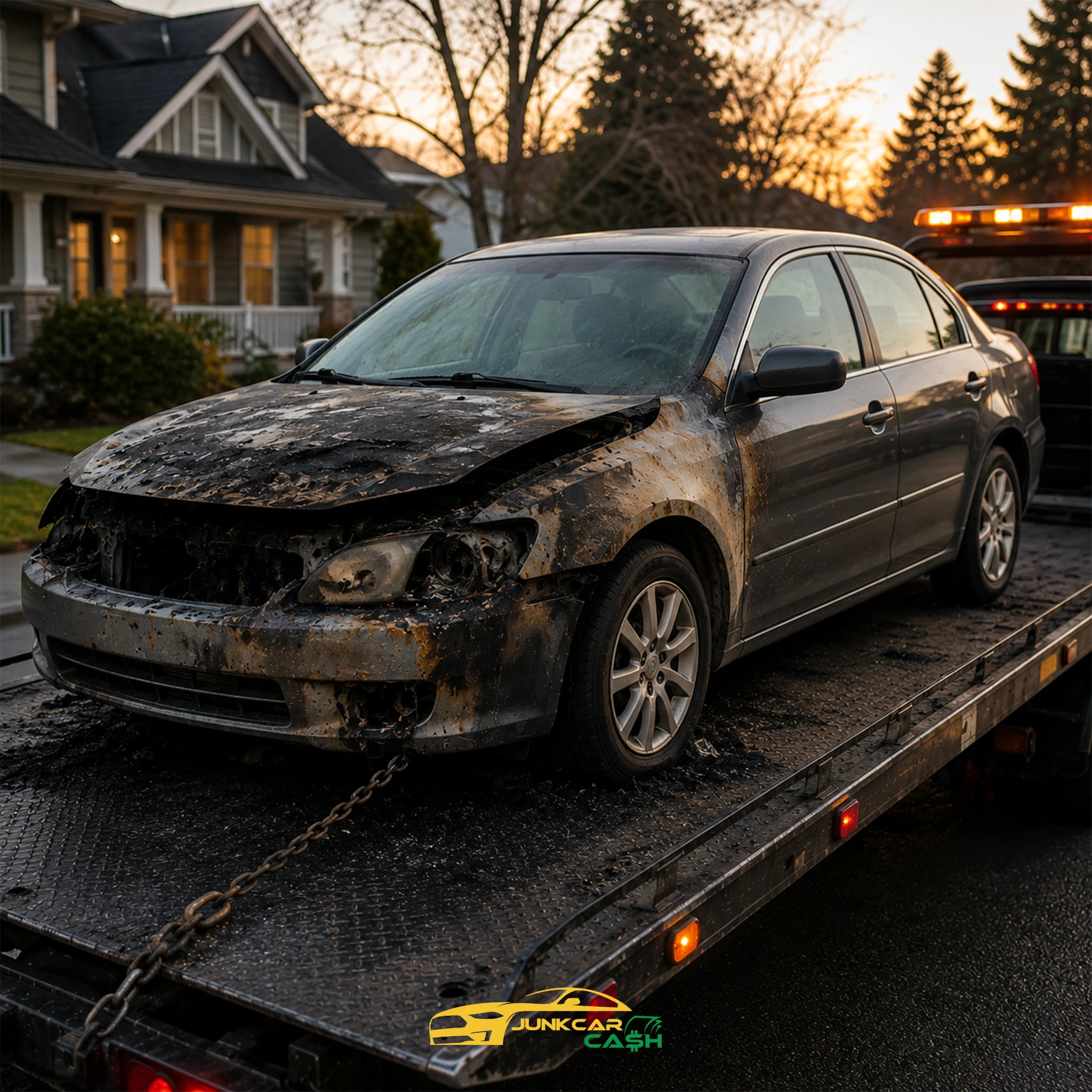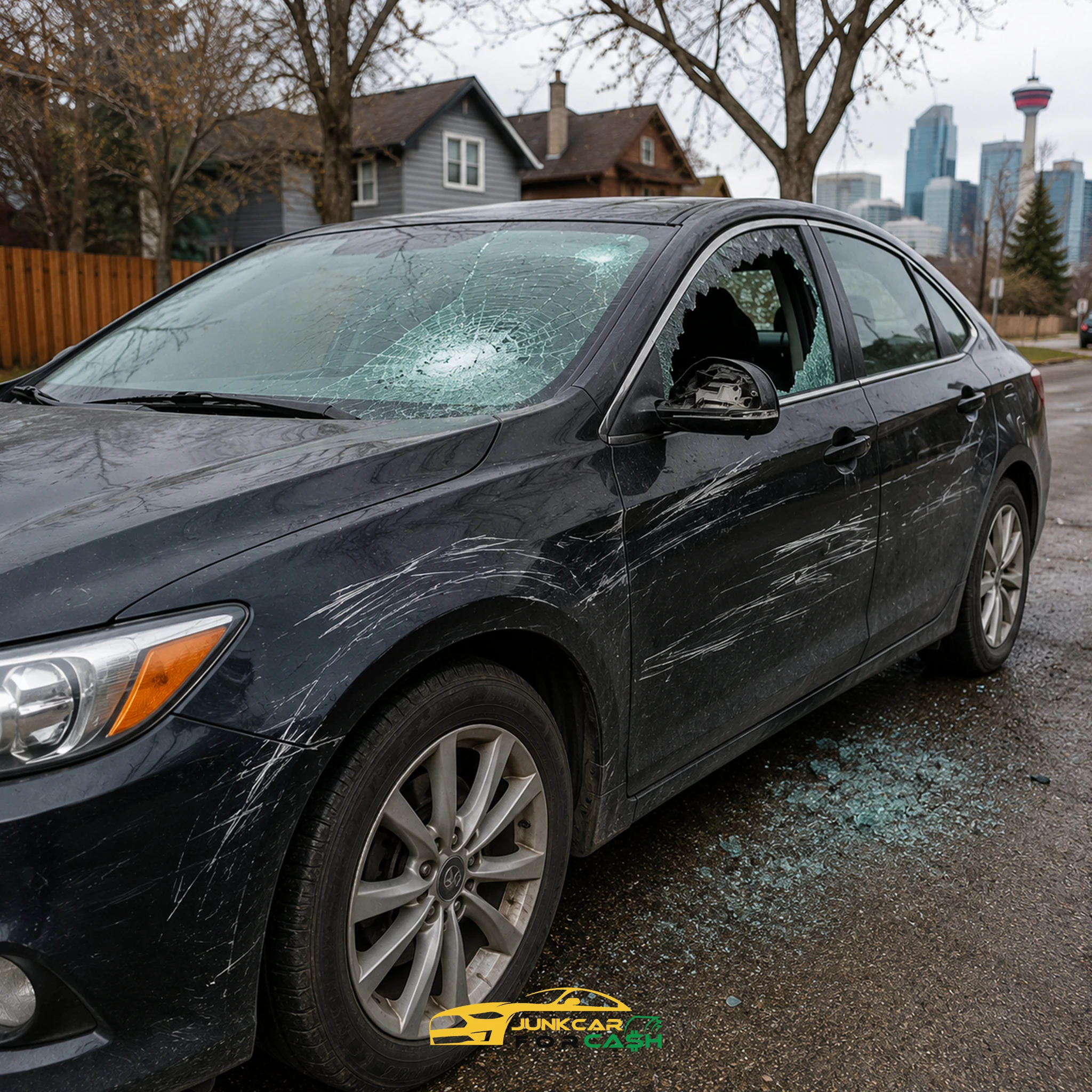

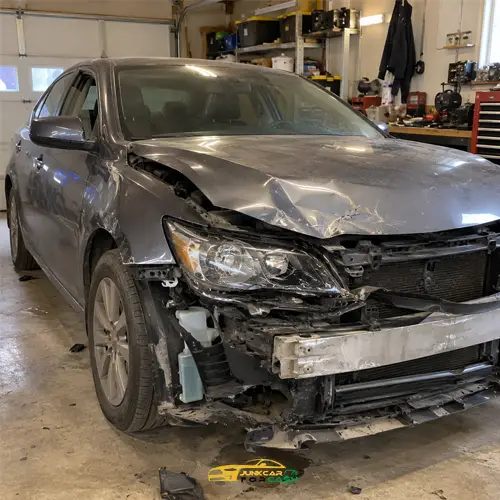
A collision leaves you with a car that still runs but doesn’t look or drive quite right anymore, and the insurer hasn’t called it a total loss. That leaves you in an in-between spot: not sure if you’re required to report anything, not sure what the damage actually did to the car’s value, and not sure whether fixing it or selling it as-is makes more sense. The good news is that it’s entirely possible, and often more straightforward than people expect. This guide walks through what you need to disclose, how damage affects your offer, and the exact steps to get it sold.
Do You Have to Report the Accident Before Selling?
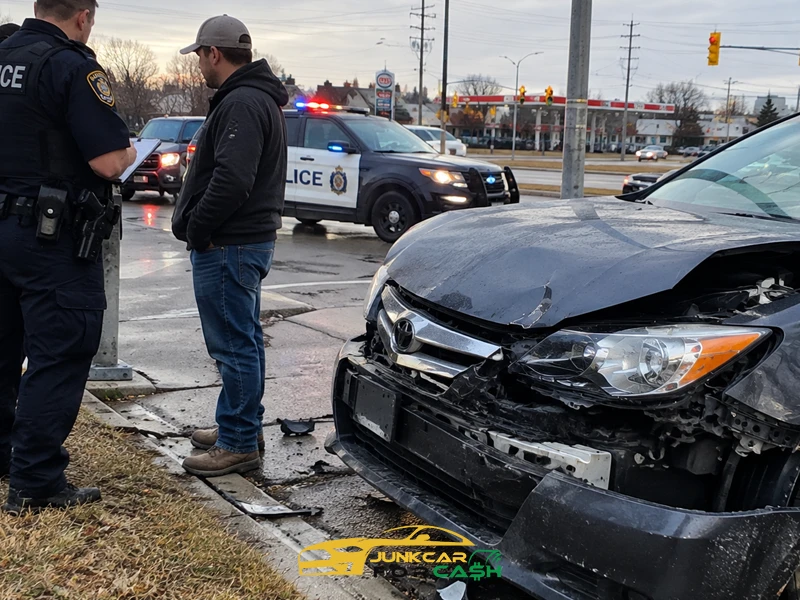
In Alberta, you must report a collision to police if the combined property damage is $5,000 or more, if anyone is injured, if a vehicle isn’t drivable, or if a driver involved doesn’t have proper documentation such as a licence, registration, or insurance. The $5,000 threshold has been in place since January 1, 2024, and the Government of Alberta confirmed it remains unchanged for 2026. If none of these circumstances apply, there’s no legal reporting requirement, though you can still choose to file a report if you want an official record.
A private seller should represent the vehicle honestly and shouldn’t mislead a buyer about its condition or history. Alberta’s used-vehicle guidance notes that private sales are generally sold as-is, and AMVIC handles consumer complaints involving misrepresentation. Practically speaking, being upfront about the damage when you get a quote is the simplest way to avoid any issue, and it gets you a more accurate offer in the first place.
What Accident Damage Does to Your Car's Value
The accident-damaged car value in Calgary depends on the type of damage more than how the accident looked. Not all damage affects value the same way.
Cosmetic Damage
Dented panels, a cracked bumper, or a scraped fender fall into this category. These are visible but don’t affect how the vehicle drives, and a cash buyer prices this kind of damage based on what it would cost to fix, not as a red flag against the vehicle overall. A vehicle with purely cosmetic damage often retains most of its value to a cash buyer, since the mechanical and structural condition underneath is unaffected.
Frame Damage
This is the most serious category. Frame damage affects the vehicle’s structural integrity, and repair costs can be expensive enough that an insurer determines the vehicle is a total loss when the overall repair economics no longer make sense relative to its actual cash value. If an insurer writes the vehicle off and it meets Alberta’s applicable vehicle-branding criteria, the vehicle can receive a salvage or non-repairable status. A salvage vehicle can potentially be repaired and pass a Salvage Vehicle Inspection before re-registration, while a non-repairable vehicle cannot be re-registered for normal road use. Even when a vehicle with frame damage is repairable, a branded history can affect resale value permanently, which is part of why many owners choose to sell rather than repair.
Airbag Deployment
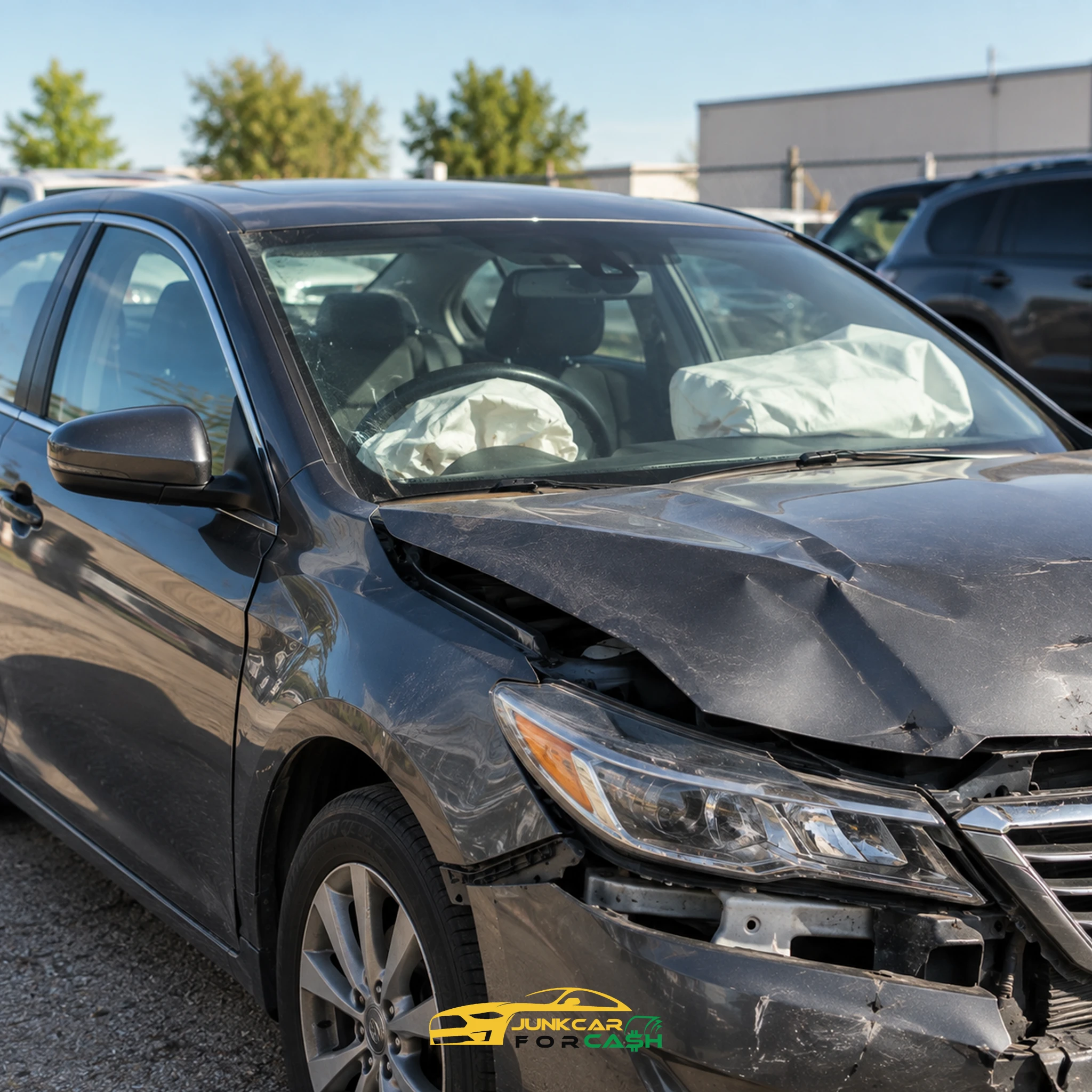
Airbag deployment sits in the middle. It doesn’t necessarily mean the vehicle is unsafe to repair, but it does mean two separate costs: replacing the deployed airbags themselves and resetting or replacing the SRS control module that manages them. Both need to be addressed before the safety system works properly again, and a vehicle subject to an applicable Alberta inspection can fail if its SRS system is malfunctioning or required airbags haven’t been properly repaired.
Mechanical and Drivetrain Damage
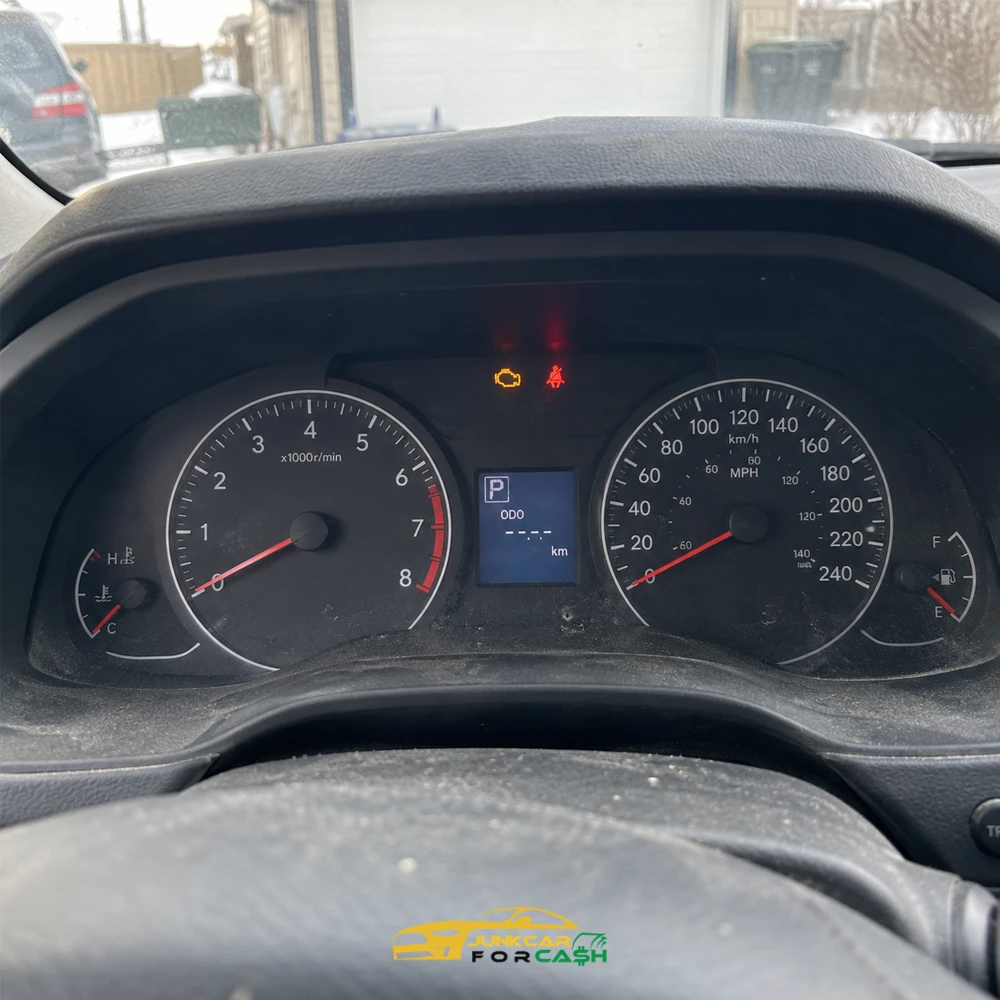
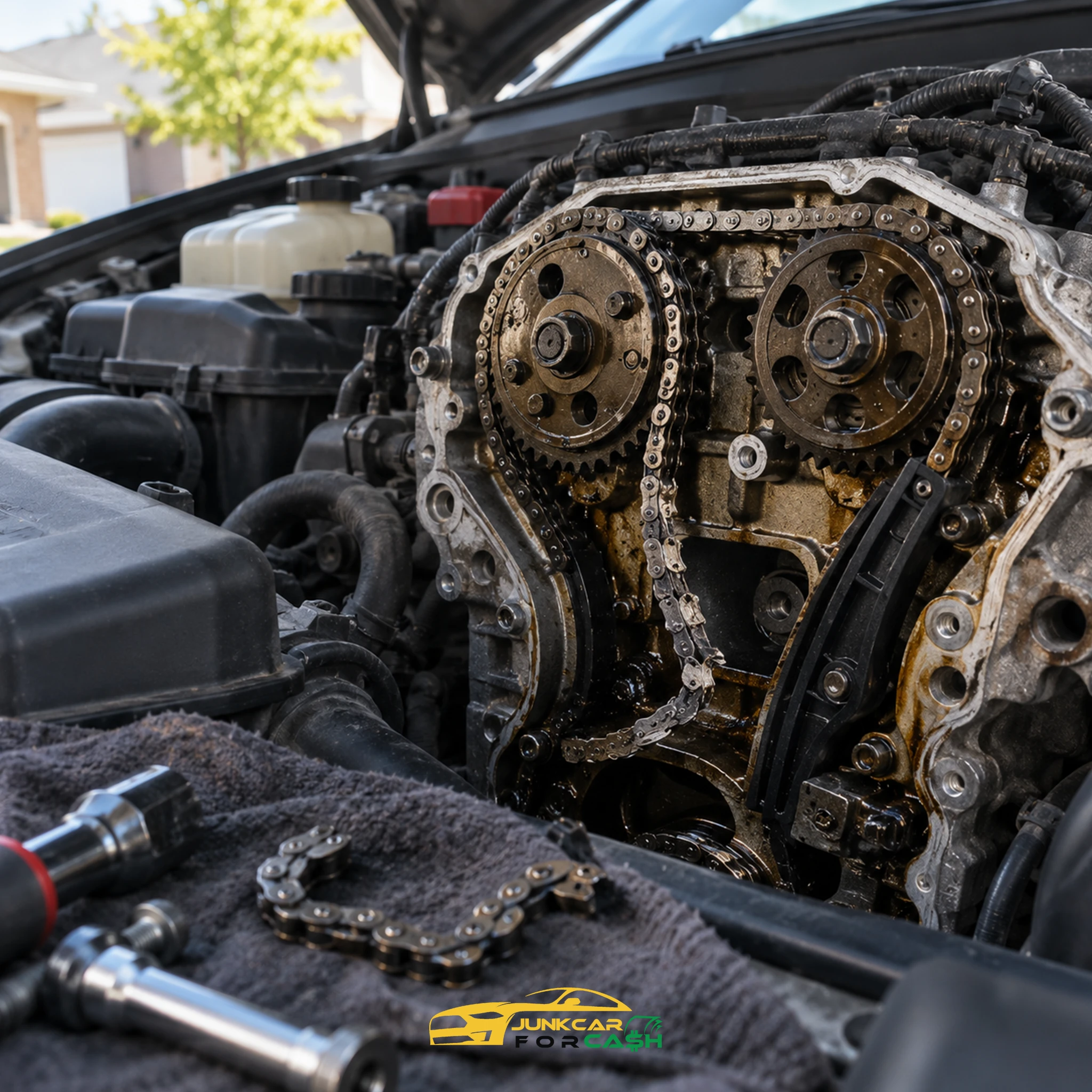
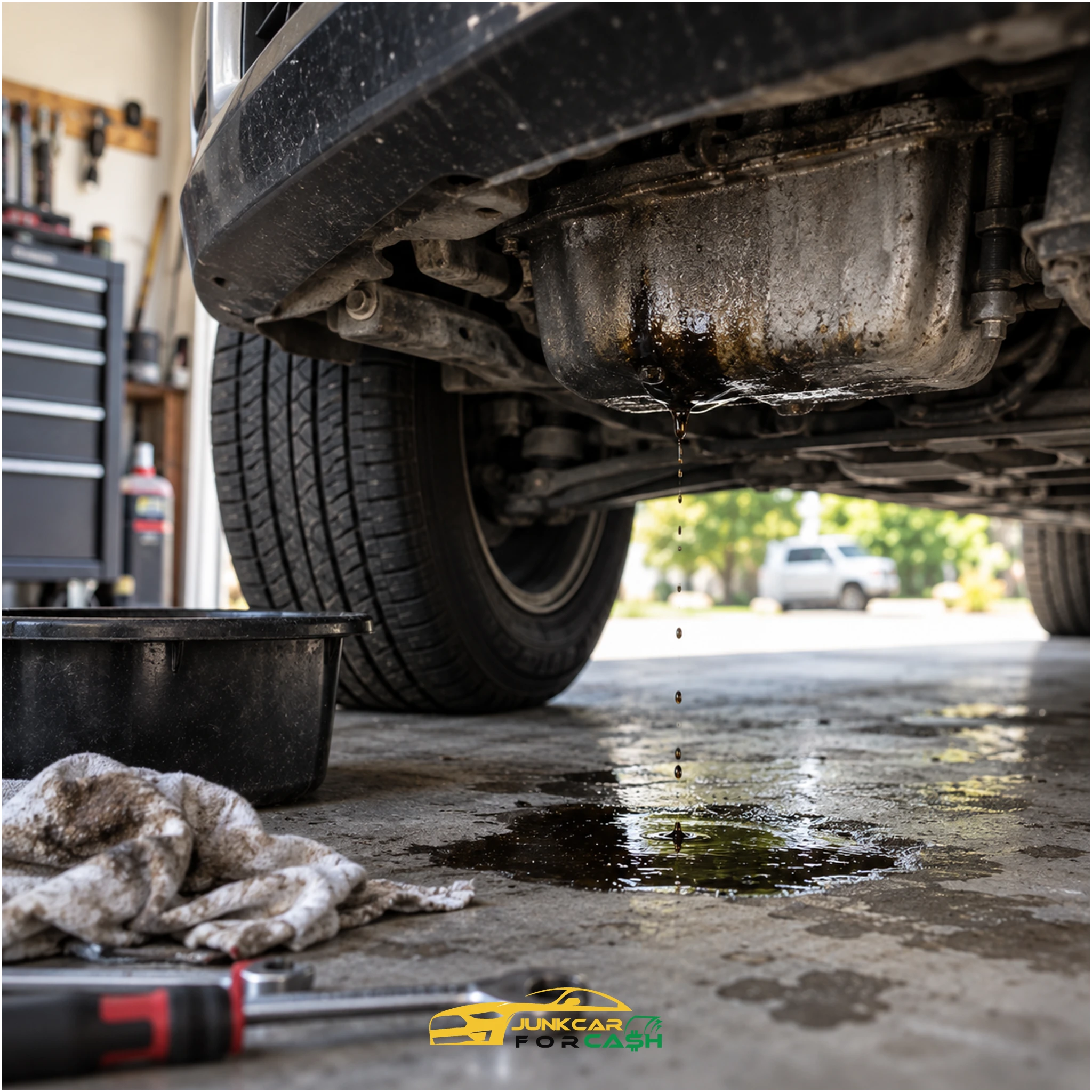
Some accidents damage the engine, transmission, cooling system, or suspension without necessarily bending the frame. This type of damage is easy to underestimate because the vehicle may still look drivable while running rough or leaking fluid. Mechanical damage typically has a more direct impact on offer value than cosmetic damage, since it affects whether the vehicle can be safely driven at all. A pre-purchase inspection or diagnostic scan is usually the only way to know the full extent of this kind of damage before selling.
For a cash buyer, none of these damage types disqualify a vehicle from being purchased. They shift the offer to reflect what it would take to bring the car back to a safe, functional state.
Repair or Sell? A Quick Cost Comparison
Here’s what these repairs typically run, and when it’s still worth doing them versus selling the vehicle as-is.
| Damage Type | Typical Repair Cost | Worth Repairing? |
|---|---|---|
| Cosmetic (dents, bumper, panel) | $500 to $2,500 per panel | Usually yes, especially on newer vehicles |
| Airbag deployment (parts) | Varies substantially by vehicle and airbag type | Often yes if the rest of the vehicle is sound |
| SRS module reset/replacement | Adds to airbag repair cost | Required alongside airbag replacement |
| Frame damage | Highly variable; can become uneconomical to repair depending on vehicle value and repair scope | Usually not, once repair costs approach the vehicle's value |
Whether repairing makes financial sense comes down to the vehicle’s post-repair value, the quality of the repair, future reliability, and what alternatives you have available. Spending heavily on repairs only makes sense if what you get back, in resale value and continued use, outweighs the cost.
A quick example. Say your vehicle’s actual cash value before the accident was $9,000, and the repair estimate for frame damage plus a bumper replacement comes back at $6,200. That’s roughly 69 percent of the vehicle’s pre-accident value. Whether repairing makes sense here depends on the vehicle’s post-repair value, repair quality, future reliability, and the alternatives available to you. A branded history can also reduce resale value afterward, which is worth factoring in. In many cases like this, selling as-is and putting that $6,200 toward a different vehicle turns out to be the more practical outcome.
Does Selling Instead of Claiming Affect You Later?
One thing worth knowing before you decide: how you handle the accident now can affect your insurance costs and the vehicle’s paper trail down the road.
Insurance premiums. An at-fault claim can affect your eligibility for Alberta’s Good Driver rate protection, which in 2026 requires no at-fault claims in the previous six years. Not-at-fault claims are less likely to move your base rate, but they can still affect certain discounts depending on your insurer. If you don’t submit an insurance claim, the accident won’t create a claim on your policy, but other reporting or recordkeeping requirements can still apply depending on the circumstances.
Vehicle history reporting. Accidents and damage may appear in CARFAX Canada or other vehicle-history records when the information is reported by insurers, police, repair facilities, or other participating data sources. Privately repaired damage may not appear, so a clean history report doesn’t necessarily mean a vehicle has never been damaged. This is one of the practical reasons some Calgary sellers choose to sell a damaged vehicle directly rather than go through the claims process, particularly when the payout wouldn’t be much higher than a cash offer anyway.
How to Sell a Car With Accident Damage in Calgary: Step by Step
If you’ve decided to sell a car with accident damage, here’s exactly how the process works from start to finish.
- Get an estimate or a clear picture of the damage. You don’t need a full body shop quote, but knowing roughly what’s wrong (cosmetic, structural, or safety system) helps you describe the vehicle accurately.
- Decide whether to report or claim. If none of Alberta’s mandatory reporting circumstances apply (damage under $5,000, no injuries, vehicle drivable, all drivers properly documented) and you’re not planning to file an insurance claim, there’s no requirement to report. If you are filing a claim, do that first so you know your settlement amount before comparing it to a cash offer.
- Get a quote with the damage disclosed. Call or fill out a form with the vehicle’s year, make, model, and an honest description of the accident damage. An accurate description gets you an accurate number that holds at pickup.
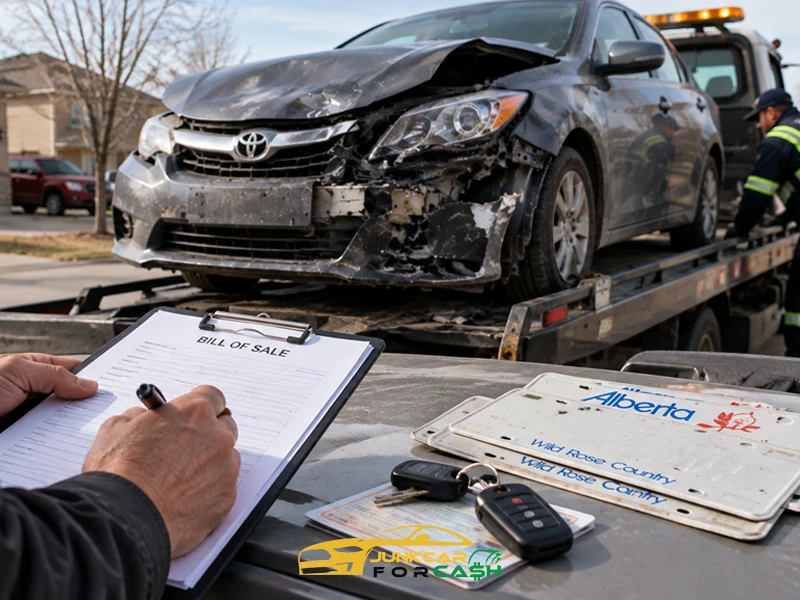
- Gather your documents. For a private sale, have acceptable identification, proof of ownership, and the completed standard bill of sale ready. A buyer or business may have additional documentation requirements.
- Remove your licence plates. Alberta plates stay with the registered owner, not the vehicle. Take them off before the tow truck arrives and transfer or cancel the registration through an Alberta registry agent using the applicable process.
- Complete the sale. The buyer checks the vehicle against what was described, you sign the paperwork, and payment is arranged. The pickup itself is usually straightforward once the vehicle and paperwork have been checked.
Get a Cash Offer for Your Accident-Damaged Car
If you want to know exactly what your vehicle is worth under current Calgary market conditions, Junk Car For Cash can give you a firm number quickly. We buy vehicles in any condition across Calgary and 40+ Alberta cities, with free towing and payment arranged at pickup. Get a quote or email [email protected] and we’ll get back to you with a real offer, no obligation.
Questions Readers Ask
Conclusion
Selling a car with accident damage in Calgary comes down to three things: knowing whether you need to report anything, understanding how the specific type of damage affects value, and getting an honest quote before deciding whether to repair. For cosmetic damage, repairing often makes sense, especially on a newer vehicle. For frame damage or repair estimates that start approaching the vehicle’s actual value, selling as-is is usually the smarter move. If you’re ready to sell, a cash for junk car Calgary buyer will take your damaged car as-is, and getting a quote first costs nothing and gives you a real number to weigh against whatever repair estimate you’re holding.
References
- Government of Alberta. Automobile Collisions and Insurance
https://www.alberta.ca/automobile-collisions-insurance - Government of Alberta. Collision Reports
https://www.alberta.ca/collision-reports - Global News (2023). Alberta ups vehicle collision damage reporting threshold from $2K to $5K
https://globalnews.ca/news/10171170/alberta-vehicle-collision-damage-reporting-threshold/ - Alberta Motor Vehicle Industry Council (AMVIC). Selling a Vehicle
https://www.amvic.org/consumer/selling-a-vehicle/ - Government of Alberta. Buying a Used Vehicle in Alberta
https://www.alberta.ca/buying-a-used-vehicle-in-alberta - Government of Alberta. Salvage Vehicle Inspections
https://www.alberta.ca/salvage-vehicle-inspections - Insurance Bureau of Canada. Understanding Auto Claims and Total Loss
https://www.ibc.ca/consumers/auto - Lethbridge Police Service. Collision Reporting
https://www.lethbridgepolice.ca/reporting-and-services/reporting/collision-reporting/ - Alberta Automobile Insurance Rate Board (AIRB). Good Driver Protection in Alberta
https://www.airbfordrivers.ca/good-driver-protection/ - Government of Alberta. Automobile Insurance Reform
https://www.alberta.ca/automobile-insurance-reform