
Get Up To $100 to $10,000 Cash Today • Call Now (587) 325-0717

Totaled Car Insurance Payout in Alberta: What You’re Actually Owed

Evan Pearson

Updated on: July 9, 2026

9 mins to read

Evan Pearson

9 mins to read
Table of Contents
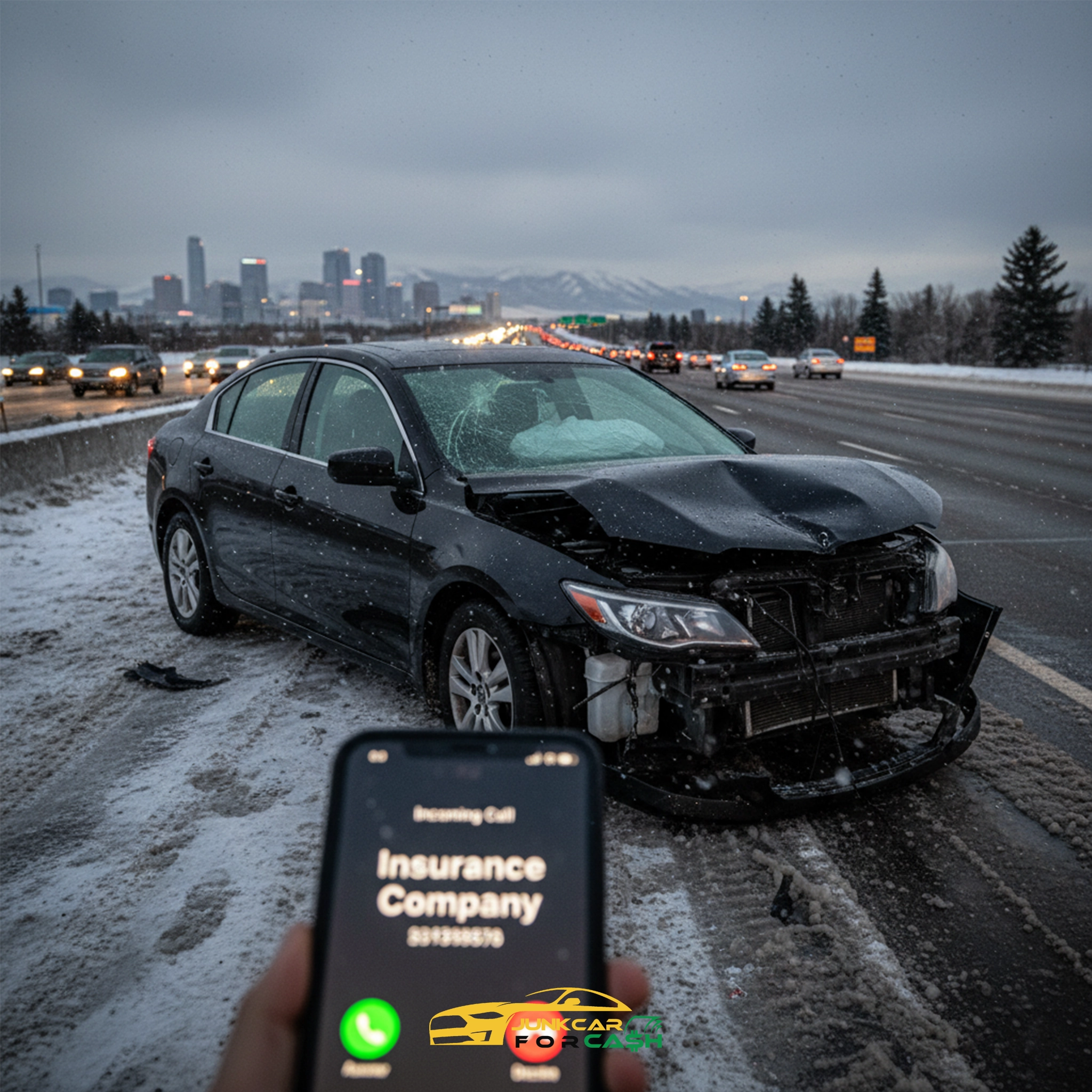
Black sedan with severe front-end damage parked on snowy highway shoulder; hand in foreground holds smartphone showing incoming call from “Insurance Company,” with city skyline and traffic visible under cloudy sky.

Updated on: July 9, 2026

Your car gets hit, you file a claim, and then your insurer calls to say it’s a total loss. For most Alberta drivers, that’s where the confusion starts. What does a write-off actually mean, what will you be paid, and what happens to the vehicle after? The answer lies in understanding how insurers calculate Actual Cash Value, what triggers a write-off declaration, and what your legal rights are if you disagree with the offer.

Getting that right can be the difference between accepting a low settlement and walking away with what your vehicle was actually worth.This guide breaks down every stage of the process so you can make an informed decision, not a pressured one.

What Triggers a Total Loss in Alberta

A write-off isn’t about how the car looks. It’s a financial calculation. When your insurer’s adjuster reviews the damage, they compare the estimated repair cost to your vehicle’s Actual Cash Value (ACV), which is the market value of your car right before the accident. If the cost to fix the vehicle gets too close to what it was worth, the insurer writes it off rather than paying to repair it.

Canadian insurers typically use one of two methods to make that determination:

  • Obvious total loss: Repair costs are greater than the ACV outright.
  • Constructive total loss: Repair costs plus the vehicle’s salvage value together exceed the ACV, even if repairs alone wouldn’t cross that line.


In practice, most Canadian insurers apply an industry-standard threshold of around 70 to 80% of the vehicle’s ACV. So if your car was worth $14,000 before the collision and repairs come in at $10,500, that’s a 75% ratio. Many insurers will write it off at that point rather than authorizing repairs.

Three situations consistently trigger a write-off declaration:

  • Repair costs meet or approach the vehicle’s pre-accident market value
  • Frame or structural damage that can’t be safely restored, even with cosmetic repairs
  • Theft where the vehicle isn’t recovered within the timeframe specified in your policy
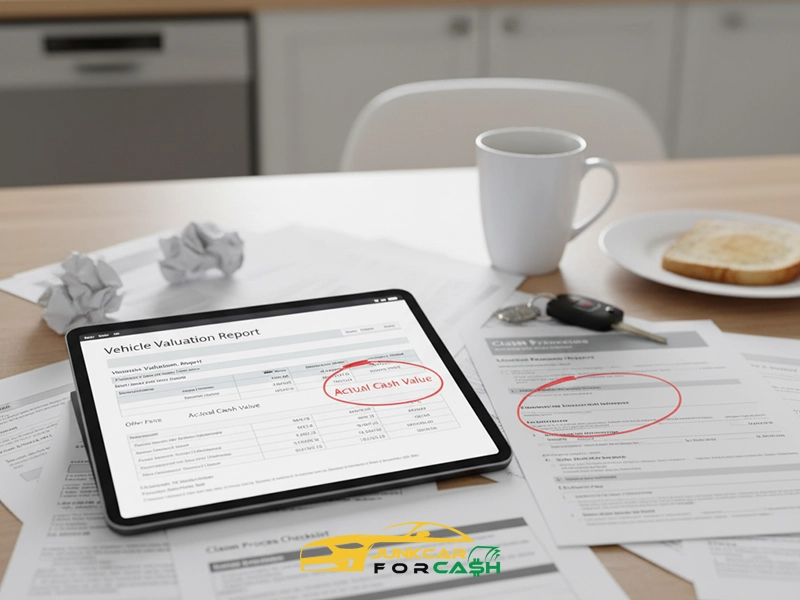
Actual Cash Value

How Your Insurer Calculates Actual Cash Value

Your ACV is not what you paid for the car. It’s the depreciated market value at the time of the loss. Depreciation is the main reason those two numbers differ, and it’s the main reason many Alberta drivers feel their settlement lands lower than expected.

Adjusters in Alberta calculate ACV by looking at several factors:

FactorWhat It Influences
Year, make, and modelSets the baseline market value
Odometer readingLower kilometres typically raises the value
Pre-accident conditionInterior, exterior, maintenance records, tires
Local market comparablesRecent sales of similar vehicles in your area
Factory options and upgradesDocumented features can increase the ACV

The insurer uses local market data, so your ACV reflects what your specific vehicle would have sold for in Calgary, Edmonton, or wherever you’re located in Alberta. That locality matters, and it also gives you something concrete to push back on if the comparables they use don’t accurately reflect your vehicle’s condition or the current local market.

Your Two Options After a Total Loss Declaration

Once the insurer has calculated your ACV, you’ll face a choice.

Option 1: Accept the settlement and surrender the vehicle. You receive the full ACV minus your deductible. The insurer takes ownership of the car and moves it to a salvage facility. This is the most common outcome and typically the cleanest path forward.

Option 2: Owner-retained salvage. You keep the vehicle but accept a reduced payout. The insurer deducts both your deductible and the car’s salvage value from the ACV before cutting your cheque. You end up with less cash and a damaged car still in your possession. This path rarely makes financial sense unless you’re a mechanic or plan to sell parts yourself.

A few additional factors that affect your payout:

  • If you still have an outstanding car loan, your lender gets paid first from the settlement.
  • If your ACV is less than your remaining loan balance, you’re responsible for the difference unless you have gap insurance coverage on your policy.
  • If the other driver was at fault, your claim runs through their insurer under third-party liability and your deductible doesn’t apply.
  • Most total loss settlements in Alberta are processed within a few weeks once documentation is complete and the proof of loss form is submitted.

Can You Dispute the Settlement?

Yes, and adjusters expect it. Under Section 519 of Alberta’s Insurance Act, you have a formal right to dispute the amount of a total loss settlement. Here’s how that process works:

  1. Submit your proof of loss form and make a written request to start the dispute resolution process.
  2. Within 7 days, both you and your insurer must each appoint a representative at your own cost.
  3. The two representatives work to reach an agreement. If they can’t, they appoint a neutral umpire within 15 days.
  4. The written decision of any two of the three parties is final and binding.

Before invoking that process, it’s worth pulling recent comparable listings on AutoTrader or Kijiji, gathering your maintenance records and any receipts for upgrades, and presenting those to your adjuster directly. Adjusters will often revise an offer when you show documented evidence. The formal dispute process is there if that doesn’t resolve it.

What to Do With a Totaled Car in Alberta

If you accepted the settlement and the insurer took the vehicle, you’re done. But if you kept the car through owner-retained salvage, or if your settlement didn’t fully cover your situation and you’re still stuck with an undrivable vehicle, selling it for cash is the most practical next step.

At Junk Car for Cash, we buy write-offs, hail-damaged vehicles, and cars in any condition across Alberta. We offer free towing province-wide, pay cash on the spot, and handle all the paperwork. Call us at (587) 325-0717 or email [email protected] for a no-obligation quote.

Conclusion

A totaled car insurance payout comes down to one calculation: your vehicle’s pre-accident market value minus your deductible. Knowing how ACV is determined, what triggers a write-off, how owner-retained salvage works, and what your formal dispute rights are under Alberta’s Insurance Act puts you in a far stronger position when your insurer makes an offer. Alberta has no legislated fixed write-off percentage, so thresholds vary by insurer and most settlements are negotiable with solid documentation. Whether the payout covers your situation or you’re still holding a vehicle you can’t drive, your options in Alberta are broader than most drivers realize.

Frequently Asked Questions

Can I dispute my insurer's total loss valuation in Alberta?
+
Yes. Under Section 519 of Alberta's Insurance Act, you can formally request a dispute resolution process after submitting your proof of loss. Both parties appoint a representative within 7 days. If they can't agree, a neutral umpire is appointed within 15 days. The umpire's written decision is final and binding for both sides.
Does my deductible apply if I wasn't at fault?
+
No. If you're claiming through the at-fault driver's insurer under a third-party liability claim, no deductible applies and you receive the full ACV. If you're running the claim through your own collision coverage regardless of fault, your deductible comes off the settlement amount.
What happens to my car after I accept the settlement?
+
The insurer takes ownership once you sign over the title. The vehicle is typically sent to a salvage auction or dismantler. You generally have a short window, around 7 to 14 days, to remove personal belongings before the car is picked up.
What is gap insurance and do I need it in Alberta?
+
Gap insurance covers the difference between your vehicle's ACV and your remaining loan or lease balance when the loan is higher than the settlement. It's optional coverage available through most Alberta insurers and is most relevant for newer financed vehicles that depreciate faster than the loan is paid down.
Can I sell my totaled car privately instead of going through insurance?
+
Once a claim is filed, the insurer holds an interest in the vehicle and it can't be sold independently. If you've chosen owner-retained salvage, or if no claim has been filed, you can sell it. Call us at (587) 325-0717 or email [email protected] and we'll give you a straightforward quote based on your vehicle's condition.

References

  1. Government of Alberta. Insurance Consumer Complaints and Dispute Resolution. alberta.ca/insurance-consumer-complaints
  2. Government of Alberta. Insurance Act, RSA 2000, Chapter I-3, Section 519. kings-printer.alberta.ca
  3. Insurance Bureau of Canada. Repairs, Replacements and Write-Offs. ibc.ca
  4. Intact Insurance. How is my car insurance affected by a total loss? intact.ca
  5. CAA South Central Ontario. What is a Total Loss? caasco.com
  6. Alberta Auto Insurance Rate Board (AIRB). Consumer Information: Auto Insurance in Alberta. albertaairb.ca

Why Choose Junk Car For Cash?

Google Reviews

How It Works

Get Your Free Quote

Schedule Your Pickup

Get Paid Cash on the Spot

Ready To Sell Your Car?

Evan Pearson

Junk Car For Cash Author

Evan Pearson is a content strategist and automotive industry specialist with 8+ years of experience in vehicle buying and disposal across Alberta. At Junk Car For Cash, Evan writes practical guides and research-backed articles to help Albertans get the most value from their unwanted vehicles. His expertise spans fair market pricing, the junk car buying process, and what buyers actually look for in non-running and damaged vehicles. Evan is committed to transparent, honest information, no sales pitch, just facts that help readers make confident decisions.

Share This Post

Reddit
Pinterest
Telegram
Facebook
Twitter
LinkedIn

Why Choose Junk Car For Cash?

Google Reviews

How It Works

Get Your Free Quote

Schedule Your Pickup

Get Paid Cash on the Spot

Ready To Sell Your Car?

Our Recent Blog Posts

Real advice for Calgary and Alberta drivers looking to sell, scrap, or remove a vehicle.
Scroll to Top