
Get Up To $100 to $10,000 Cash Today • Call Now (587) 325-0717

How to Sell a Deceased Person’s Car in Alberta

Evan Pearson

Updated on: August 22, 2026

11 mins to read

Evan Pearson

11 mins to read
Table of Contents
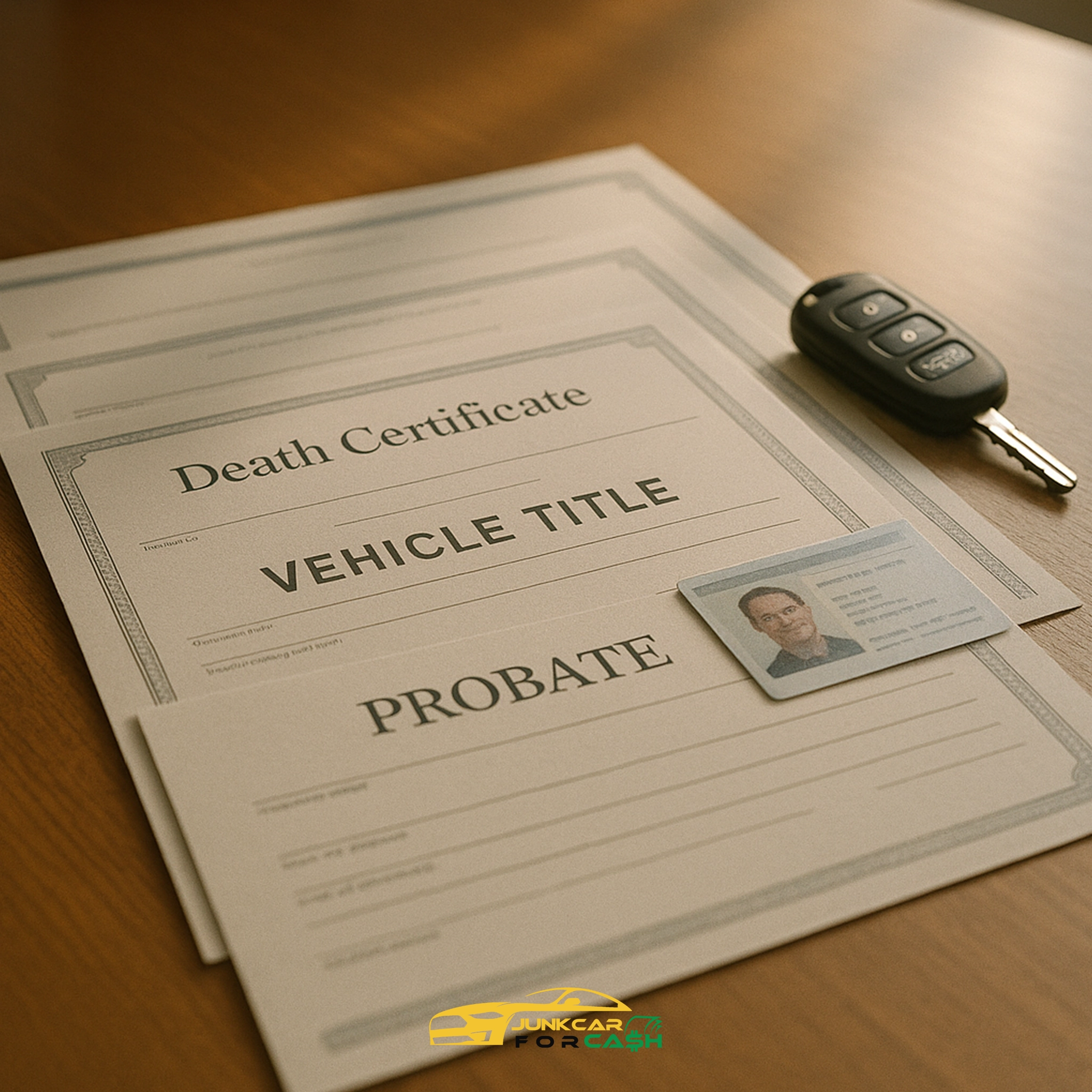
Documents labeled death certificate, vehicle title, and probate on a table with a car key and ID card.

Updated on: August 22, 2026

If you need to know how to sell a dead person’s car in Alberta, the process is more manageable than it might feel right now. Dealing with a loved one’s vehicle is rarely the first thing on anyone’s mind after a loss, but it’s a real, practical task that eventually needs attention. Not every estate needs formal court administration, but the documents required to deal with a vehicle depend on how the estate was structured and who has legal authority to act.

This guide walks through what’s needed, the situations that call for probate versus a simpler process, what happens with any loan or insurance still attached to the vehicle, and what to do if some of the original paperwork can’t be found.

Get a Compassionate, Straightforward Offer for the Vehicle

We understand this isn’t a typical sale, and we aim to make the process as smooth as possible during an already difficult time. Junk Car For Cash buys vehicles in any condition across Calgary and the surrounding Alberta area, offer free towing, and can walk you through exactly what documentation your specific situation needs before pickup.Get a quote or email [email protected] for a free, no-obligation quote.

What Documents Do You Need?

Before anything else, gather what you’ll likely need to bring to a registry agent or a buyer.

  • The death certificate. This is the starting point for establishing that the registered owner has passed away.
  • The vehicle’s registration certificate. This identifies the vehicle and its registered owner, though it isn’t proof of ownership on its own.
  • Documentation establishing your legal authority to act for the estate. What this looks like depends on the estate, covered in detail below.
  • Your own government-issued photo ID.
  • Loan or lien information, if the vehicle was financed. The lender may need to provide payoff and discharge documentation as part of the sale itself, covered further down.

If any of these are missing or unclear, a registry agent can advise on what’s actually needed for your specific situation rather than guessing.
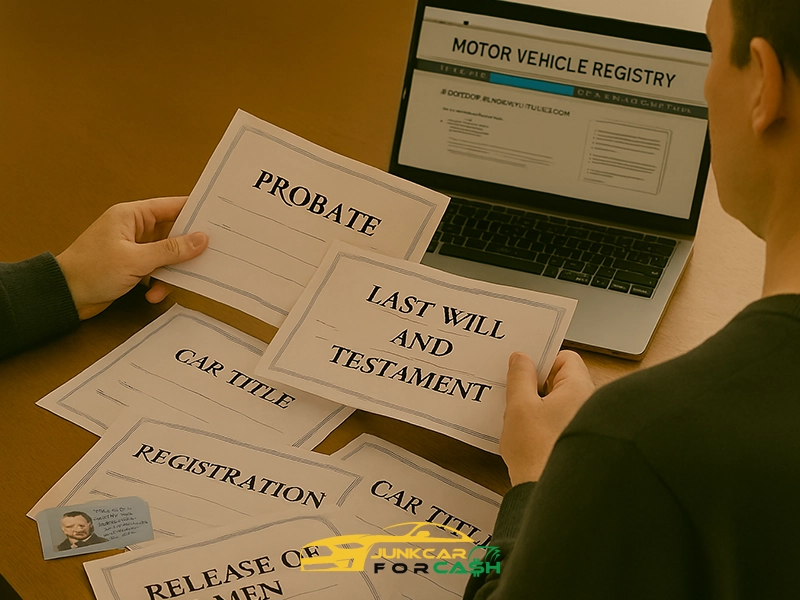
Sell a Deceased Person's Car

Do You Need Probate to Sell the Vehicle?

Not always, and this is worth understanding before assuming you need to go to court. Alberta doesn’t require every estate to be formally administered. Whether a grant of probate or letters of administration through the Court of King’s Bench of Alberta applies depends on the size and complexity of the estate, whether there’s a will, and how the vehicle was owned.

SituationWhat's Typically Involved
There's a valid will naming an executor, and the estate is straightforwardThe executor may be able to deal with the vehicle without formal estate administration, but a registry agent can confirm what documentation is required
There's no will, or the estate involves multiple significant assetsLetters of administration or a grant of probate is more likely to be required
The vehicle was jointly owned with a surviving spouse or partnerOwnership may transfer more directly, worth confirming with a registry agent specifically
The estate is already going through formal probate for other reasonsThe grant confirms the personal representative's authority to administer the estate, which can be used to establish authority over assets like the vehicle

This is a general guide rather than a strict rule, and confirming your specific situation with a registry agent before assuming either way is always the safer step.

What Happens If There's a Loan on the Vehicle?

An outstanding loan doesn’t disappear when the registered owner passes away. A few things typically need to happen:

  • Contact the lender directly. They can explain the payout process and confirm the exact balance remaining.
  • Determine how it will be resolved. This is usually handled either through the estate’s other assets or as part of the vehicle sale itself, depending on what’s available and how the estate is structured.
  • Confirm the lien status before selling. A buyer can arrange a lien search based on the vehicle’s VIN, including through the Personal Property Registry, to verify whether a registered security interest exists, and it’s worth doing this on your end too if you’re not entirely sure where things stand.

The loan doesn’t need to be fully resolved before you start the process, but it does need to be addressed before the sale can close cleanly.

What If There Are Multiple Heirs or Beneficiaries?

When more than one person has a claim to the estate, or to the vehicle specifically, it’s worth sorting out agreement among everyone involved before approaching a buyer. A registry agent or buyer generally needs to see that whoever is signing on the estate’s behalf actually has the authority to do so.

  • If a will names an executor, that person is generally the estate’s personal representative, subject to any probate or other authority requirements that apply to the specific estate.
  • If there’s no will, determining who has authority becomes part of the same estate administration question covered above, and it’s worth resolving that question before, not after, a buyer is involved.

Disagreement among heirs after a sale has already happened creates a much harder situation to untangle than getting everyone aligned beforehand.

What Happens to the Insurance Policy?

The vehicle’s insurance policy doesn’t automatically transfer the way some people assume. Contact the insurer directly to explain the situation. Depending on the specific insurer and policy, a few outcomes are common:

  • The insurer may be able to maintain coverage temporarily while the estate is being settled, depending on the specific policy and circumstances.
  • The vehicle gets added to another driver’s existing policy if it’s going to be driven by someone else in the meantime.
  • The policy is cancelled once the vehicle is sold, the same as it would be for any other vehicle sale.

Whichever applies, it’s worth having this conversation with the insurer early rather than assuming coverage is still active by default.

How Does the Actual Sale Work?

Once you’ve confirmed your authority to act and gathered the necessary documents, selling the vehicle itself follows a fairly standard process.

  1. Confirm your authority and gather your documents. This includes the death certificate, the vehicle’s registration, and whatever documentation establishes your right to act, whether that’s a grant of probate, letters of administration, or simply your role as named executor.
  2. Get a quote from your buyer of choice. Provide the vehicle’s make, model, year, and condition, and mention upfront that you’re selling on behalf of an estate so the buyer knows what documentation to expect.
  3. Complete the applicable bill of sale. Identify your capacity as the estate’s personal representative clearly in the transaction documentation, the same standard bill of sale required for any other private sale in Alberta.
  4. Confirm payment and handover. A legitimate buyer completes payment before or at the time the vehicle is picked up, the same as any other transaction.

In our experience, this is one of the more common points of hesitation for people in this situation, worrying that the sale itself will be complicated because of the circumstances, when in practice the documentation is what actually determines whether a buyer can proceed, not the situation itself.

How Does the Actual Sale Work?

What If You Can't Find the Original Documents?

This comes up more often than people expect, especially if the vehicle wasn’t something the deceased dealt with regularly in their final months. A few things help:

  • Missing registration. Contact a registry agent directly. They can confirm what documentation is required and whether a duplicate registration certificate can be issued to the person authorized to act for the estate.
  • Missing death certificate. Additional certified copies can be ordered through an Alberta registry agent if you’re eligible to receive them.
  • Uncertainty about whether a will exists. Alberta doesn’t have a general wills registry, so if you’re not sure, checking with the deceased’s lawyer, family members, or places important documents were kept, such as a safety deposit box, is the recommended starting point.

None of these situations are unusual, and a registry agent has generally seen them before, so it’s worth asking directly rather than assuming a missing document is a dead end.

Frequently Asked Questions

Do I need probate to sell a deceased person's car in Alberta?
+
Not always. Alberta doesn't require every estate to be formally administered, and whether probate or letters of administration apply depends on the estate's size, complexity, and whether there's a will. A registry agent can advise on what's needed for your specific situation.
What documents do I need to sell a deceased person's vehicle?
+
You'll typically need the death certificate, the vehicle's registration certificate, documentation establishing your legal authority to act for the estate, and your own government-issued photo ID. If there's a loan on the vehicle, the lender's payoff and discharge process will need to be addressed as part of the sale.
Does a car loan get cancelled when the owner dies?
+
No, an outstanding loan doesn't disappear. It generally needs to be resolved as part of settling the estate, either through the estate's assets or as part of the vehicle sale. Contact the lender directly to understand the specific payout process.
What happens to the car insurance policy after the owner dies?
+
It doesn't transfer automatically to another person. Contact the insurer directly and explain the situation, since coverage depends on the specific policy and insurer, but it may be possible to maintain it temporarily while the estate is settled, or cancel it once the vehicle is eventually sold.
Can I sell a deceased relative's car without going to court?
+
Often, yes, for smaller and more straightforward estates, though this depends on your specific situation. A registry agent can advise on what documentation they'll accept without formal probate, so it's worth checking directly rather than assuming court involvement is required.

Conclusion

Selling a deceased person’s car in Alberta comes down to establishing your legal authority to act, which depends on the size and structure of the estate rather than one universal requirement, and then handling the sale itself much like any other private transaction. A death certificate, the vehicle’s registration, and documentation of your authority are the starting point, with a lien or insurance situation addressed alongside them if either applies.

Confirming the specifics with a registry agent early, rather than assuming what’s needed, is what keeps this process manageable during an already difficult time.

  1. Government of Alberta, “Deceased persons’ estates,” alberta.ca: https://www.alberta.ca/deceased-persons-estates
  2. Government of Alberta, “Standard bill of sale,” alberta.ca: https://www.alberta.ca/standard-bill-sale
  3. Court of King’s Bench of Alberta, surrogate (estate) matters: https://albertacourts.ca/kb/areas-of-law/wills-estates-trusteeships/forms

Get a Compassionate, Straightforward Offer for the Vehicle

We understand this isn’t a typical sale, and we aim to make the process as smooth as possible during an already difficult time. Junk Car For Cash buys vehicles in any condition across Calgary and the surrounding Alberta area, offer free towing, and can walk you through exactly what documentation your specific situation needs before pickup.Get a quote or email [email protected] for a free, no-obligation quote.

Why Choose Junk Car For Cash?

Google Reviews

How It Works

Get Your Free Quote

Schedule Your Pickup

Get Paid Cash on the Spot

Ready To Sell Your Car?

Evan Pearson

Junk Car For Cash Author

Evan Pearson is a content strategist and automotive industry specialist with 8+ years of experience in vehicle buying and disposal across Alberta. At Junk Car For Cash, Evan writes practical guides and research-backed articles to help Albertans get the most value from their unwanted vehicles. His expertise spans fair market pricing, the junk car buying process, and what buyers actually look for in non-running and damaged vehicles. Evan is committed to transparent, honest information, no sales pitch, just facts that help readers make confident decisions.

Share This Post

Reddit
Pinterest
Telegram
Facebook
Twitter
LinkedIn

Why Choose Junk Car For Cash?

Google Reviews

How It Works

Get Your Free Quote

Schedule Your Pickup

Get Paid Cash on the Spot

Ready To Sell Your Car?

Our Recent Blog Posts

Real advice for Calgary and Alberta drivers looking to sell, scrap, or remove a vehicle.
Scroll to Top