
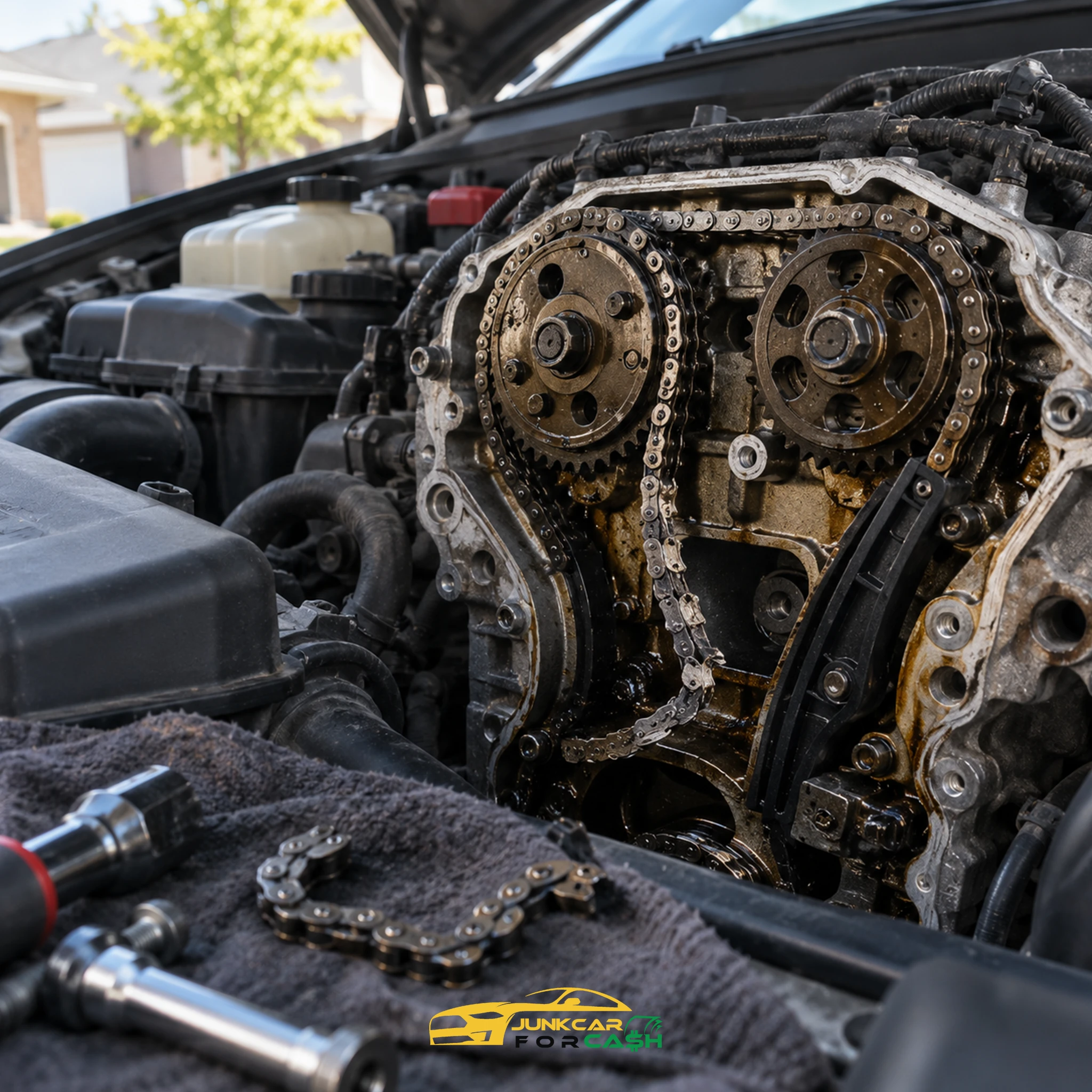
A broken timing chain sounds like a death sentence for a car, and for a lot of vehicles, it effectively is, but that doesn’t mean the vehicle is worthless. What actually determines whether you’re looking at a repair or a write-off is one specific detail: whether your engine is an interference design. That single fact separates a moderate repair bill from a catastrophic one, and most owners don’t know which type they have until it’s too late to matter for repair purposes.
This guide covers what a broken timing chain actually costs to fix, why the damage varies so wildly between vehicles, and when selling as-is makes more sense than repairing.
Ready to Sell a Car With a Broken Timing Chain?
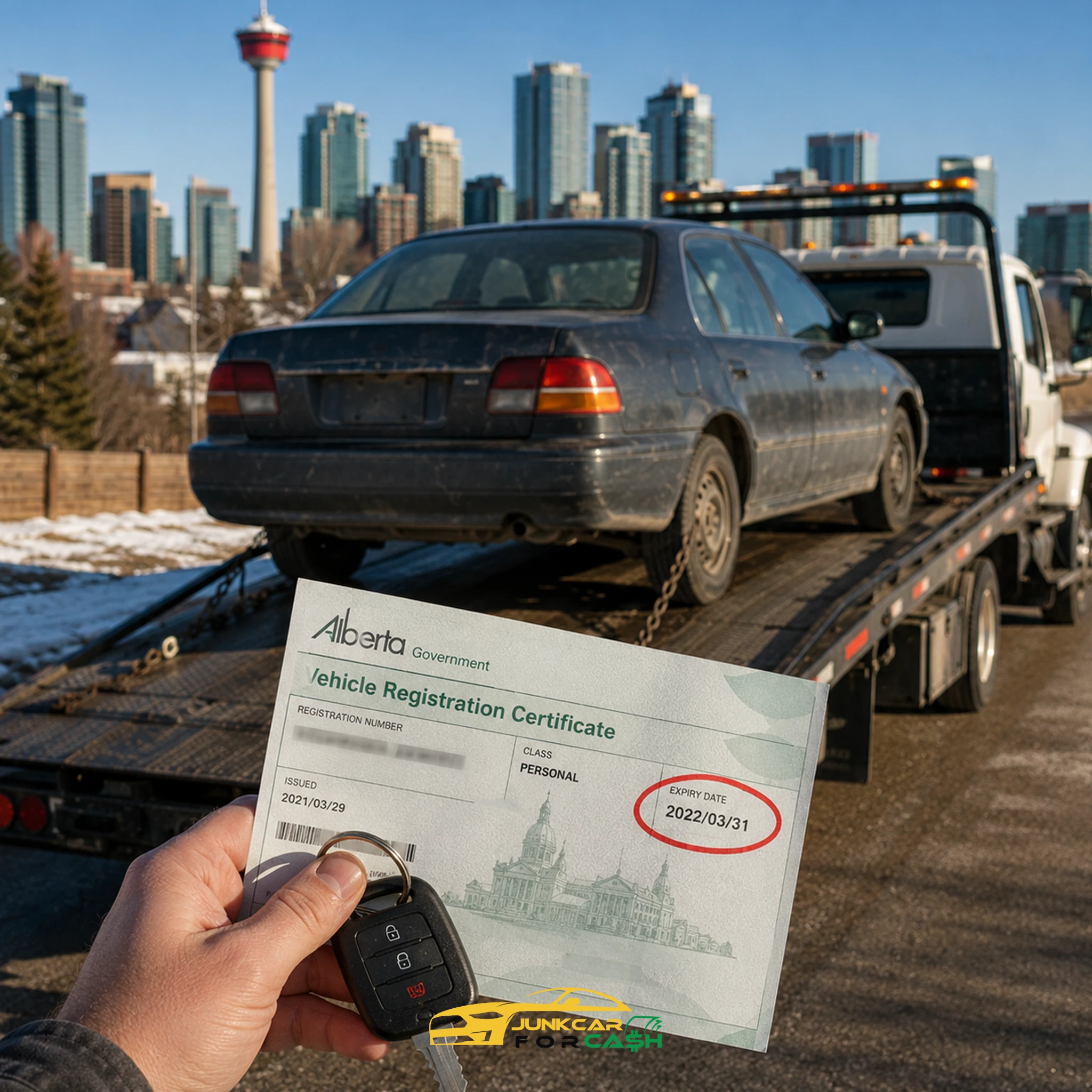
Whether the damage turned out to be minor or the engine needs a full rebuild, Junk Car For Cash buys vehicles in any condition, broken timing chain included, without requiring repairs first. We serve Calgary and Alberta communities across the province. Get a quote or email [email protected] for a free, no-obligation quote.
What Does It Mean If Your Timing Chain Is Broken?
The timing chain keeps your engine’s crankshaft and camshaft moving in perfect sync, which controls exactly when each valve opens and closes relative to the pistons. When it breaks while the engine is running, that synchronization is lost instantly, and what happens next depends entirely on your engine’s design.
- Read Also :
What Warning Signs Show Up Before a Chain Actually Breaks?
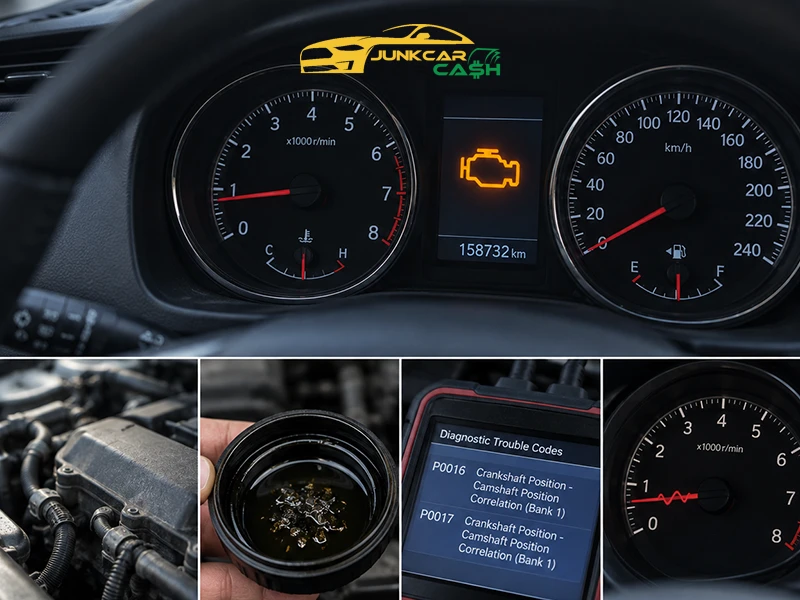
A worn or failing timing chain can produce warning signs, although some failures occur with little or no warning. A few signs worth taking seriously:
- A rattling or whirring noise from the engine, especially noticeable on startup, which often points to a stretched chain or a failing tensioner.
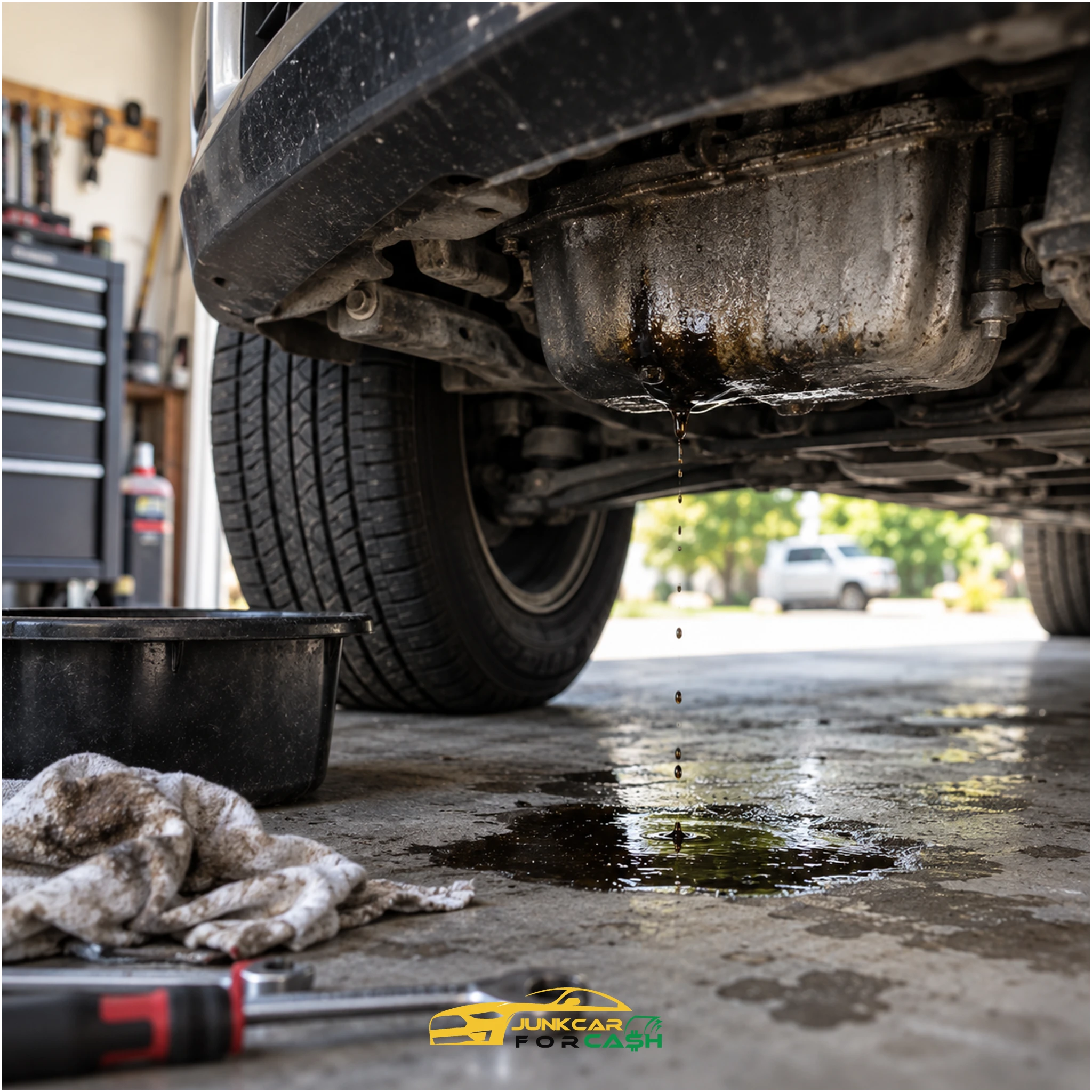
- Metallic debris in the oil or oil filter, which can indicate wear in the timing system or its components, sometimes only detectable through inspection rather than visible at a glance.
- A check engine light, particularly with camshaft or crankshaft correlation codes, which can point to a timing problem specifically rather than a generic engine fault.
- Engine misfires or rough idling, since a stretched chain throws valve timing slightly off even before it fully fails.
Catching any of these before the chain actually breaks is the difference between a bounded repair and the much larger bill that follows a full failure.
- Read Also :
Interference vs. Non-Interference Engines: Why This Matters More Than Anything Else
This is the single biggest factor in what a broken timing chain actually costs you.
Interference engines have valves and pistons that occupy the same physical space at different points in the engine’s cycle, timing is what keeps them from colliding. If the chain breaks in an interference engine, the pistons and valves crash into each other, bending valves, damaging pistons, and sometimes cracking the cylinder head. Most modern automotive engines use this design, since it allows for higher compression and more power from a smaller engine.
Non-interference engines have enough physical clearance that the valves and pistons don’t collide even when timing is lost. The engine simply stops running. This is a genuinely different situation, the chain and its related components still need replacing, but there’s no catastrophic secondary damage to pay for. These are increasingly rare on newer vehicles but still show up on some older economy engines.
How Do You Find Out Which Type Your Engine Is?
A mechanic can confirm this quickly, but a few starting points help:
- Check your vehicle’s specific engine code against manufacturer documentation or a parts lookup, which usually states interference status directly.
- Ask a shop to check during a diagnostic, since this is a quick lookup for anyone with access to service data.
- Don’t assume based on vehicle age alone. Interference and non-interference designs both exist across a wide range of years and manufacturers.
Most owners don’t know which type they have until a mechanic tells them, which is exactly why getting a proper diagnosis before assuming the worst, or assuming it’s a simple fix, matters so much here.
What Does a Timing Chain Replacement Actually Cost?
Real Canadian repair bills reported by vehicle owners show this varies enormously by vehicle. A basic chain-only job on a simpler engine can land in the low thousands, while a full timing job with guides, tensioner, sprockets, and water pump on a more complex engine commonly reaches $2,000 to $6,000 CAD or more, with premium European engines sometimes exceeding that.
| Scenario | Typical cost |
|---|---|
| Basic chain replacement, simpler engine (Canada) | Low thousands, varies by vehicle |
| Full timing job (chain, guides, tensioner, sprockets, sometimes water pump) | $2,000 to $6,000+ CAD, based on real Canadian repair bills |
| Broken chain, non-interference engine | Generally closer to the cost of a standard timing-system repair, assuming no other damage occurred |
| Broken chain, interference engine with confirmed damage | Cost rises substantially once valve, piston, or cylinder head damage is involved |
Even without a specific figure for interference-engine damage, the underlying mechanics are clear: valve and piston damage means parts and labor well beyond a standard timing job, and on a vehicle worth a few thousand dollars in good working condition, that gap alone is often enough to make repair impractical.
What Else Can Add to the Repair Bill?
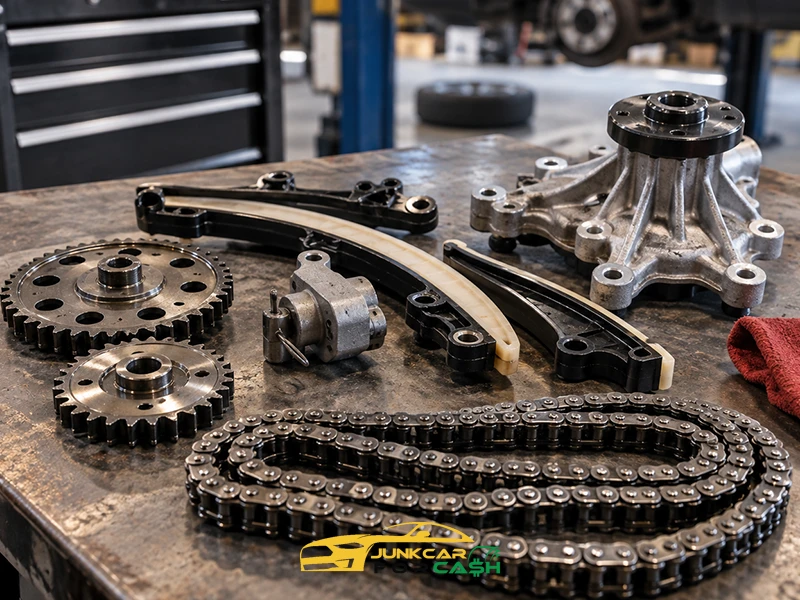
A timing chain job rarely involves just the chain itself:
- Tensioners and guides are typically replaced alongside the chain, since they wear at a similar rate and reusing old ones risks a repeat failure.
- The water pump is sometimes driven by the same timing system on certain engines, and many shops recommend replacing it during the same job since access is already open.
- Sprockets may need replacing if they show wear, adding to the parts total even on a straightforward job.
- Labor hours vary widely by engine layout, with some jobs taking under a day and others requiring extensive disassembly that spans several days at a shop.
Does It Make Sense to Repair a Broken Timing Chain Before Selling?
It depends on more than just interference status. Non-interference engines generally make the repair decision simpler, since catastrophic valve or piston damage is less likely, but the repair still needs to be compared against the vehicle’s actual value rather than assumed to be automatically worthwhile.
If it’s an interference engine with confirmed valve or piston damage, the repair cost frequently exceeds the vehicle’s total value, especially on older or lower-value vehicles. In that situation, spending money on the repair doesn’t get you a proportionally higher offer, it just delays the inevitable while adding a bill on top.
What Should You Do If You're Not Sure Which Engine You Have?
A mechanic can confirm interference versus non-interference design and assess actual damage, typically as part of a diagnostic visit. This is worth doing before committing to any repair quote, since the difference between the two scenarios is the entire decision. We see this constantly: an owner gets a repair quote assuming the worst, or assuming it’s a minor fix, without ever confirming which situation they’re actually in, and the number changes the whole conversation once that’s clarified.
Is a Car With a Broken Timing Chain Worth Anything?
Yes. Even a vehicle that won’t start still has real value in its remaining parts, its weight, and any components unaffected by the engine failure. A broken timing chain affects the engine specifically, it doesn’t erase the value of the transmission, body, electronics, or anything else still functional. This is exactly the kind of situation a direct buyer is built to handle, evaluating what’s actually there rather than requiring the vehicle to run first.
FAQs
Ready to Sell a Car With a Broken Timing Chain?
Whether the damage turned out to be minor or the engine needs a full rebuild, Junk Car For Cash buys vehicles in any condition, broken timing chain included, without requiring repairs first. We serve Calgary and Alberta communities across the province. Get a quote or email [email protected] for a free, no-obligation quote.
The Bottom Line
A broken timing chain isn’t automatically a total loss, but it isn’t automatically a simple fix either, the outcome depends almost entirely on whether your engine is an interference design. A non-interference engine keeps the repair question simpler, though still worth comparing against the vehicle’s value. An interference engine with confirmed valve or piston damage often means a repair bill that exceeds the vehicle’s actual value, particularly on an older or lower-value car. Getting a proper diagnosis before committing to any repair, or assuming the vehicle is worthless, is what actually determines the right decision. Either way, the vehicle still has real value even if the engine doesn’t run.
References
- Uchanics Auto Repair — Timing chain replacement cost and guide, Canadian pricing
https://uchanics.ca/timing-chain-replacement-cost-and-guide/ - AMVIC (Alberta Motor Vehicle Industry Council) — consumer guidance on buying and selling used vehicles
https://www.amvic.org/consumer/buying-a-vehicle/buying-used/ - RepairPal — Timing chain replacement process and interference vs. non-interference engine explanation
https://repairpal.com/estimator/timing-chain-replacement-cost