
Fixing it isn’t required before you sell, but it does change what you can expect from the offer, and how you handle it makes a real difference in both the price you get and how smoothly the transaction goes. Some leaks are a quick, cheap fix. Others involve tearing into the back of the engine and cost more than the car is worth. Treating every oil leak the same way, either ignoring it entirely or assuming it needs fixing before you can sell, leads to either a lowball surprise or money spent that never comes back. This guide covers what actually determines the cost of an oil leak repair, how it affects your car’s value, and when it makes sense to fix it versus sell as-is.
Can You Legally Sell a Car With an Oil Leak in Alberta?
Yes. Alberta doesn’t require a private seller to provide a Mechanical Fitness Assessment, the inspection document licensed dealers must give buyers, so there’s no legal barrier to selling a vehicle with a known oil leak. What matters is being upfront about it, an oil leak is exactly the kind of condition detail worth mentioning before a buyer commits, not something discovered after the sale.
What Determines How Much an Oil Leak Costs to Fix?
Location matters more than almost anything else. Oil leak repair costs are largely a labor story, the parts themselves are usually inexpensive, what varies is how many hours it takes to actually reach the leak.
| Leak source | Typical repair cost (Canada) |
|---|---|
| Valve cover gasket | $100 to $400 CAD |
| Oil pan gasket | $400 to $600 CAD |
| Front crankshaft seal | $300 to $600 CAD |
| Rear main seal | $400 to $1,200 CAD |
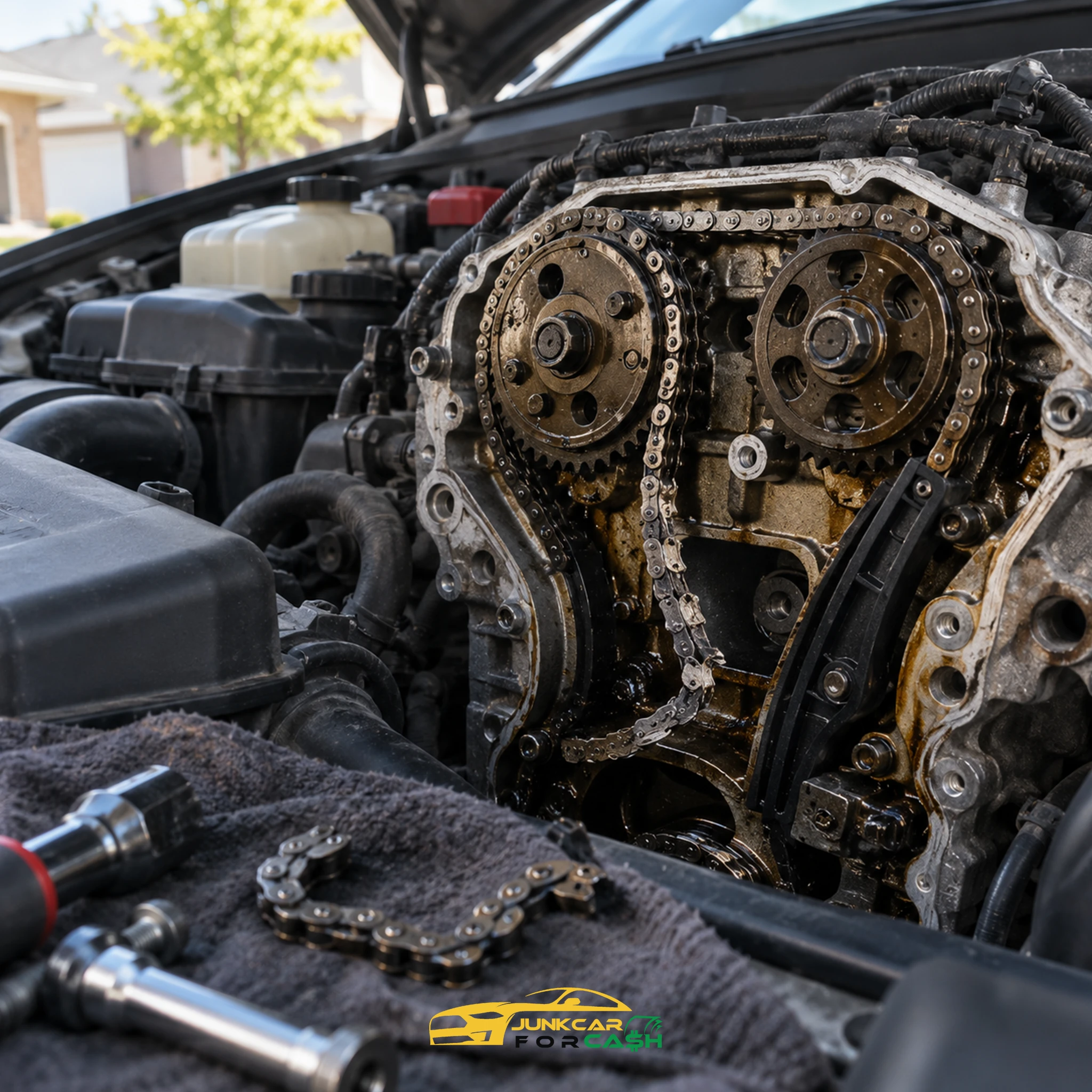
| Timing cover gasket | Varies substantially by vehicle and access |
| Head gasket failure involving oil/coolant leakage | Varies substantially by vehicle and extent of damage; several-thousand-dollar repairs are possible |
The pattern that matters most: a valve cover gasket sits at the top of the engine and typically takes an hour or two to access, while a rear main seal sits between the engine and transmission, often requiring significant drivetrain disassembly to reach. That difference in labor, not the part cost, is usually what separates a few-hundred-dollar fix from a much larger one.
How Do You Know Which Leak You Have?
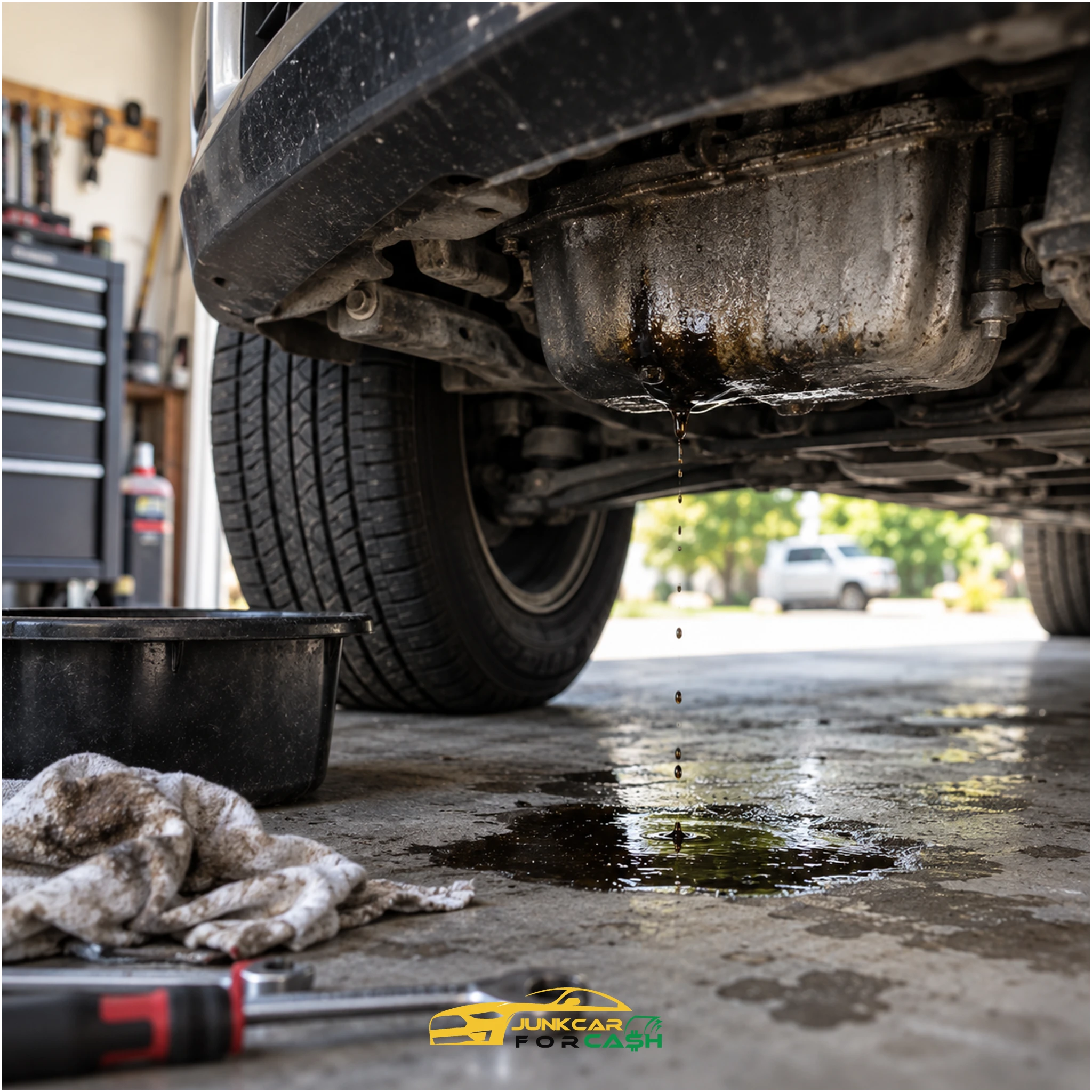
A mechanic’s diagnostic pinpoints the actual source before you commit to a repair estimate, and diagnostic charges vary by shop, vehicle, and whether the fee gets credited toward the eventual repair. Guessing based on where oil pools underneath the car is unreliable, since oil can travel along the engine and drip from a spot well away from where it’s actually leaking.
What Are the Warning Signs of a Serious Leak?
Not every oil leak needs urgent attention, but a few signs mean it shouldn’t wait:
- A burning oil smell, which suggests oil is contacting a hot engine component like the exhaust manifold.
- A growing puddle or a rapidly recurring drip after parking, especially paired with an oil level that’s noticeably dropping between checks.
- An oil pressure warning light, which can indicate inadequate lubrication and potential engine damage, and should be treated as urgent regardless of how the leak otherwise looks.
A slow, minor seep from a valve cover gasket that isn’t near the exhaust is something you can schedule around. The signs above generally aren’t.
- Read Also :
Does an Oil Leak Actually Lower a Car's Value?
Yes. A visible oil leak can reduce buyer confidence and lead to a lower offer, even when the underlying repair is relatively inexpensive, since it raises a broader question about what else on the vehicle might have been neglected. This is the same pattern that shows up with most single visible issues on an otherwise decent vehicle, the concern it raises in a buyer’s mind can affect the offer beyond the direct cost of repairing the leak.
Should You Attempt a DIY Repair Before Selling?
Sometimes, but only for the simplest leaks. A loose drain plug or an accessible valve cover gasket are within reach for someone comfortable with basic engine work, and a DIY fix can cost substantially less in parts than a professional repair. Anything involving the rear main seal, timing components, or head gasket should go to a shop, these repairs require pulling major components, and getting them wrong risks turning a moderate repair into engine damage. A common mistake even on simple jobs is over-tightening the oil drain plug, which can strip the threads and turn a simple service issue into a substantially more expensive repair.
Repair vs. Sell As-Is: What Actually Decides This?
The right call comes down to one comparison: what the repair costs against what fixing it would actually add to the sale price, not just whether the repair itself is affordable on its own.
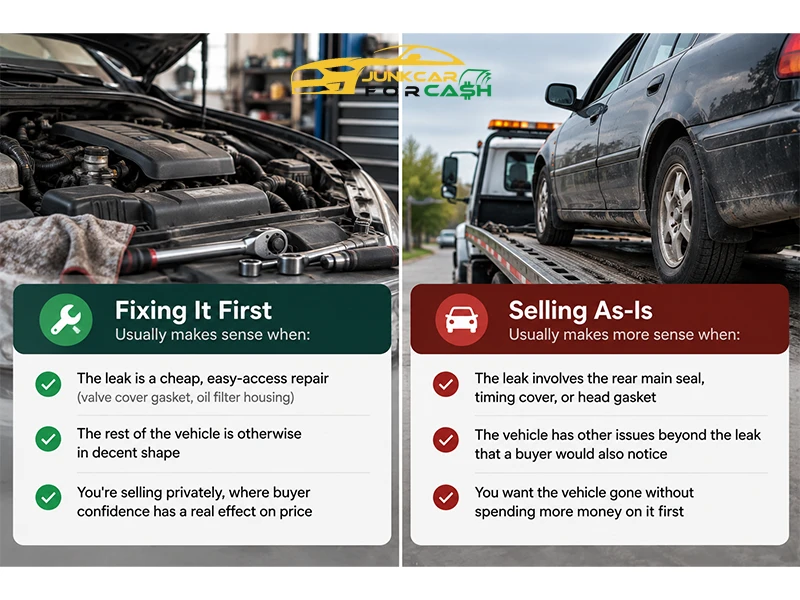
Fixing it first usually makes sense when:
- The leak is a cheap, easy-access repair (valve cover gasket, oil filter housing)
- The rest of the vehicle is otherwise in decent shape
- You’re selling privately, where buyer confidence has a real effect on price
Selling as-is usually makes more sense when:
- The leak involves the rear main seal, timing cover, or head gasket
- The vehicle has other issues beyond the leak that a buyer would also notice
- You want the vehicle gone without spending more money on it first
On a car that also needs other work, fixing an expensive leak rarely moves the price enough to justify the cost, since a buyer is still pricing in everything else regardless of how clean the engine looks. A rear main seal or head gasket repair on an older vehicle is worth comparing carefully against a realistic estimate of the car’s actual value before committing to it.
What Happens to the Oil and Fluids When a Vehicle Is Sold for Scrap?
This is worth knowing regardless of which direction you go. Alberta has run a regulated used oil recycling program since 1997, with the Alberta Recycling Management Authority assuming oversight in October 2018. Since the program began, more than 2.4 billion litres of used oil have been recycled province-wide. Environmental fees ranging from $0.06 to $1.25, applied when new lubricating oil, filters, and containers are purchased, fund this system. A responsible recycler or dismantler should drain and manage used fluids through appropriate recycling channels, which matters both environmentally and for keeping your property free of contamination from a vehicle that’s been leaking for a while.
FAQs
Ready to Sell a Car With an Oil Leak?
Whether the leak is a cheap valve cover fix or something more expensive like a rear main seal, Junk Car For Cash buys vehicles in any condition, oil leaks included, and follows proper fluid handling as part of the pickup. We serve Calgary and Alberta communities across the province. Get a quote or email [email protected] for a free, no-obligation quote.
The Bottom Line
Selling a car with an oil leak doesn’t prevent a sale, but it does affect what a buyer’s willing to pay and how much trust they put in the rest of the vehicle’s condition. Cheap, easy-access leaks are often worth fixing before a private sale, while expensive repairs like a rear main seal or head gasket may cost more than they add back in value, particularly on an older vehicle. Knowing which category your leak falls into, through an actual diagnostic rather than a guess, is what separates a smart repair decision from money spent for nothing. For a vehicle where the math doesn’t favor repair, selling as-is to a direct buyer who handles the fluids responsibly is usually the more practical path.
References
- Alberta Recycling Management Authority — Used Oil Materials Recycling Program, history and environmental fees
https://www.albertarecycling.ca/stewardship-recycling/used-oil/ - Government of Alberta — Regulated stewardship programs, used oil management
https://www.alberta.ca/regulated-stewardship-programs - AMVIC (Alberta Motor Vehicle Industry Council) — consumer guidance on buying and selling used vehicles
https://www.amvic.org/consumer/buying-a-vehicle/buying-used/