
Every junk car buyer in Alberta will tell you they pay the most. That claim is everywhere, and it’s almost always meaningless. The buyer who paid your neighbor $2,800 for a beat-up F-150 might offer you $400 for your old Civic, and both quotes could be completely fair. That’s because junk car pricing in Alberta isn’t about which company is most generous. It’s about which buyer’s business model matches what your specific vehicle still has to offer.
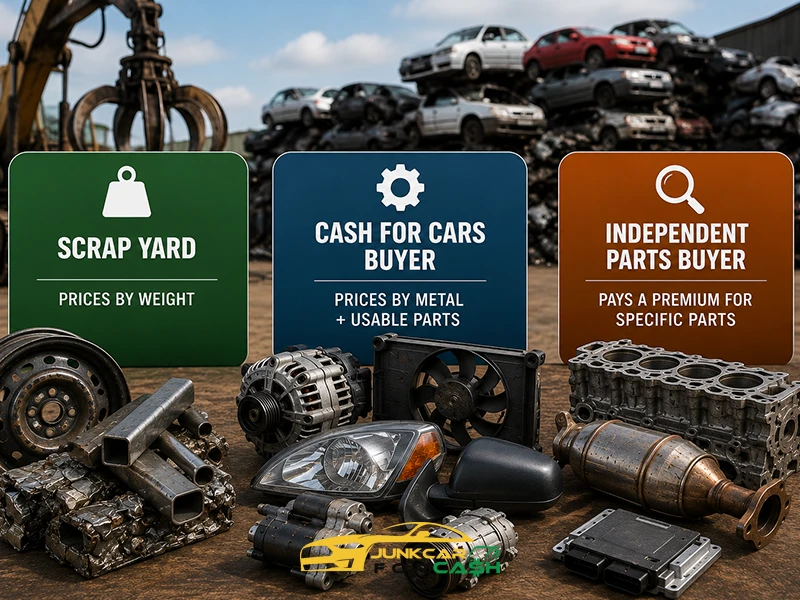
A scrap yard prices by weight. A cash for cars buyer also prices by parts. Neither is universally better. Once you understand that, the question shifts from “who pays the most?” to “who pays the most for my car?” That’s the question this guide actually answers, scenario by scenario.
Get a Quote on Your Junk Car in Alberta
If you’re ready to find out what your junk car is actually worth, Junk Car for Cash will give you a firm, honest number based on your vehicle’s specific condition. There are no hidden deductions, no bait-and-switch pricing, and no pressure to commit before you’re ready. Get a quote or email [email protected] to get your offer today.
There's No Single Buyer That Pays the Most for Every Junk Car in Alberta
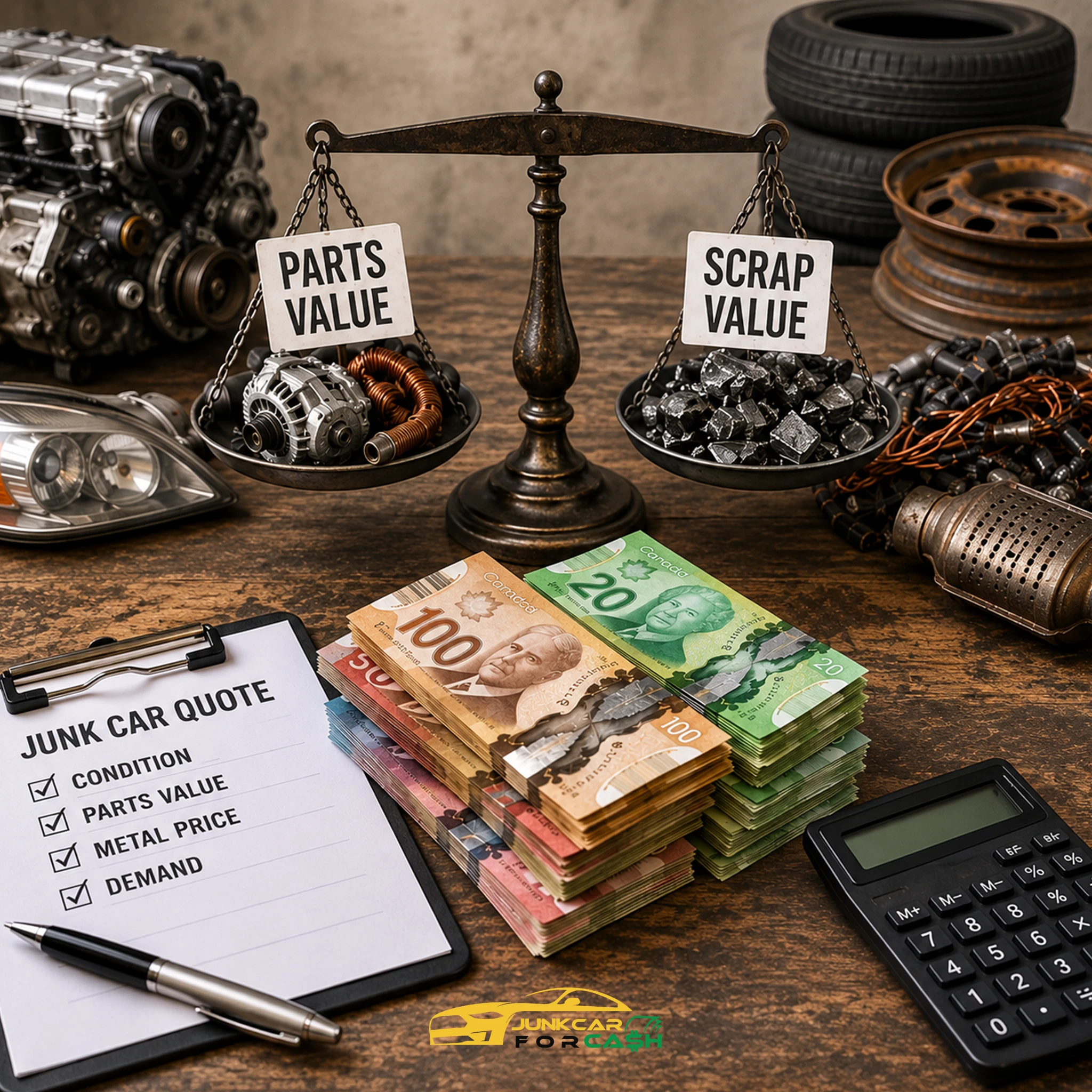
The payout on a junk car comes from two sources: the base metal value of the vehicle and the recoverable parts value. Different buyer types profit from these differently, which is why the same car can get wildly different quotes depending on who you call.
A scrap yard prices your car almost entirely on weight. They’re selling recycled steel and aluminum to mills. A cash for cars buyer looks at both metal value and what usable components can be recovered. An independent parts buyer wants one specific thing from your vehicle and will pay a premium for it if you happen to have it.
None of these buyers is universally the best. The right one depends on what your vehicle still has in it. The sections below match common junk car situations to the buyer type that typically pays the most for each one.
Who Pays the Most for Your Junk Car by Situation
The table below matches the most common junk car scenarios in Alberta to the buyer type that usually offers the strongest payout, and why.
| Your Situation | Who Typically Pays Most | Why |
|---|---|---|
| Running but mechanically worn | cash for cars buyer | Pays for parts value plus scrap; free tow included |
| Non-running with intact engine and drivetrain | cash for cars buyer | Drivetrain parts value offsets non-running status |
| Accident-damaged, engine untouched | cash for cars buyer | Mechanical components still recoverable |
| Stripped or heavily parted-out | Both can be equal | Weight-based pricing is the ceiling when parts are gone |
| Failed safety inspection | cash for cars buyer | Repair cost exceeds value; parts still recoverable |
| Sitting unused for years, major parts intact | cash for cars buyer | Scrap weight plus parts value still applies |
| Heavy truck or large SUV, any condition | cash for cars buyer | Higher metal weight and stronger parts demand |
| Completely crushed | Scrap yard | Metal weight is all that remains |
The pattern here is consistent. As long as major components are still attached and intact, a cash for cars buyer will almost always out-offer a scrap yard because they’re pricing more than just the steel. The exception is a vehicle that has nothing left to recover, at which point scrap weight is the ceiling no matter who you call.
Running but mechanically worn
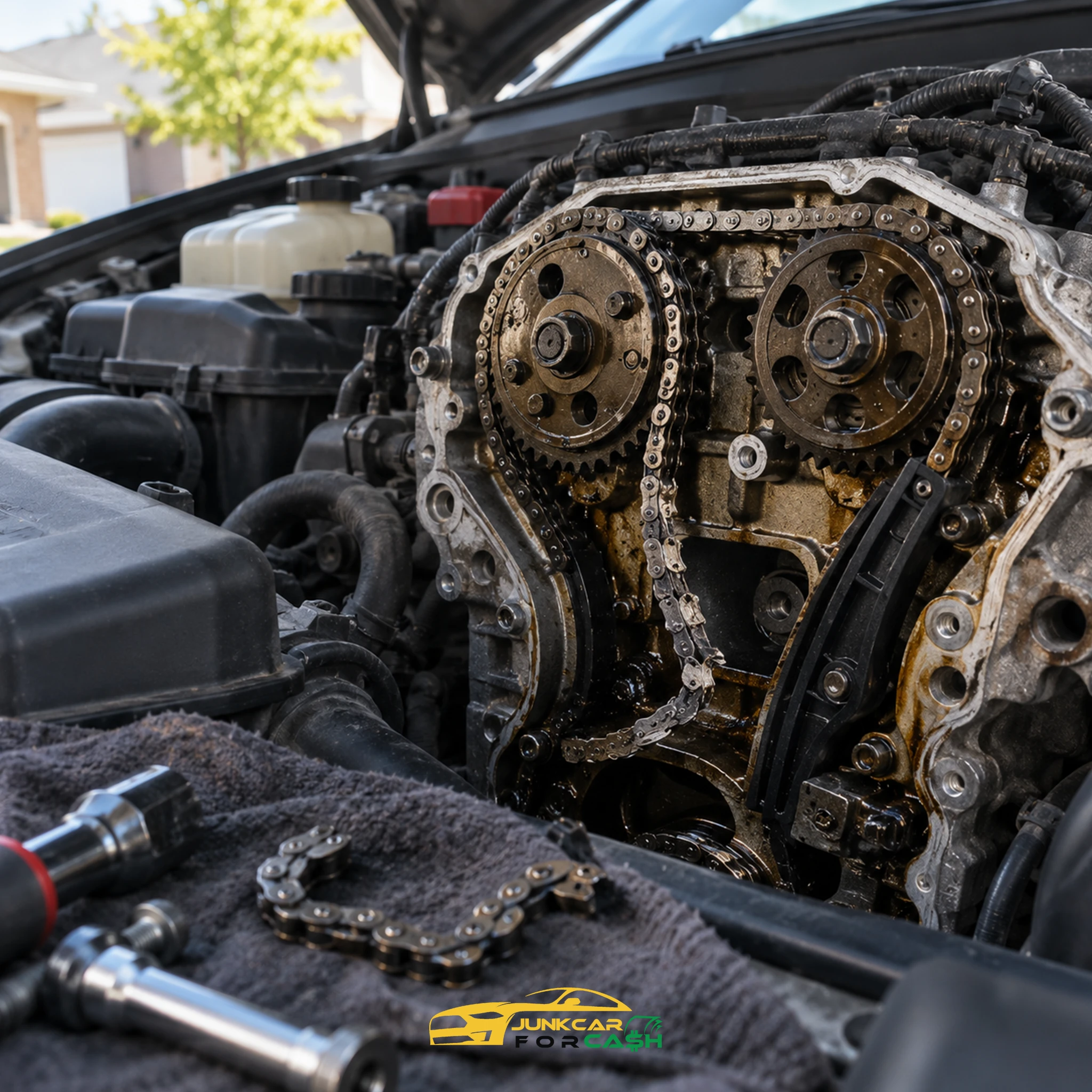
A car that drives but has a blown head gasket, worn transmission, or high kilometer engine is still worth significantly more than scrap weight to the right buyer. Body panels, suspension, electronics, and the catalytic converter all carry parts value. A cash for cars buyer factors all of this in. A scrap yard doesn’t.
Non-running with an intact drivetrain
Whether the car starts is less important than what’s still under the hood. A non-running vehicle with a solid engine and transmission will get a noticeably stronger offer than one with a seized or stripped powertrain. Buyers look past the dead battery or failed starter to what’s recoverable.
Accident-damaged with mechanical components untouched
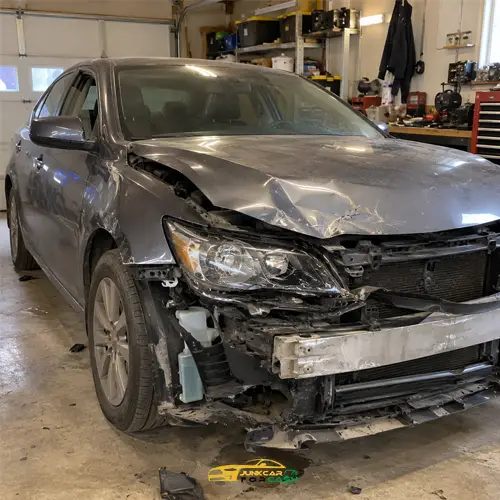
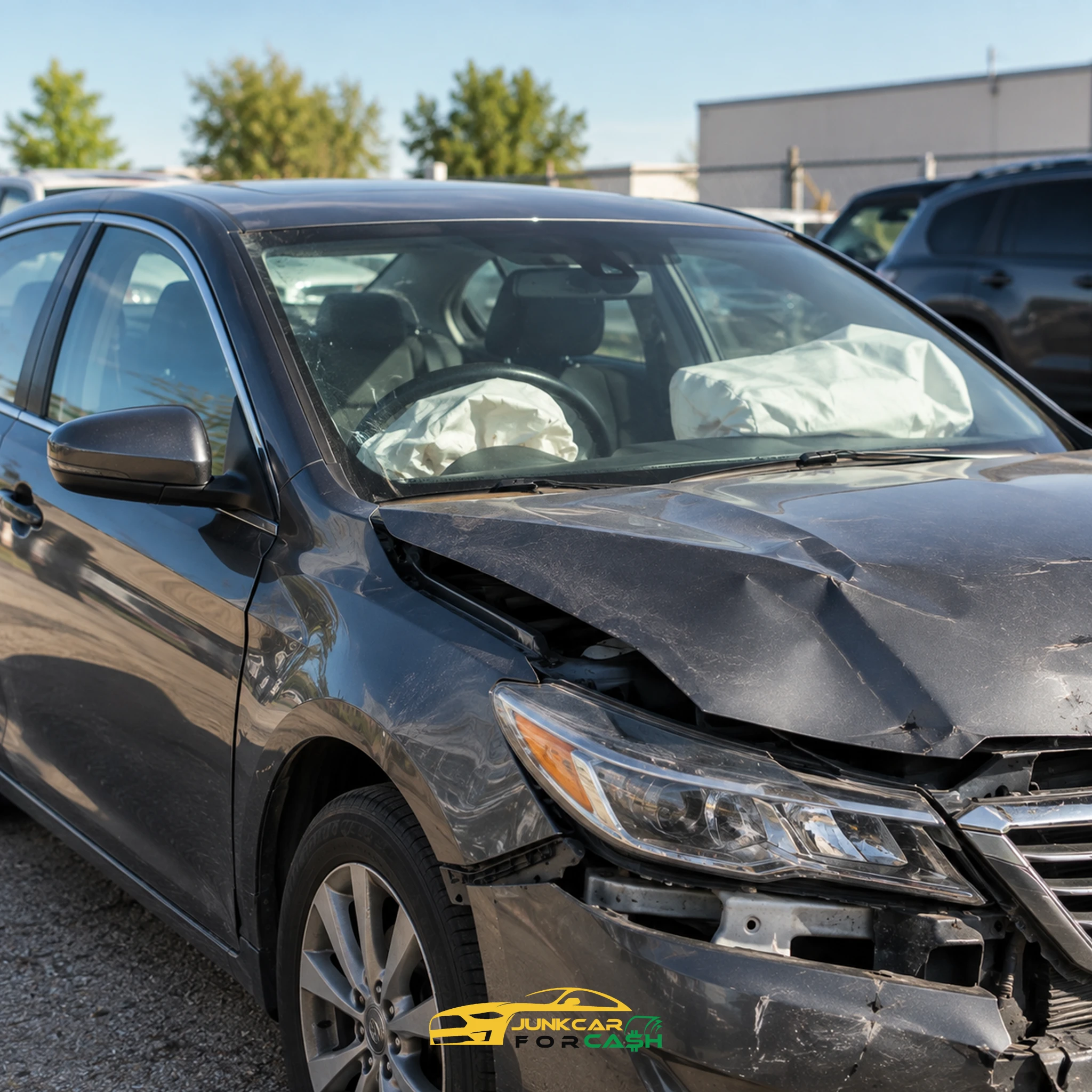
Front-end or rear-end collision damage often leaves the engine, transmission, and drivetrain completely intact. Those components drive most of the parts value in a cash for cars offer. If your vehicle was hit but the mechanical side is fine, you’re in a much stronger position than you might think.
Stripped or parted-out vehicles
If someone has already pulled the engine, catalytic converter, or other major components, the recoverable parts value is gone. At that point a scrap yard and a cash for cars buyer will offer similar numbers because both are pricing mainly on metal weight.
What Actually Determines Your Junk Car Payout in Alberta
Regardless of buyer type, these are the factors that move the number up or down on any junk car quote in Alberta.
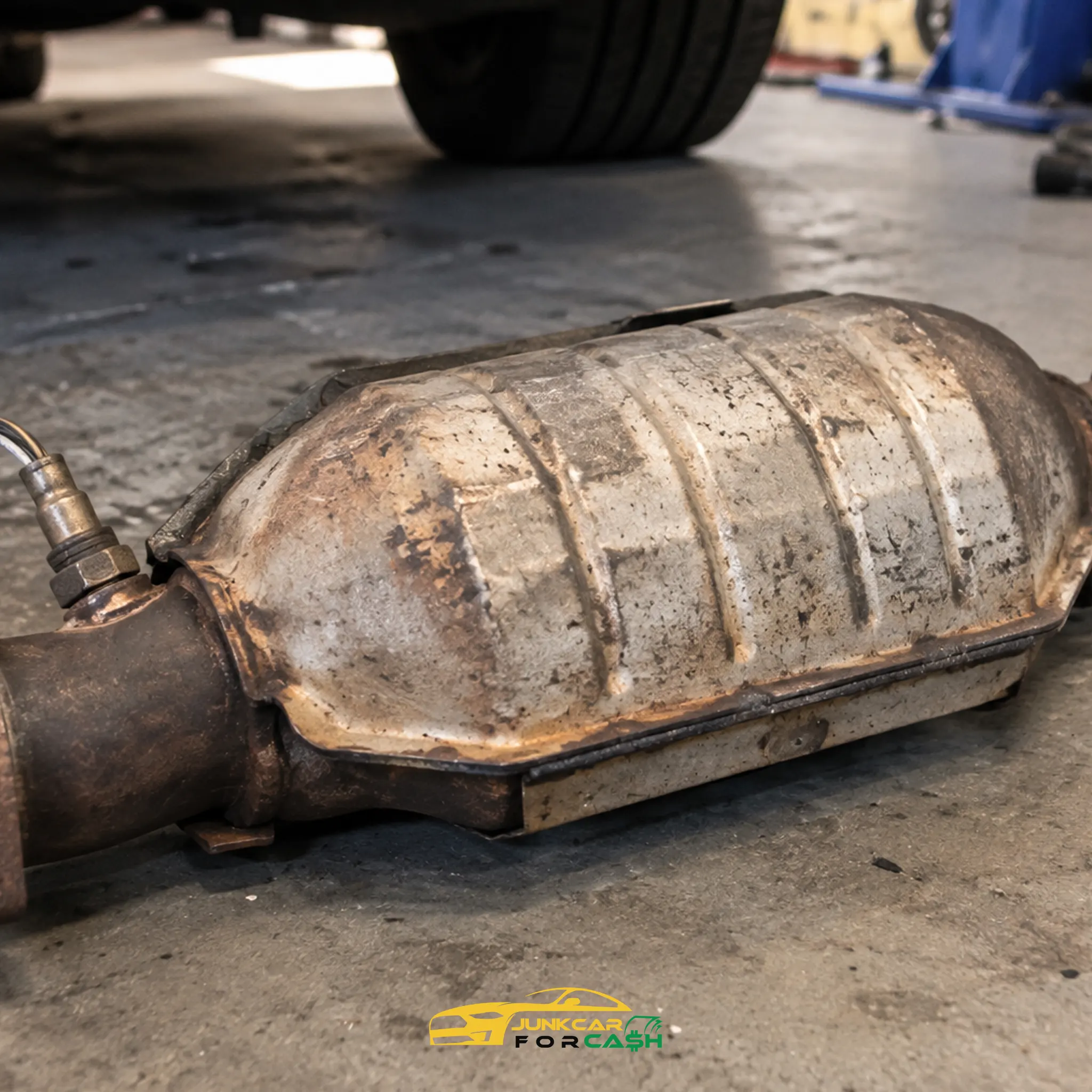
Catalytic converter. This is the single most impactful component for many vehicles. Catalytic converters contain platinum, palladium, and rhodium, precious metals with real market value. A missing converter can reduce your offer by $100 to $500 or more depending on the vehicle. Trucks and SUVs carry higher-value converters than compact cars.
Make and model demand. Vehicles with strong local parts demand in Alberta get stronger offers. F-150s, Dodge Rams, GMC Sierras, and popular Japanese models like the Corolla and Civic all have active parts buyers in the provincial market. A rare or unpopular model gets priced closer to scrap weight regardless of condition.
Overall completeness. A vehicle with all major components present, including the engine, transmission, catalytic converter, battery, radiator, and wheels, is worth more than one missing any of these. Each absent component reduces the offer.
Vehicle weight. Heavier vehicles carry more base metal value. A three-ton truck returns more in scrap metal than a 1.2-tonne hatchback regardless of condition.
Current scrap metal market. Steel prices shift monthly. A quote from six months ago may not reflect today’s rates. If you’re ready to sell, getting a current quote is more reliable than relying on an old figure.
- Read Also :
How to Spot a Junk Car Buyer Who Won't Honor Their Quote
Getting a strong quote means nothing if the buyer lowers it the moment the tow truck arrives. This happens regularly enough that it’s worth knowing the warning signs before you book.
Watch out for buyers who:
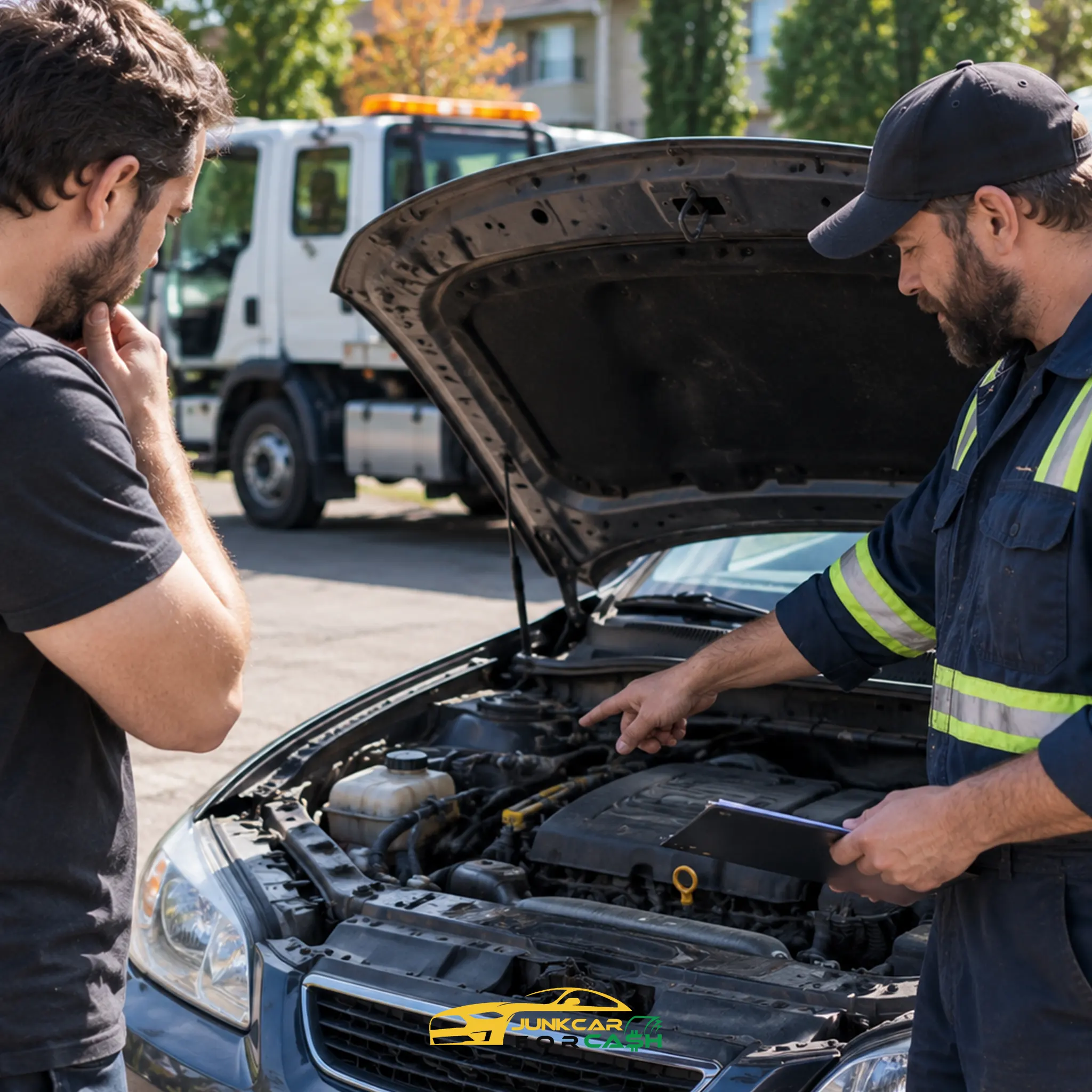
- Say they’ll give you a better number once they see the car in person. A legitimate buyer prices from the information you provide, not from what they can renegotiate at pickup.
- Want to pay you after the vehicle arrives at their yard. Your leverage disappears the moment the car leaves your property. Reputable buyers pay on pickup.
- Drop the offer at pickup with vague reasons about condition. A drop of more than 10 to 15 percent at pickup without a clear, specific explanation is a red flag.
- Have no verifiable reviews, no physical address, or Google reviews that are only a few months old.
- Pressure you to commit immediately. Legitimate buyers let their quotes stand for at least a few days.
Also worth knowing: as of September 1, 2025, all scrap metal dealers and recyclers in Alberta are required by law to report every transaction to a law enforcement database, including your name, government-issued ID, and vehicle details. Catalytic converter sales also require the VIN and proof of ownership to be recorded. Cash payments are no longer permitted for scrap metal transactions under the Scrap Metal Dealers and Recyclers Identification Act. Any buyer who offers to pay cash without recording your information is operating outside Alberta law.
What to Have Ready Before You Call for a Quote
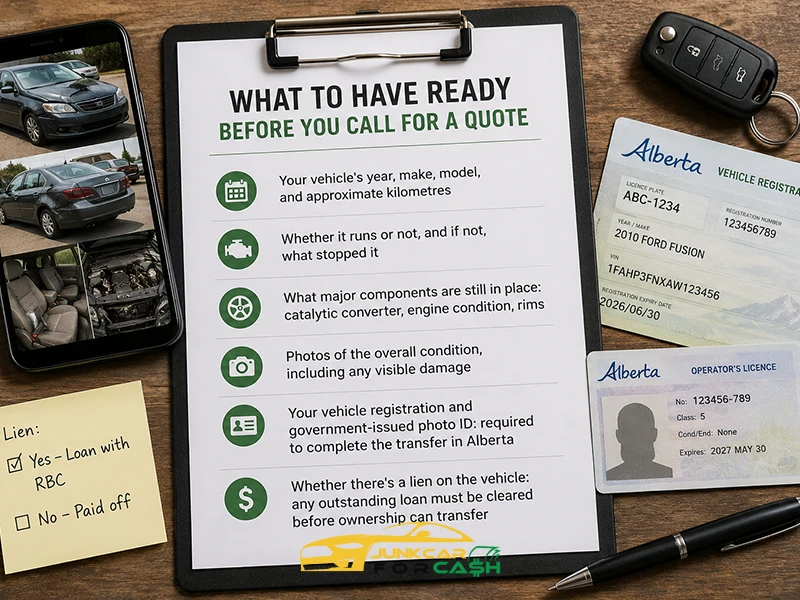
Getting your information together before you call leads to a more accurate first offer and reduces the chance of a last-minute adjustment at pickup.
- Your vehicle’s year, make, model, and approximate kilometers
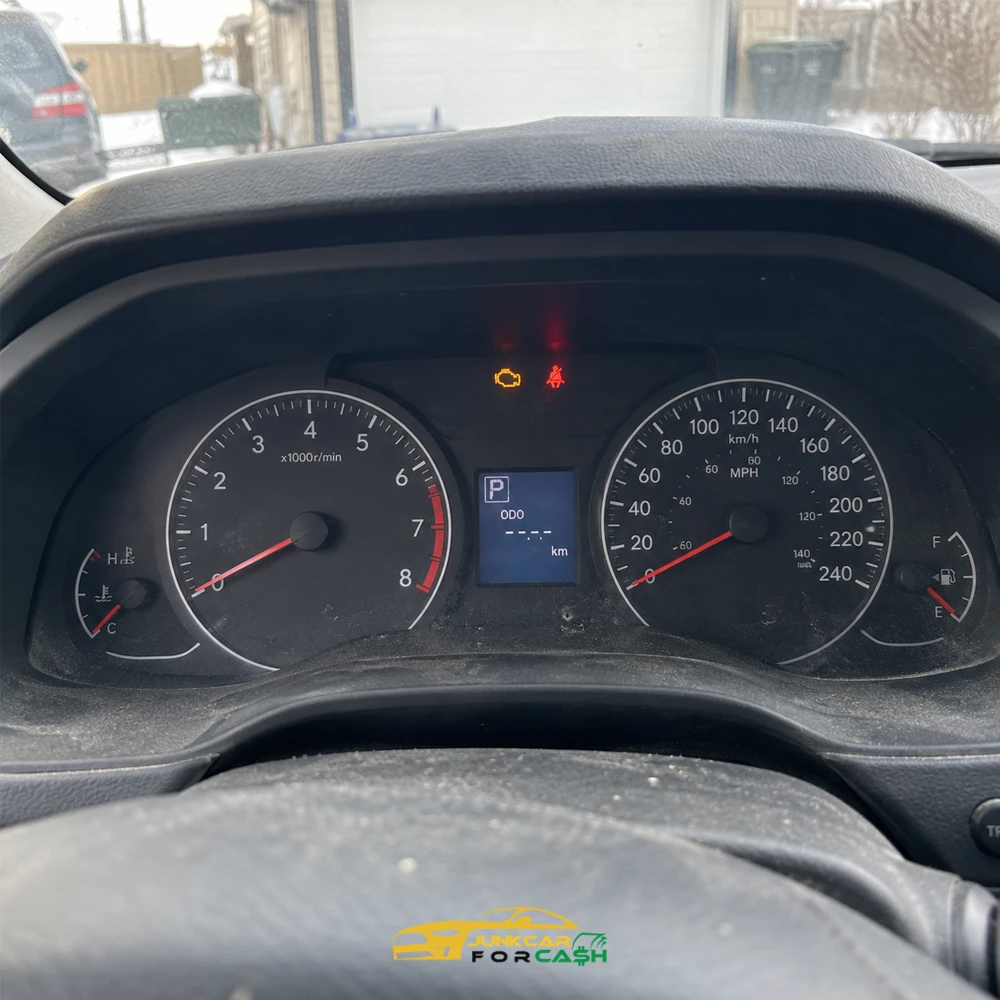
- Whether it runs or not, and if not, what stopped it
- What major components are still in place: catalytic converter, engine condition, rims
- Photos of the overall condition, including any visible damage
- Your vehicle registration and government-issued photo ID: required to complete the transfer in Alberta
- Whether there’s a lien on the vehicle: any outstanding loan must be cleared before ownership can transfer
Being accurate about what you’ve got leads to a quote that holds at pickup. Surprises in either direction almost always change the final number.
Frequently Asked Questions
Conclusion
The buyer who pays the most cash for junk cars in Alberta is the one whose business model best matches what your specific vehicle still has to offer. For most junk cars with major components intact, a cash for cars buyer will out-offer a scrap yard because they price both metal value and recoverable parts. The exception is a vehicle that’s been stripped or heavily damaged to the point where parts value is gone, at which point scrap weight becomes the ceiling regardless of who you call.
Before you call anyone, know what your vehicle still has in it. The catalytic converter, engine condition, make and model, and overall completeness all move the number significantly. Get at least two quotes from different buyers, compare the net payout after towing, and verify that the buyer pays on pickup rather than after transport. Those three steps consistently produce a better outcome than accepting the first number you hear.
References
- Government of Alberta. Scrap Metal Transactions. alberta.ca/scrap-metal-transactions. Published September 10, 2025. (Used for: Alberta reporting requirements for scrap metal transactions, prohibition on cash payments, September 2025 Scrap Metal Dealers and Recyclers Identification Act amendments, VIN and proof of ownership requirement for catalytic converter sales.)
- Government of Alberta. Scrap Metal Dealers and Recyclers Identification Act. open.alberta.ca/publications/s03p5. Last updated September 1, 2025. (Used for: legislative basis for scrap metal transaction reporting and seller identification requirements.)
- Government of Alberta. Transfer a Vehicle Registration. alberta.ca/transfer-vehicle-registration. Last updated July 8, 2026. (Used for: registration and ID requirements to complete vehicle ownership transfer in Alberta.)
- Government of Alberta. Personal Property Liens. alberta.ca/personal-property-liens. Accessed July 2026. (Used for: lien clearance requirement before ownership transfer.)
- AutoCatalystMarket. How Much is a Scrap Catalytic Converter Worth? autocatalystmarket.com/en/articles/how-much-is-a-scrap-catalytic-converter-worth. Published January 31, 2024. (Used for: catalytic converter precious metal content and value variation by vehicle type.)
- Recycling Today. Recycled Steel Prices Remain Afloat Amidst Latest Storms. recyclingtoday.com/article/recycled-steel-prices-remain-afloat-amidst-latest-storm. Published May 1, 2026. (Used for: scrap steel market conditions and monthly pricing variability in 2026.)
Get a Quote on Your Junk Car in Alberta
If you’re ready to find out what your junk car is actually worth, Junk Car for Cash will give you a firm, honest number based on your vehicle’s specific condition. There are no hidden deductions, no bait-and-switch pricing, and no pressure to commit before you’re ready. Get a quote or email [email protected] to get your offer today.