
A car with an active loan can absolutely be scrapped in Alberta, though the math rarely works in your favor the way people hope. Most owners picture scrapping a financed vehicle as a way to walk away with something in hand, only to find out the payoff amount is bigger than whatever the vehicle brings in. That gap catches a lot of people off guard partway through the process, sometimes after they’ve already made calls or scheduled a pickup. Knowing what to expect before you start avoids that mid-process surprise entirely.
This guide covers how the lien actually gets cleared, what changes depending on your loan or lease type, and the specific steps that keep the process from stalling out halfway through.
Ready to Scrap Your Financed Car Without the Hassle?
If your vehicle still has a loan on it and you’d rather not coordinate the lien payoff yourself, Junk Car For Cash serves Calgary and more than 40 Alberta communities and can work directly with your lender as part of the offer. Get a quote or email [email protected] for a straightforward, no-obligation quote.
Can You Legally Scrap a Car That Still Has a Lien on It?
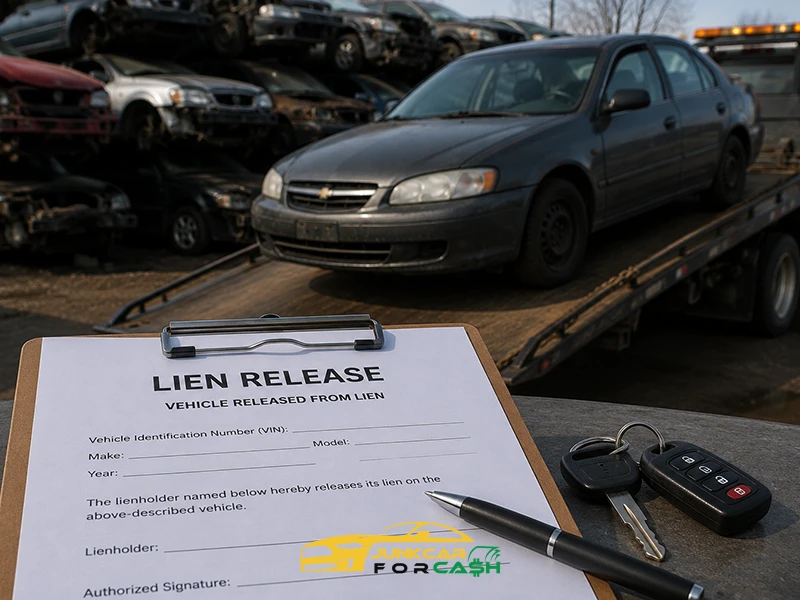
Not without clearing the lien first. In Alberta, a car loan is registered as a lien through the Personal Property Registry, which means the lender has a legal claim on the vehicle until the balance is paid off, regardless of what happens to it physically. That registration has to be discharged before the vehicle can legally change hands, and scrapping counts as a change of hands even though there’s no new driving owner on the other end.
This trips people up because scrapping feels different from selling. There’s no buyer negotiating a price, no test drive, no registration transfer to a new driver, so it’s easy to assume the usual rules don’t apply. They do. Since a scrapped vehicle isn’t being re-registered to anyone, some lenders will specifically want written confirmation that it’s headed for scrap rather than resale, since that affects what exactly they’re releasing their claim against. A quick call to your lender before arranging pickup avoids any confusion on their end later, and it’s usually a five-minute conversation once you have your loan number handy.
Does the Type of Finance Agreement Change the Process?
It does, and this is where a lot of people get tripped up, because “financed” doesn’t mean the same thing in every situation.
- Standard loan. You own the vehicle outright, subject to the lender’s registered lien. This is the situation the rest of this guide covers, and it’s the most common one people are dealing with when they’re ready to scrap an older car.
- Lease. You don’t own the vehicle at all, the leasing company does, so scrapping it isn’t really a decision you can make on your own. According to AMVIC, ending a lease early is usually extremely costly, and the leasing company can require payment of the full remaining lease value before they’ll release the vehicle for disposal. If your leased vehicle isn’t worth fixing anymore, you need to go through the leasing company directly rather than following the steps in this guide, since they’re the legal owner and the ones who ultimately decide what happens to it.
- Balloon or deferred-payment financing. Worth flagging separately, since these agreements often carry a large final payment near the end of the term. If that payment is still outstanding, the payoff amount can be unusually high relative to how old or beat-up the car actually is, which makes negative equity even more likely than with a standard loan.
Does It Matter If the Car Still Runs or Is Already Totaled?
Yes, and it changes which part of this guide actually applies to your situation, so it’s worth figuring out which category you’re in before reading further.
Still running, but not worth fixing. This is the standard case. You’re the one initiating the scrap sale, deciding when to call, and coordinating the payoff yourself. The steps later in this guide apply directly to this scenario.
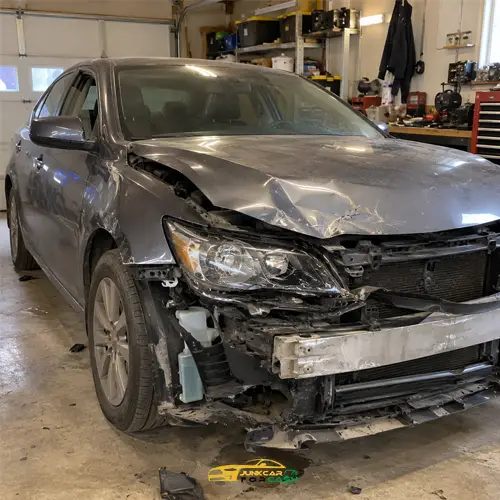
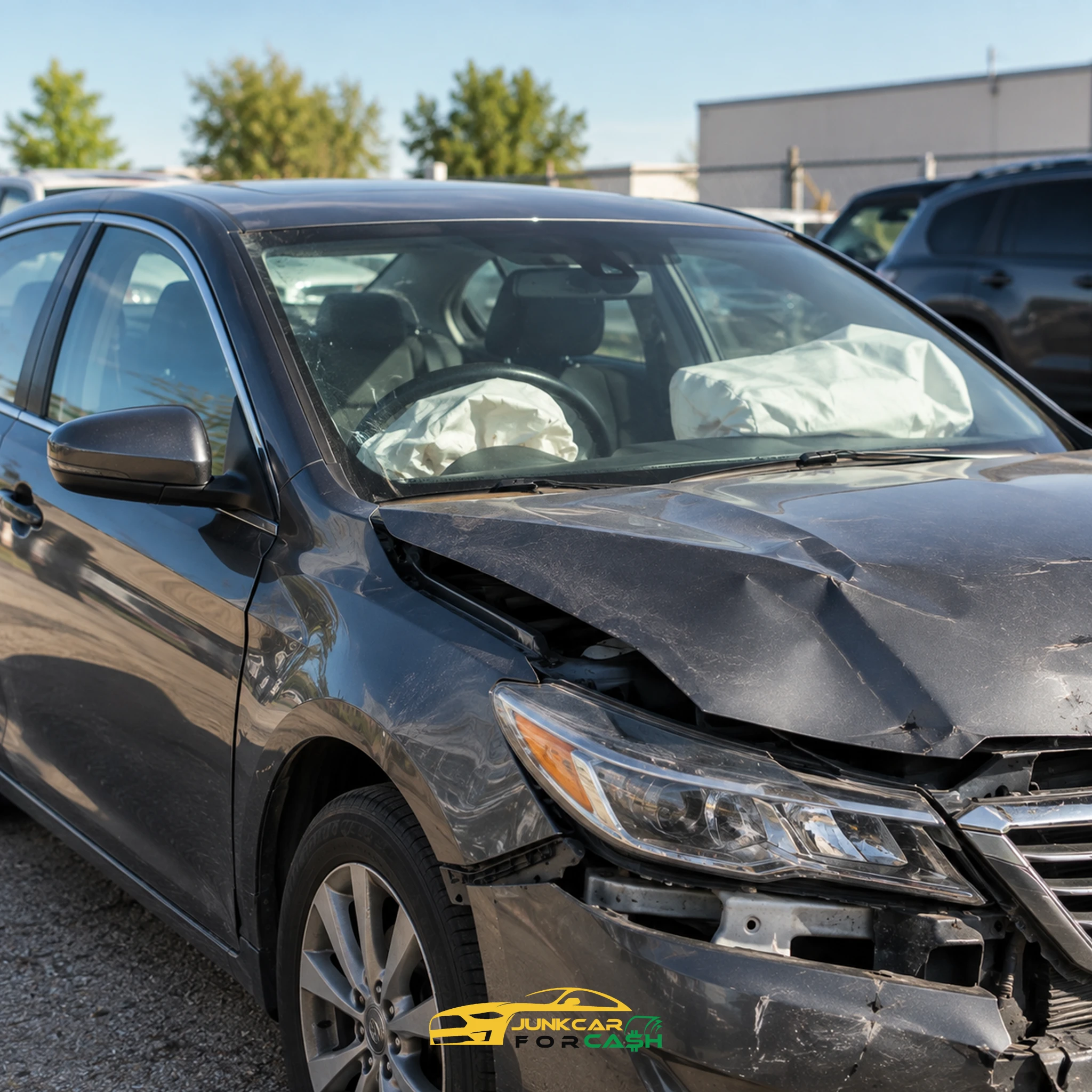
Already declared a total loss by insurance. This changes the order of operations significantly. Instead of you contacting a scrap buyer, the insurance payout is usually what goes toward the lien first, handled largely between your insurer and your lender. If you’re in this situation, the section on insurance write-offs below matters more than the step-by-step process that follows it.
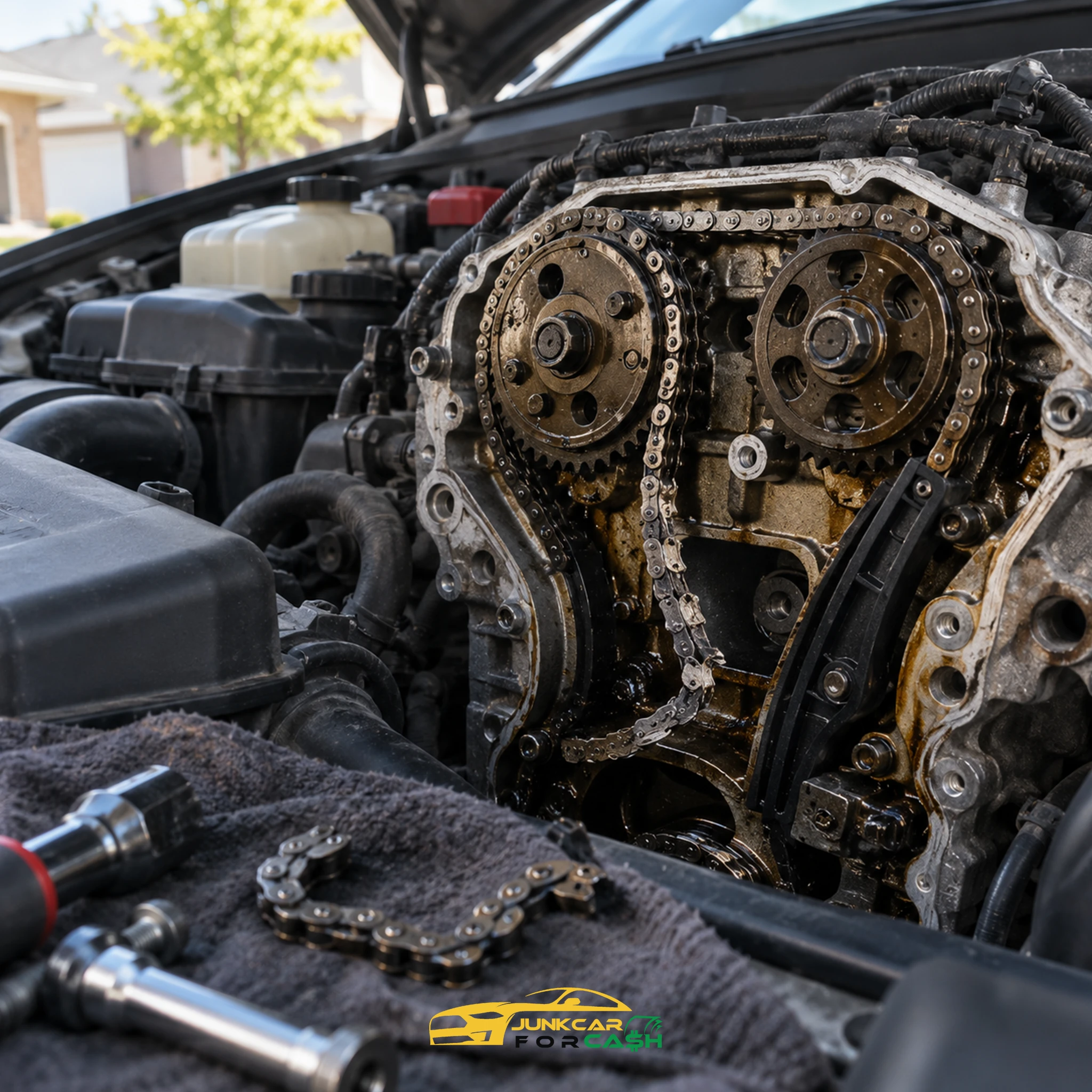
Non-running for other reasons. Mechanical failure, sitting unused for years, or general wear all fall into this category, and they still follow the standard steps. The main difference is that scrap value tends to be lower in these cases, which usually means a larger gap between what the car is worth and what’s still owed on it.
- Read Also :
Why Scrap Value Almost Never Covers Outstanding Finance
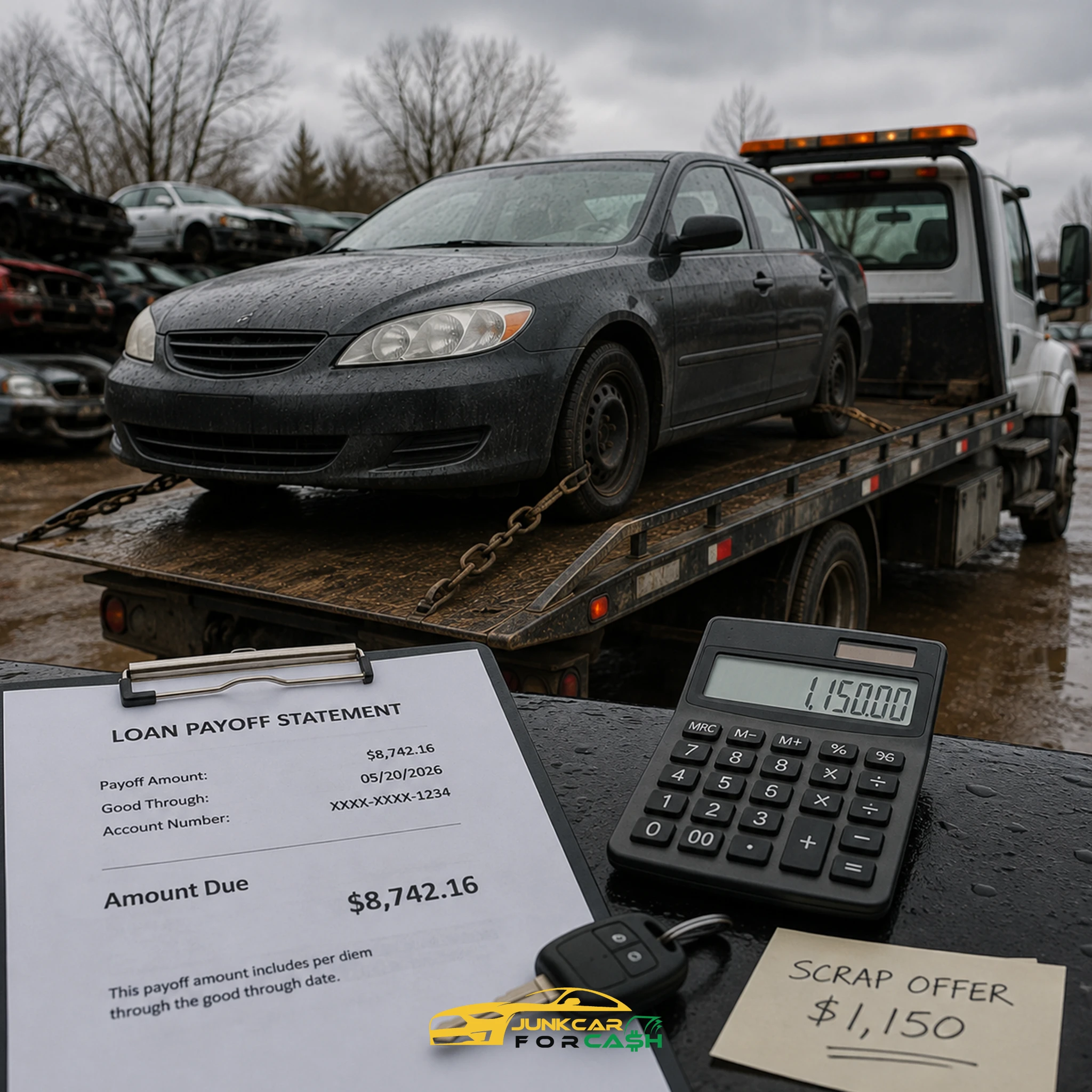
Scrap and recycling value is based on metal weight and any parts still worth salvaging, not on what you originally paid for the vehicle or what you still owe on it. A car that’s reached the point of being scrapped has typically already lost most of its market value over years of depreciation, while a loan balance doesn’t shrink any faster just because the vehicle itself is falling apart. Those two numbers move independently of each other, and by the time a car is scrap-worthy, they’re usually far apart.
This is why negative equity is the norm in this scenario rather than the exception. In a general used-car sale, there’s a reasonable chance the vehicle is still worth more than the payoff amount, especially if it’s only a few years old. That’s rarely true of a car that’s being scrapped. Going in with that expectation upfront, rather than hoping for a payout, makes the rest of the process much less stressful and helps you plan for the gap instead of being surprised by it.
What If the Car Was Already Written Off by Insurance?
Alberta insurers typically declare a vehicle a total loss when repair costs approach 70 to 80 percent of its value. Once that happens, the insurer pays out based on the car’s actual cash value, calculated from its condition, mileage, and market comparables before the damage occurred. Your lender is first in line to receive that payout toward the loan balance, ahead of you receiving anything.
If the settlement doesn’t fully cover what’s owed, you’re responsible for the remaining amount, unless you have gap coverage. It’s worth knowing there are two different versions of this. True gap insurance covers the entire shortfall between your loan balance and the payout. A more limited version, sometimes sold as loan or lease payoff coverage, typically caps out around 25% of the vehicle’s value, which may not close the whole gap. In Alberta, gap coverage typically costs $400 to $700 as a one-time premium, or $20 to $40 a year through your insurer. Lease agreements sometimes include it automatically, but not always, so it’s worth checking your specific policy rather than assuming either way.
Steps to Take Before You Scrap a Financed Car
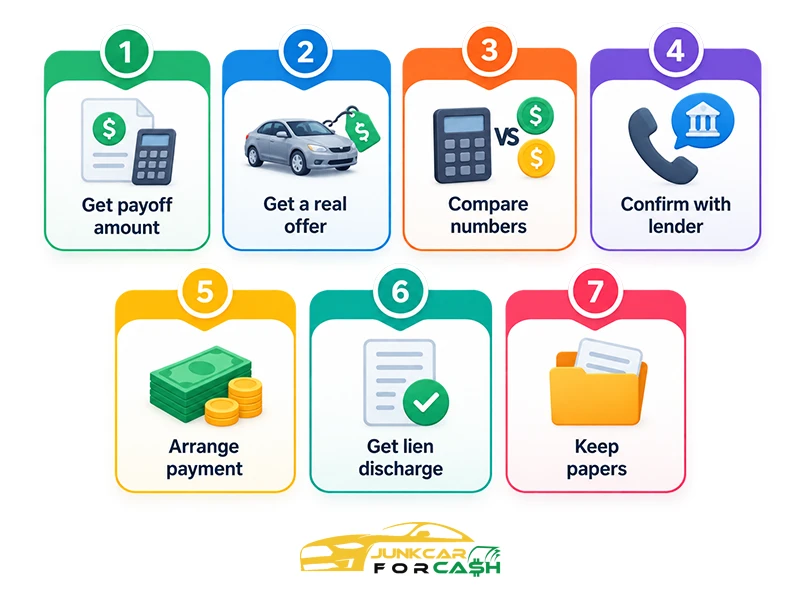
Once you know which situation applies to you, financed and running, or already written off, the actual process comes down to a handful of steps done in the right order:
- Get your exact payoff amount from your lender. Not your remaining balance, the actual payoff figure, since it can include accrued interest and fees that a simple balance check won’t show.
- Get a real scrap or cash offer for the vehicle. Based on its actual weight, condition, and any usable parts, not a rough guess pulled from an online estimate.
- Compare the two numbers. This tells you upfront how large the gap is, if there is one, before you commit to anything or start making arrangements.
- Confirm with your lender that scrapping is acceptable. Some lenders want written notice the vehicle is being scrapped rather than resold, since it changes what they’re releasing the lien against.
- Arrange payment for any shortfall. Either upfront or through an agreed plan with your lender, depending on what they’ll accept and what you can manage.
- Get lien discharge confirmation before the vehicle is picked up. Don’t let the vehicle leave your property until the lien is actually cleared, not just promised.
- Keep your paperwork. Payoff confirmation, lien discharge, and the scrap transaction record, in case anything about the vehicle’s status comes up later, whether that’s a registry question or a dispute with the lender.
Following these in order matters more than it might seem. Skipping straight to arranging pickup before confirming your payoff amount, for example, often means finding out about a shortfall at the worst possible moment, when the buyer is already there and expecting the transaction to close.

What Happens to the Loan If You Can't Cover the Shortfall Immediately?
This is the situation that stalls people the most, and it’s more common than people expect once they see the actual numbers side by side. If the scrap value or insurance payout doesn’t cover what you owe and you can’t cover the gap right away, you generally have two options: keep making payments on the remaining balance until it’s paid down on its normal schedule, or negotiate directly with your lender about a revised payment arrangement that reflects the car no longer being in your possession.
Neither is pleasant, but both are far more manageable than assuming the loan disappears along with the car, since it doesn’t. Lenders deal with this situation regularly and usually have a process for it, so it’s worth asking directly rather than guessing at your options.
Does It Matter Who You Scrap It With?
Yes, more than people expect. Some scrap buyers won’t touch a vehicle with an active lien at all, since it adds a layer of complication they’d rather avoid, which leaves the coordination entirely on you to sort out before they’ll even make an offer.
A direct buyer who’s willing to handle the lien payoff as part of the transaction removes a lot of that hassle. Instead of you calling the lender, getting a payoff quote, arranging payment, and then separately arranging the scrap sale, a buyer who handles this directly confirms the payoff amount with your lender and factors it into the offer as one coordinated process. That’s a meaningful difference in how much running around falls on you, especially if you’re already dealing with a vehicle that’s inconvenient to have sitting around in the first place.
- Read Also :
FAQs
The Bottom Line
Scrapping a car with outstanding finance is completely doable in Alberta, but it’s worth going in with realistic expectations. The lien has to be cleared through the Personal Property Registry regardless of how the vehicle is being disposed of, scrap value rarely covers what’s still owed, and leased vehicles follow a different process entirely since you don’t own the car outright. Getting your exact payoff amount and a real scrap offer before you commit to anything tells you exactly where you stand, whether that’s a small gap to cover or a straightforward payoff. Either way, don’t let the vehicle go until the lien discharge is actually confirmed.
References
- Government of Alberta – Personal property liens, registration and search
https://www.alberta.ca/personal-property-liens - Government of Alberta – Find a personal property registration
https://www.alberta.ca/find-personal-property-registration - AMVIC (Alberta Motor Vehicle Industry Council) – Leasing a vehicle, early termination and lease obligations
https://www.amvic.org/consumer/leasing-a-vehicle/ - AMVIC – consumer guidance on buying and selling used vehicles
https://www.amvic.org/consumer/buying-a-vehicle/buying-used/ - Aaxel Insurance – What gap insurance covers in Alberta
https://www.aaxel.ca/faq/what-does-gap-insurance-cover-in-alberta/
Ready to Scrap Your Financed Car Without the Hassle?
If your vehicle still has a loan on it and you’d rather not coordinate the lien payoff yourself, Junk Car For Cash serves Calgary and more than 40 Alberta communities and can work directly with your lender as part of the offer. Get a quote or email [email protected] for a straightforward, no-obligation quote.