
Top dollar for a junk car comes down to four things you can actually check yourself: how much the metal weighs, whether the parts are still worth something, what kind of shape the car is in, and whether it runs. Most people assume every junk car offer lands in roughly the same ballpark, so they take whatever number they hear first without knowing if it’s any good. That’s an easy way to leave money on the table, because two buyers can look at the exact same vehicle and land on wildly different offers.
Once you know what actually moves the price, you’re in a much better spot to tell a fair offer from a lazy one. Here’s what really drives the number, and how to make sure yours reflects it.
Ready to Get a Fair Offer on Your Junk Car?
If you’d rather know what your car is actually worth before committing to anything, Junk Car For Cash serves Calgary and more than 40 Alberta communities, and looks at your vehicle’s real weight, condition, and parts value, not just a flat number. Offers typically range from $100 to $10,000 depending on the vehicle. Get a quote or email [email protected] for a straightforward, no-obligation offer.
What Actually Determines a Junk Car's Value?
There’s no single chart that spits out your car’s worth. It’s really a handful of things stacked on top of each other:
- Vehicle weight and size. Larger, heavier vehicles carry more scrap metal, so full-size trucks and SUVs consistently outearn compact sedans, even in similar condition.
- Running condition. A car that starts and drives is almost always worth more than one that won’t move, since it has more resale paths open to it.
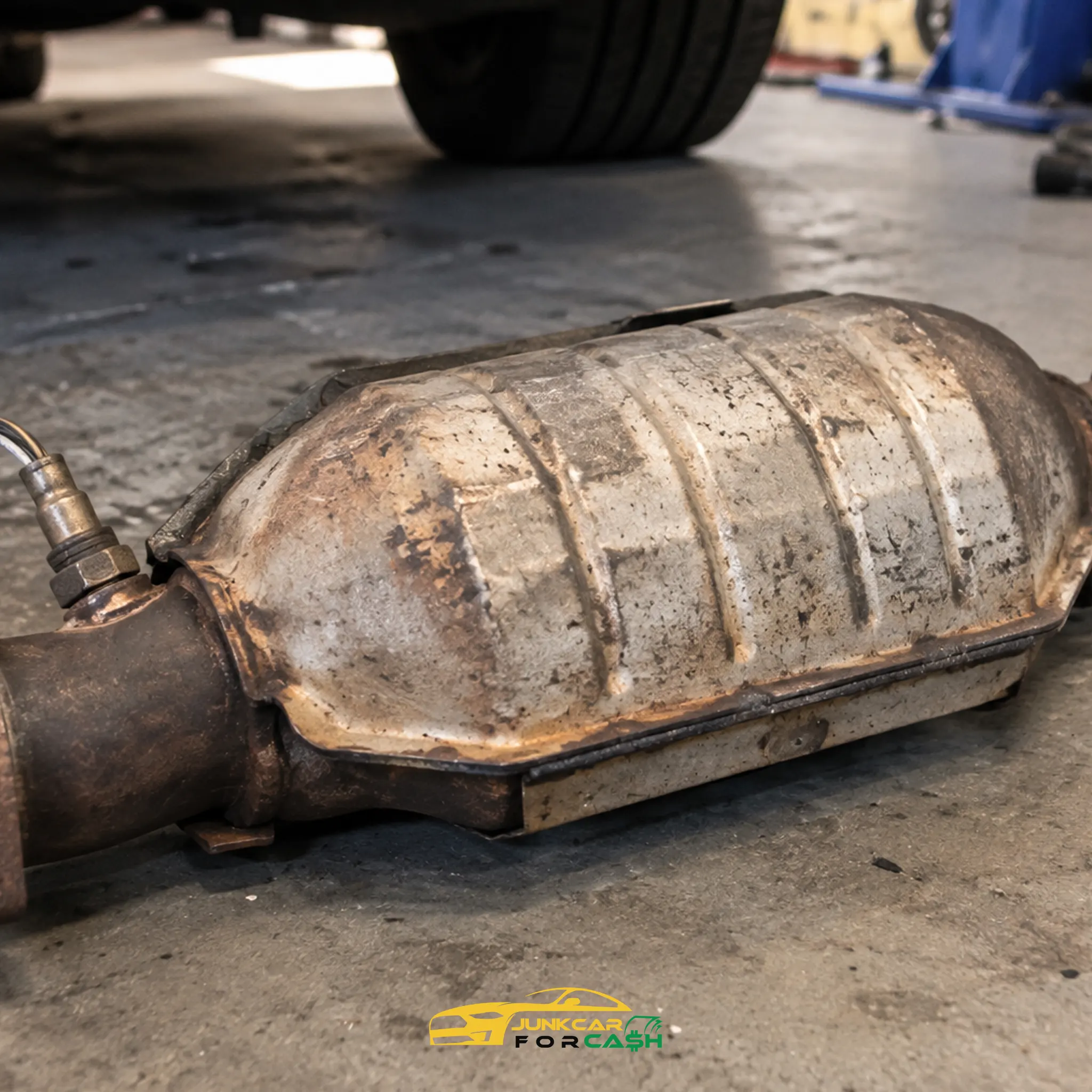
- Parts demand. A working catalytic converter, battery, or alternator adds real money on top of the scrap price, assuming they’re intact.
- Make and model. Some vehicles are just more sought-after for parts than others, regardless of how beat up they look.
Once you understand these four, you stop just hoping the first offer is decent and start actually knowing.
- Read Also :
How Much Is a Junk Car Worth in Alberta Right Now?
Offers in Calgary and across Alberta generally fall between $100 and $10,000, and where yours lands depends almost entirely on condition and size:
| Vehicle condition | Typical cash range |
|---|---|
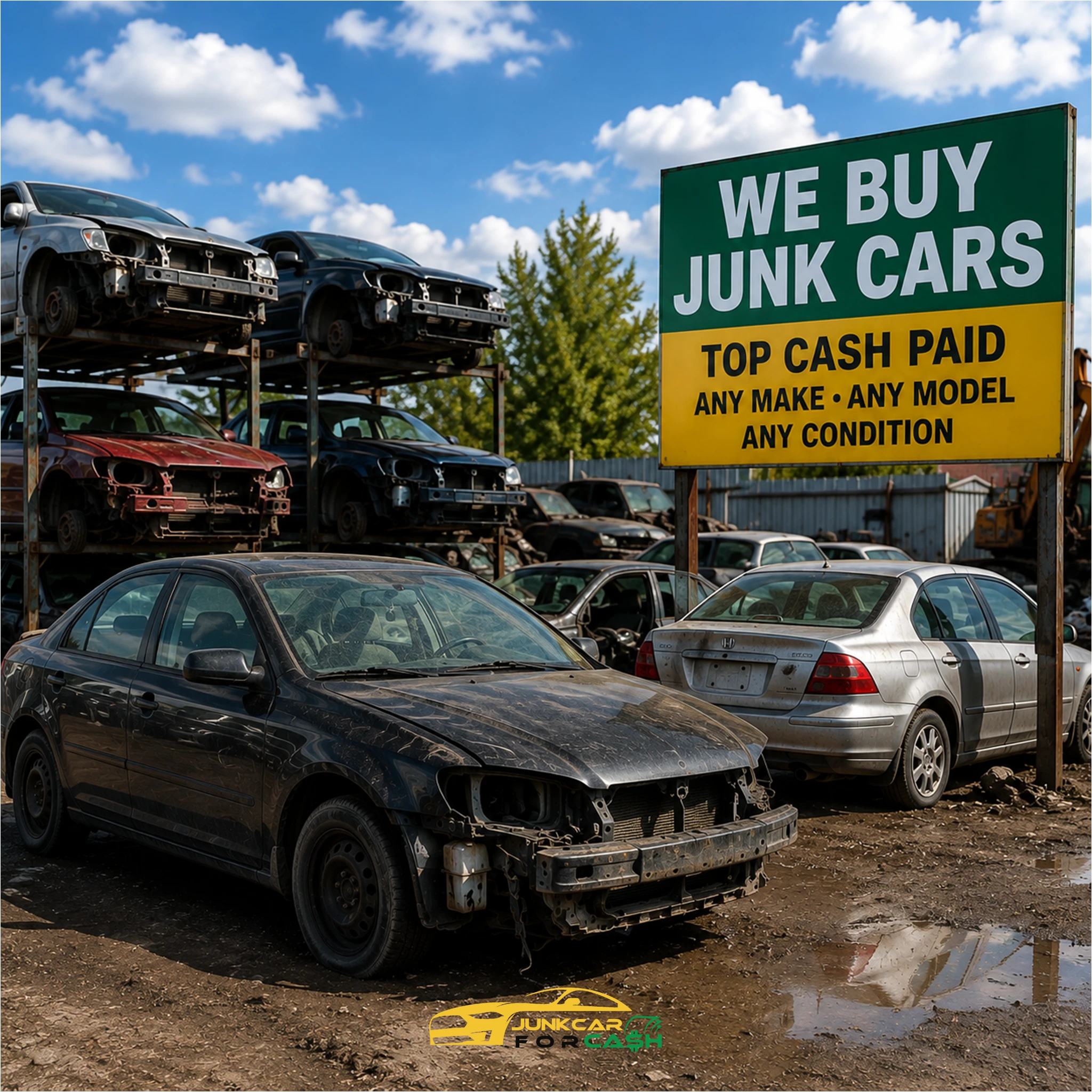
| Older scrap vehicle, parts value only | $100 to $500 |
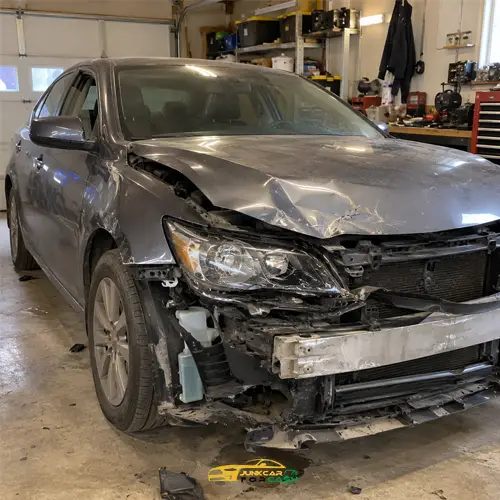
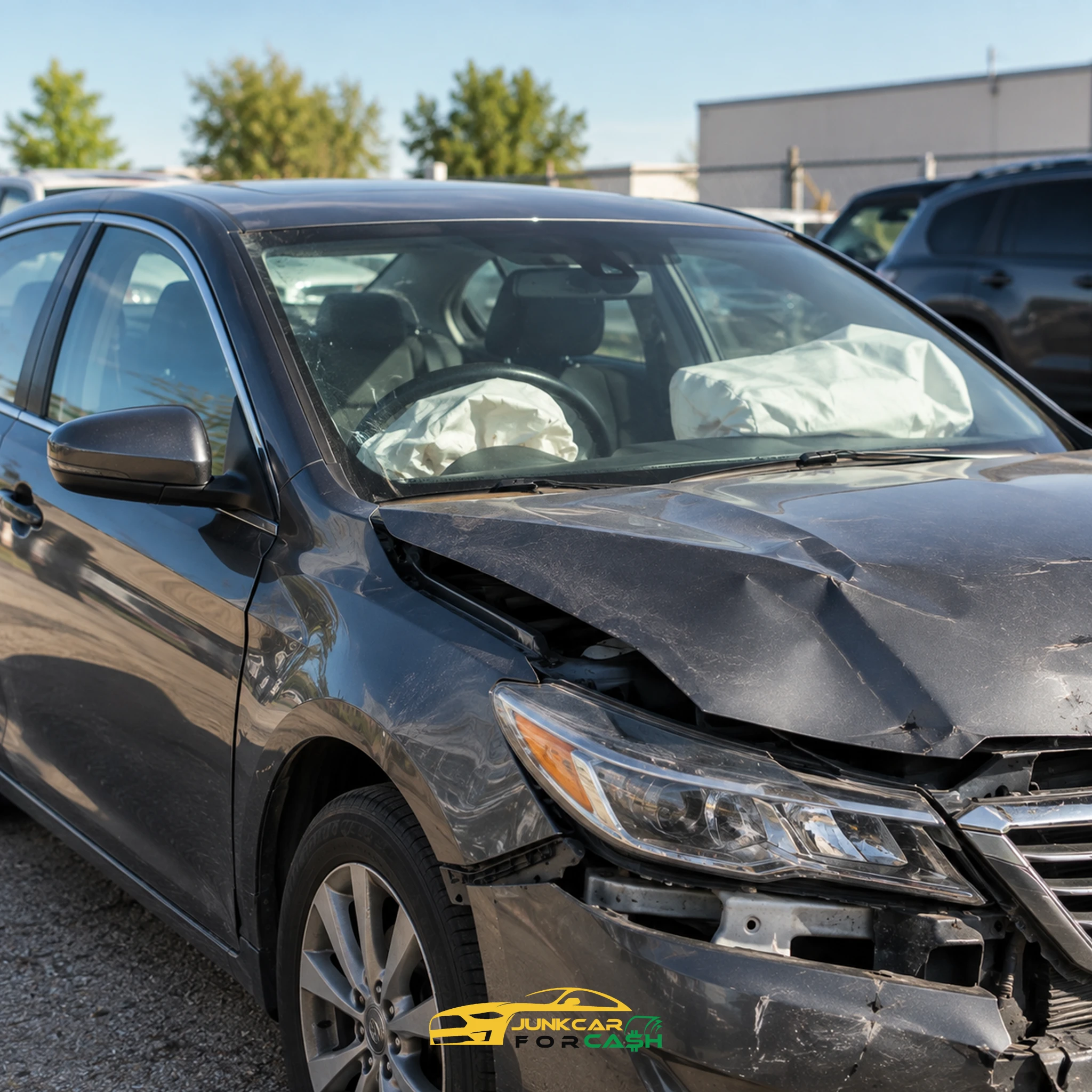
| Accident or storm damaged | $200 to $1,200 |
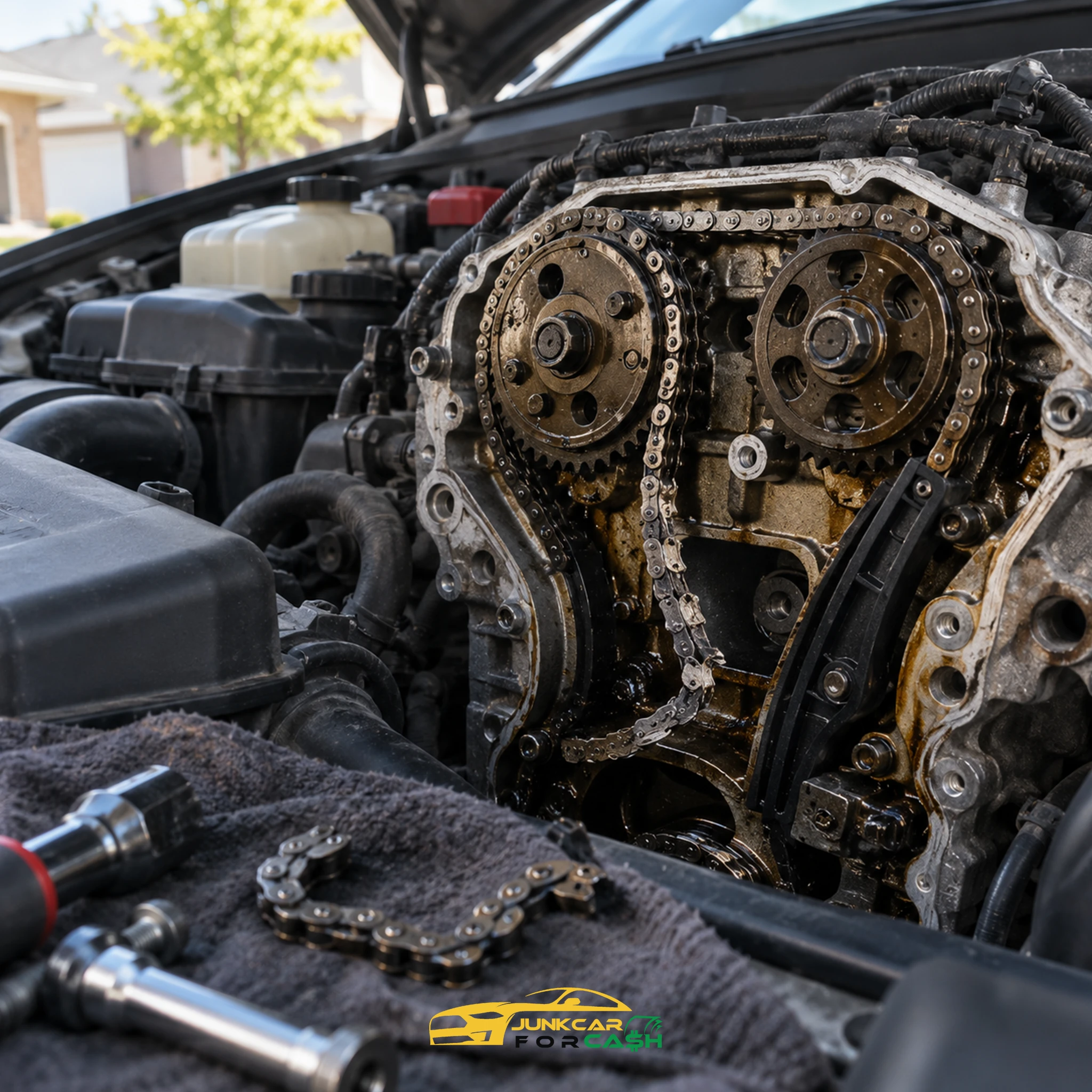
| Non-running, mechanical issues | $300 to $1,500 |
| Running, drivable vehicle | $500 to $3,000+ |
| Larger or newer vehicle (trucks, SUVs) | Up to $10,000 |
That’s a wide spread, and it’s wide for a reason. A stripped-out sedan and a running, low-mileage truck are both “junk cars” in the sense that neither is headed for a normal private sale, but they’re nowhere close in value. Figuring out which bucket your car actually falls into before you start making calls saves you from either overestimating or getting talked into a lowball number.
Do Trucks and SUVs Really Pay More Than Cars?
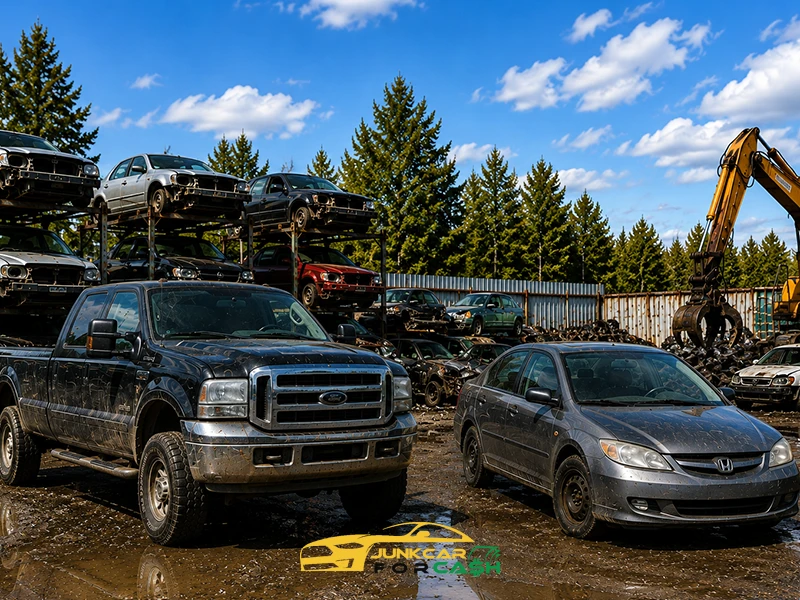
Usually, yes, and by a meaningful margin. Weight is the biggest reason. A full-size truck or SUV simply carries more scrap steel than a compact sedan, so even in similar condition, it starts from a higher scrap-value floor before parts are factored in. Trucks also tend to have higher demand for specific components, larger engines, transfer cases, 4×4 systems, all of which stay in demand longer than equivalent car parts. That’s why a beat-up truck can sometimes out-earn a running sedan. If you’re deciding between two vehicles to sell, or wondering whether it’s worth holding onto a truck a little longer, size and weight alone put it ahead of a similarly conditioned car in almost every case.
Running vs. Non-Running: How Much Difference Does It Actually Make?
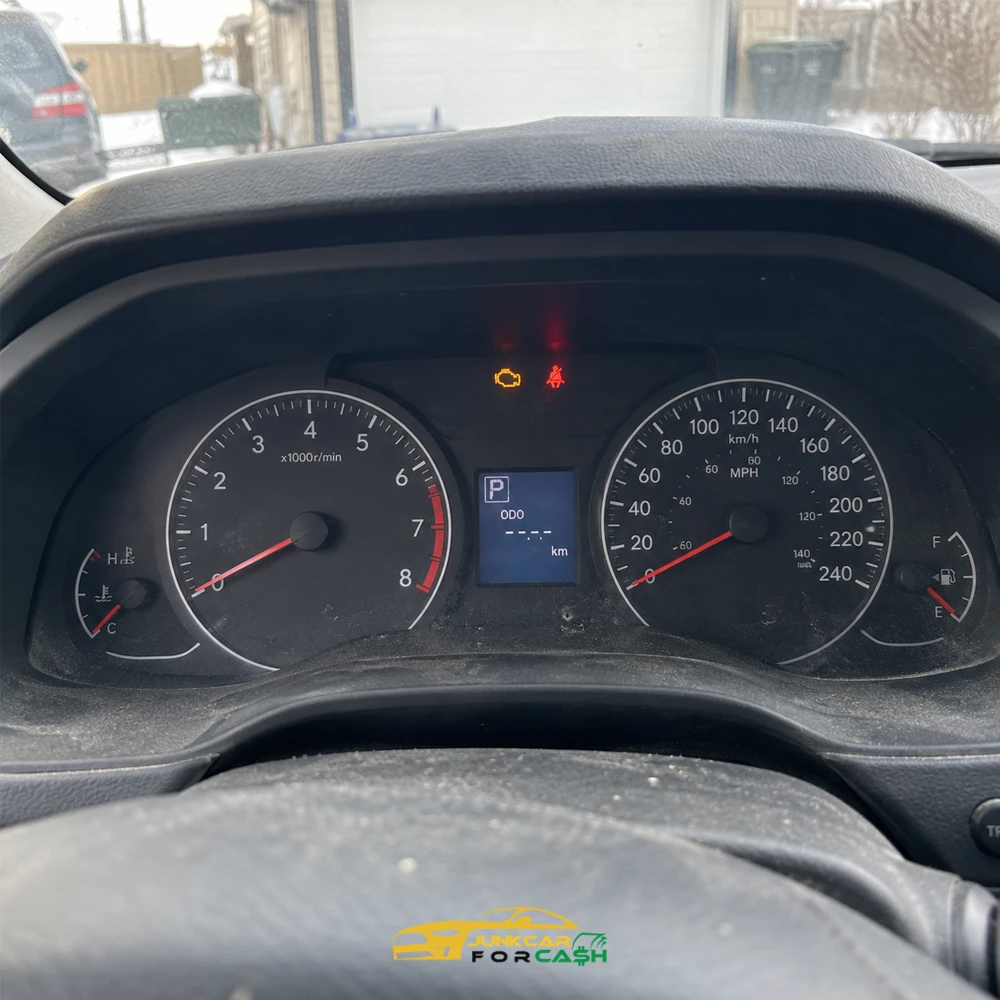
A real one. A car that starts, even if it sounds rough doing it, still has a working engine and transmission that someone can resell. A true non-runner usually doesn’t get that credit, since the drivetrain is really only worth what can be salvaged from it. Two vehicles that look nearly identical sitting in a driveway can generate very different offers because of this one detail. If yours turns over at all, even inconsistently, say so clearly when you’re getting quotes. It can shift the number more than people expect.
Three Things That Quietly Lower Your Offer
A few issues trip people up because they don’t seem like they’d matter, but they do:
- Missing parts. If the catalytic converter or battery is already gone, whether it was stolen or pulled by a previous owner, that value just isn’t there anymore. A rough, hand-cut exhaust pipe where the converter used to be is one of the fastest ways to see an offer drop on the spot, since it usually signals other parts were removed the same way.
- Amateur part removal. A car that’s had parts yanked out without much care, damaged wiring, stripped fittings, can make buyers more cautious with their number since it’s harder to assess what else might be missing or damaged underneath.
- Messy paperwork. Missing registration or an unclear ownership history won’t usually kill the sale, since many buyers review it case by case, but it can slow things down and make some buyers start lower until it’s sorted out.
None of these are dealbreakers. They’re just things worth knowing about before an offer comes in lower than you were hoping for.
How to Make Sure You're Actually Getting Top Dollar
A few steps consistently separate people who get a fair price from people who get taken advantage of:
- Get more than one quote. As covered above, this is the single biggest lever you have. Even two or three quick calls tell you where your vehicle actually sits in the range.
- Confirm the price is locked in before pickup. Some buyers quote high over the phone and then chip away at it once they’re standing in front of the car. Ask outright if the number is firm.
- Ask what’s actually included. Towing, paperwork, and payment timing should all be clear upfront rather than showing up as a surprise deduction later.
- Check that they’re licensed. In Alberta, a legitimate buyer should have no problem confirming their business licensing if you ask.
How to Spot a Lowball Offer Before You Agree to It
A few warning signs show up again and again with less reputable buyers, and knowing them ahead of time protects you from losing money at the last minute.
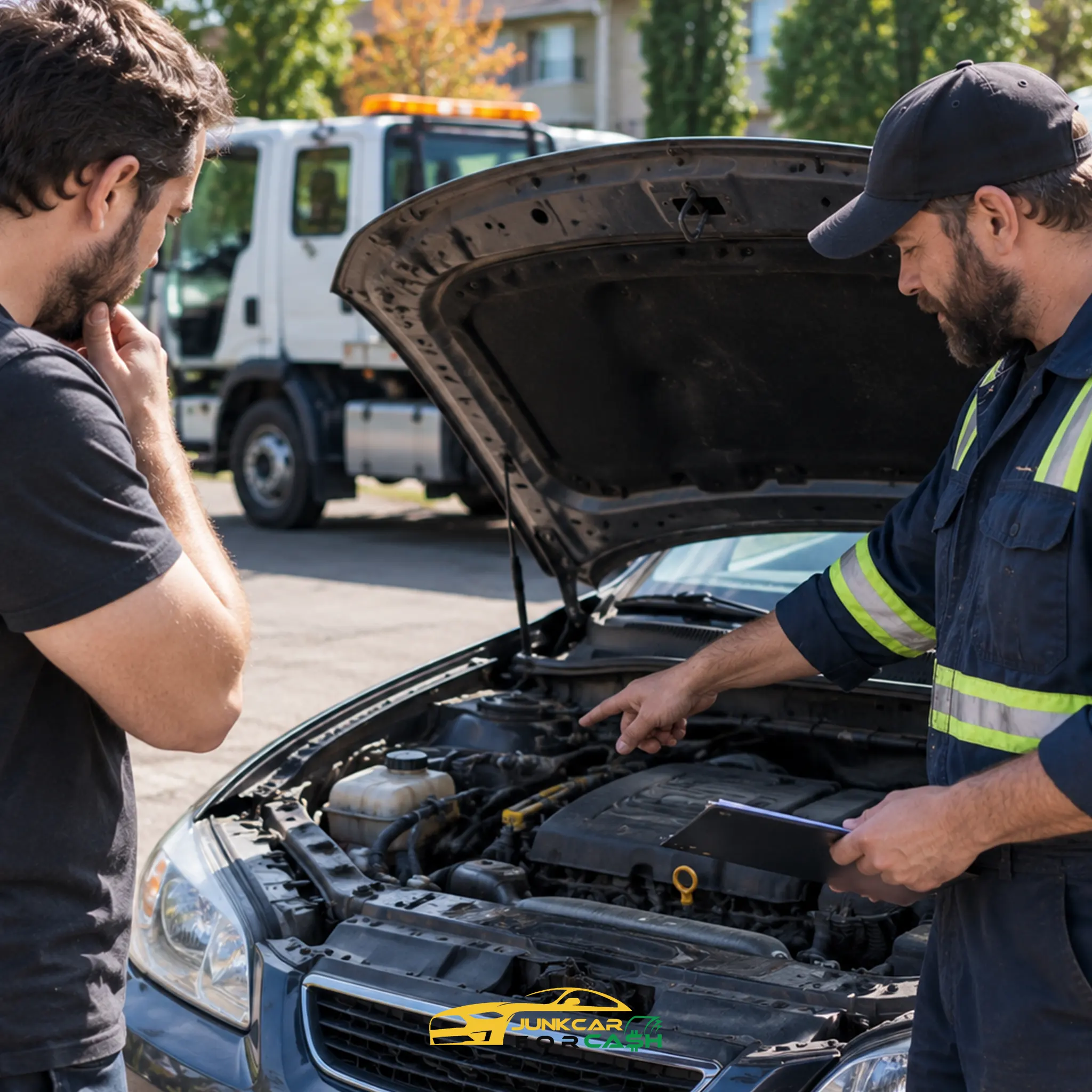
- The number changes once they arrive. A buyer quotes one figure over the phone, then finds a reason to lower it once they see the car in person, a scratch, a smell, “it’s heavier than expected.” A firm quote shouldn’t move without a real, visible reason you weren’t told about upfront.
- Towing gets deducted after the fact. Free towing should mean free towing. If a fee shows up at pickup that wasn’t mentioned on the call, that’s money quietly coming out of your offer.
- They can’t or won’t confirm licensing. A legitimate buyer should answer this without hesitation. Hesitation or a vague answer is worth treating as a red flag.
- Pressure to decide immediately. A fair offer doesn’t need to expire in the next ten minutes. Buyers who push urgency are often counting on you not comparing it to anything else.
None of these mean every buyer is trying to shortchange you, most aren’t. But knowing what to watch for means you’re negotiating from a position of knowledge instead of hoping for the best.
FAQs
The Bottom Line
Getting top dollar for a junk car isn’t about getting lucky or stumbling onto the one generous buyer in town. It comes down to understanding what actually moves the number, weight, parts demand, condition, whether it runs, and then spending a few extra minutes comparing offers instead of taking the first one. The gap between a lowball offer and a fair one can be bigger than you’d think on the exact same car, and it usually comes down to whether the seller knew what to look for. A little bit of checking upfront is the difference between hoping you got a decent deal and actually knowing it.
References
- AMVIC (Alberta Motor Vehicle Industry Council) — vehicle condition disclosure requirements, licensing verification
https://www.amvic.org/consumer/buying-a-vehicle/buying-used/ - AMVIC — general code of conduct and Consumer Protection Act obligations
https://www.amvic.org/about-us/laws-and-regulations/general-code-of-conduct/ - ScrapMonster Canada — live scrap steel and metals pricing by province, including Alberta
https://www.scrapmonster.com/scrap-yards/prices/alberta/state/3006 - Auto Service World / S&P Global Mobility — Canadian vehicle fleet size and average vehicle age
https://www.autoserviceworld.com/whys-canadian-average-vehicle-age-so-low/ - Current Scrap Metal Prices Canada — national scrap steel price-per-pound range and market context
https://www.currentscrapmetalpricescanada.com/scrap-car-prices-in-canada.php
Ready to Get a Fair Offer on Your Junk Car?
If you’d rather know what your car is actually worth before committing to anything, Junk Car For Cash serves Calgary and more than 40 Alberta communities, and looks at your vehicle’s real weight, condition, and parts value, not just a flat number. Offers typically range from $100 to $10,000 depending on the vehicle. Get a quote or email [email protected] for a straightforward, no-obligation offer.