
The leasing company holds the title until you pay a buyout, so a straight private sale isn’t on the table the way it would be with a car you own outright. But that buyout is a real, common step, not a wall. It takes one phone call to your leasing company to find out what it costs, and from there the car is yours to sell however you’d like. What trips people up isn’t the process itself, it’s not knowing whether the buyout is actually worth doing on the vehicle they’ve got.
This guide covers how a lease buyout works, what it means to have equity in a lease, and what your options are if you want to sell before the lease term ends.
Ready to Sell Your Leased Vehicle Without the Extra Steps?
If you’re weighing whether a lease buyout is worth it, Junk Car For Cash serves Calgary and more than 40 Alberta communities and can often handle the buyout directly as part of the offer. Get a quote or email [email protected] for a straightforward, no-obligation quote.
Why Can't You Sell a Leased Car the Normal Way?
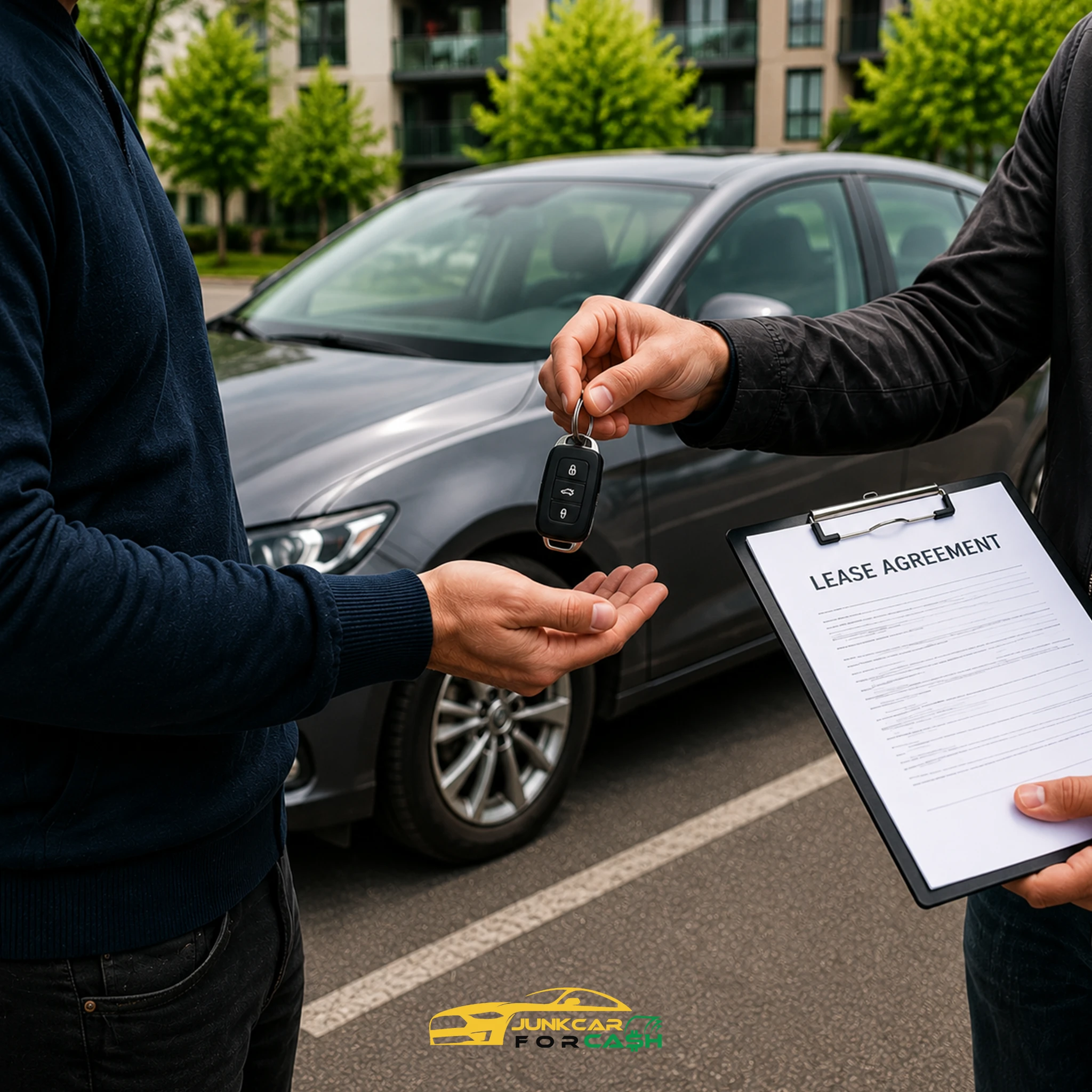
Because you don’t own it. A lease is a long-term rental agreement, you’re paying for the use of the vehicle over a set term, not building equity toward ownership the way a loan works. According to AMVIC, the leasing company determines the vehicle’s retail and residual values at the start of the contract, and those numbers govern what happens at lease-end, not your monthly payment history. Since you’re not the legal owner, you can’t transfer ownership to a buyer without the leasing company being involved first.
- Read Also :
What Is a Lease Buyout, and How Does It Work?
A lease buyout means purchasing the vehicle from the leasing company for its residual value, the number set back when you signed the lease, based on what the vehicle was projected to be worth at this point in time. Once you’ve paid that amount, you own the vehicle outright, the same as if you’d financed or bought it with cash, and you’re free to sell it to anyone.
This is where lease equity comes in, and it works differently than loan equity:
| What's being compared | What it means | |
|---|---|---|
| Loan equity | What you owe vs. the car's current value | You're paying down toward ownership the whole time |
| Lease equity | The buyout price vs. the car's current market value | You never owe the full value, only the buyout matters |
- Positive lease equity: the car is worth more on the open market than the buyout price. Buying it out and reselling can put real money in your pocket.
- Negative lease equity: the buyout price is higher than what the car’s actually worth. Buying out just to sell would cost more than you’d get back.
Market shifts can move this in either direction. Used vehicle prices climbing unexpectedly during a supply shortage, for example, can push a lease into positive equity that nobody predicted when the contract was signed.
Does Buying Out Your Lease Mean You Avoid Mileage and Wear Charges?
Often, yes, and this is a detail worth knowing before you assume a buyout costs more than it does.
If you return the vehicle at lease-end: mileage overage and excess wear-and-tear charges typically apply, since they exist to compensate the leasing company for a vehicle worth less than expected when they take it back.
If you buy out the vehicle instead: you’re purchasing it as-is, so those specific charges are usually waived.
A buyout still isn’t free of other costs, though. In Alberta, expect:
- GST on the buyout price, since the province has no provincial sales tax
- Standard registration and licensing fees to put the vehicle in your name
- A possible administrative fee some leasing companies charge to process the buyout paperwork
None of these are dealbreakers, but they’re worth factoring in when you’re deciding whether a buyout actually makes financial sense.
Can a Third Party or Dealer Buy Out Your Lease For You?
Yes, and this is often the easiest path if you don’t want to front the buyout cost yourself. Some dealerships and direct buyers will handle the lease buyout as part of purchasing the vehicle from you:
- They pay the leasing company the residual value directly
- They give you the difference if there’s positive equity
- The purchase from you completes in the same transaction
This works similarly to how a dealer or direct buyer might handle a loan payoff on a financed vehicle, they coordinate the payment to the party that holds the vehicle, then complete the purchase from you. It’s worth asking specifically whether a buyer offers this, since not every dealer trade-in desk is set up to handle a lease buyout the same way they’d handle a straightforward used car purchase.
What About Ending a Lease Early Without Buying It Out?
This is a separate path from a buyout, and it’s generally the more expensive option.
| Buyout | Early termination (no buyout) | |
|---|---|---|
| What you pay | Residual value, GST, registration fees | Remaining lease payments plus a penalty fee |
| Wear and mileage charges | Usually waived | Usually apply, full inspection required |
| End result | You own the vehicle | Vehicle is returned, you own nothing |
If you’re leasing and thinking about getting out early, it’s worth comparing this cost against a buyout before deciding, since a buyout often ends up being the cheaper route if the vehicle has any real market value.
Steps to Take If You Want to Sell Your Leased Car
Once you understand your equity position and what a buyout actually costs, the process itself comes down to a handful of steps done in order:
- Contact your leasing company for your exact buyout quote. This is your residual value plus any applicable fees, not an estimate you can calculate on your own.
- Get your vehicle’s current market value. Based on its actual condition, mileage, and demand, not the number in your original lease paperwork.
- Compare the two numbers to check your equity position. This tells you whether a buyout and resale makes financial sense before you commit to anything.
- Decide whether to buy out and sell yourself, or have a dealer or direct buyer handle the buyout. The second option removes the step of fronting the buyout cost yourself.
- Complete the buyout with the leasing company, if going that route yourself, and get confirmation the vehicle is now registered in your name.
- Sell the vehicle, either privately, through a dealer, or to a direct buyer, once you legally own it.
Skipping straight to step 6 without confirming your equity position first is the most common mistake here. It’s easy to assume a buyout is automatically worth it once you’ve decided you want out of the lease, but if the math doesn’t work in your favor, you’re better off exploring early termination or simply riding out the lease term instead.
FAQs
The Bottom Line
You can’t sell a leased car directly, but a buyout is a real, straightforward path to ownership, and from there, selling works exactly like selling any other vehicle. Whether it’s worth doing comes down to equity, if the car’s current market value is higher than the buyout price, there’s real money on the table, and if it’s lower, buying out just to sell doesn’t make financial sense.
Buying out also typically waives the mileage and wear charges that apply to a standard lease return, which can make the math better than people initially assume. Get your real buyout quote and your car’s actual market value before deciding either way.
References
- AMVIC (Alberta Motor Vehicle Industry Council) – Leasing a vehicle, residual value and lease-end obligations
https://www.amvic.org/consumer/leasing-a-vehicle/ - AMVIC – general code of conduct and Consumer Protection Act obligations
https://www.amvic.org/about-us/laws-and-regulations/general-code-of-conduct/ - BrokerLink – How car leases work in Canada, buyout and equity mechanics
https://www.brokerlink.ca/blog/how-do-car-leases-work-in-canada - Government of Alberta – Personal property liens, registration and search
https://www.alberta.ca/personal-property-liens
Ready to Sell Your Leased Vehicle Without the Extra Steps?
If you’re weighing whether a lease buyout is worth it, Junk Car For Cash serves Calgary and more than 40 Alberta communities and can often handle the buyout directly as part of the offer. Get a quote or email [email protected] for a straightforward, no-obligation quote.