
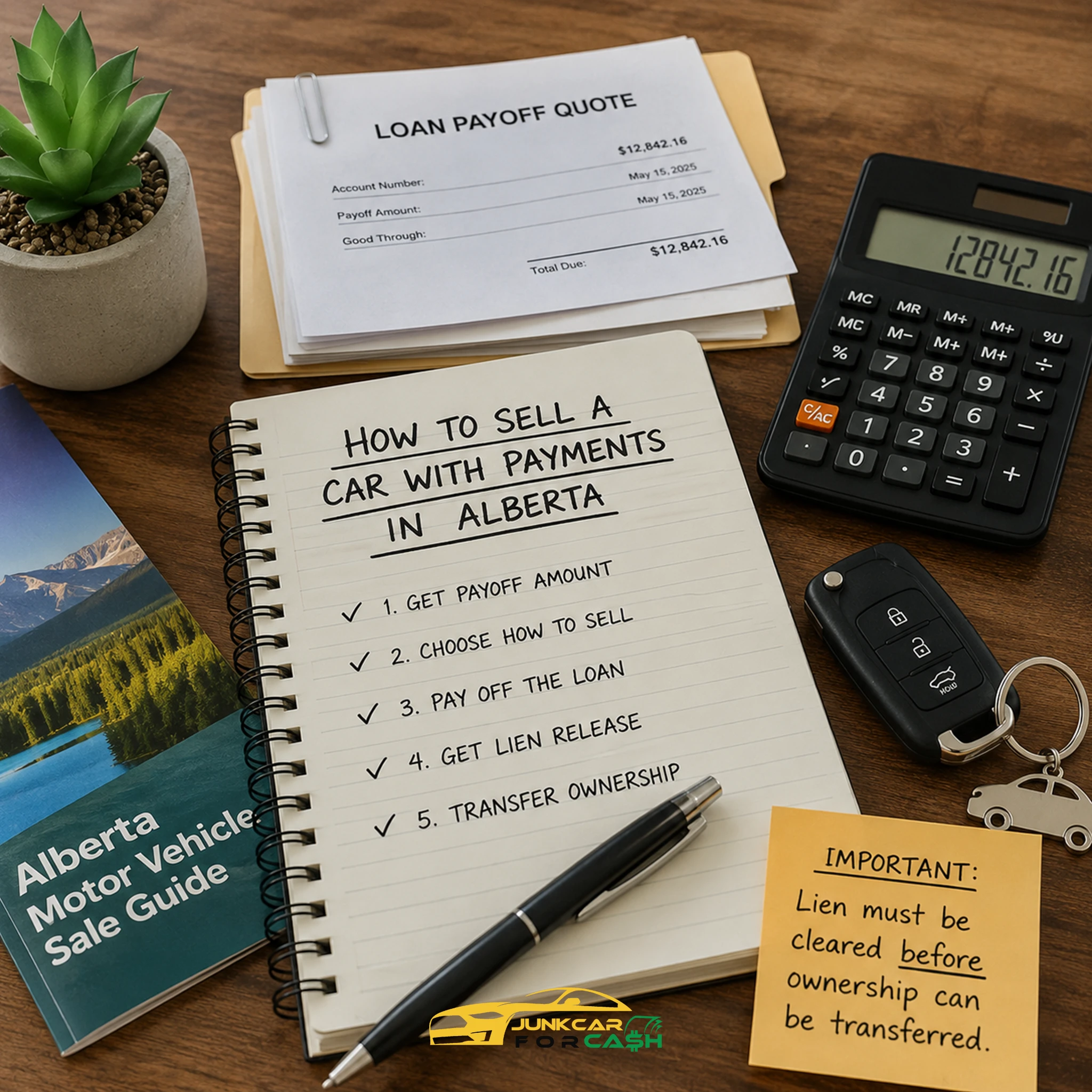
You can sell a car in Alberta even if you still owe money on it, you just need to clear the lien before ownership legally transfers to the buyer. A lot of Alberta owners assume a loan balance means the car is stuck until it’s paid off, so they either hold onto a vehicle they’d rather replace or accept a bad trade-in offer just to avoid the hassle. Neither is necessary. The process is a bit more involved than selling a car outright, but it’s straightforward once you know the order of operations.
This guide walks through how to find your exact payoff amount, decide how to sell, and clear the lien properly so the sale closes without any surprises.
Ready to Sell Without Dealing With the Lien Yourself?
If your vehicle has a loan on it and you’d rather not coordinate lender payoffs and branch meetings, Junk Car For Cash serves Calgary and more than 40 Alberta communities and can often handle the lien payoff directly as part of the sale. Get a quote or email [email protected] for a straightforward, no-obligation quote.
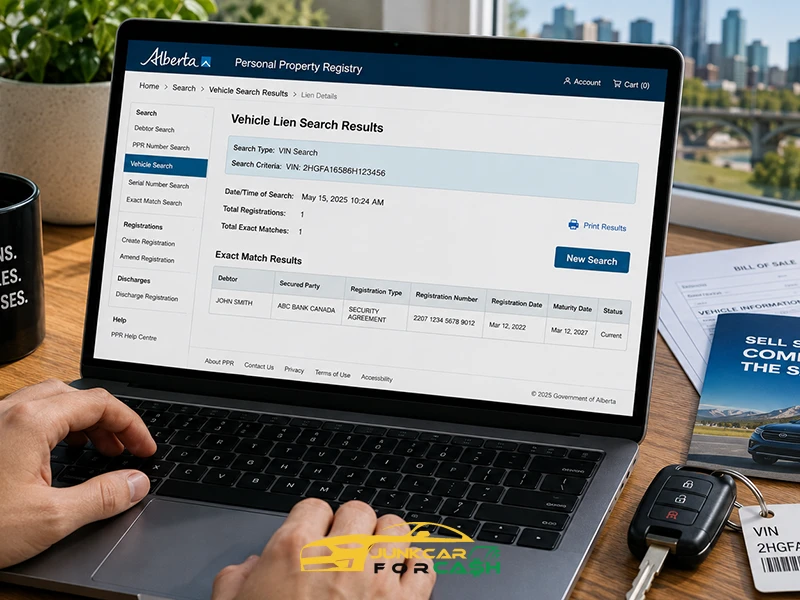
Should You Get an Independent Lien Search Before Selling?
It’s worth running one yourself before you list the car, even though your lender already knows the balance. A lien search through the Alberta Personal Property Registry costs around $10 and can be done through any registry agent, either in person or online, using your vehicle’s VIN. The result shows exactly what’s registered against the vehicle, which matters if there’s ever been a second loan, a mechanic’s lien from unpaid repair work, or an old registration that was never properly discharged even after a previous loan was paid off.
This isn’t about distrust of your own lender, it’s about avoiding a surprise. A buyer, especially a private one, may ask to see this themselves before completing the sale, so having it ready in advance speeds up the transaction and signals you’ve done your homework. It’s a small cost for the certainty of knowing exactly what a buyer will find if they check.
How Do You Find Your Exact Payoff Amount?
- Contact your lender directly: Ask for your payoff amount, not just your remaining loan balance.
- Check the difference: These two numbers can be different because the payoff figure may include accrued interest, administrative fees, or an early repayment penalty, depending on your loan terms.
- Get the amount in writing: If possible, ask your lender for a written payoff statement showing the exact amount needed to clear the loan.
- Use the exact figure when selling: Knowing the real payoff amount upfront helps you avoid an unexpected gap between what you thought you owed and what actually needs to be paid.
How Do You Know If You Have Positive or Negative Equity?
Compare your payoff amount against your vehicle’s current market value, based on make, model, year, mileage, and condition. This tells you which of two situations you’re in:
| Situation | What it means |
|---|---|
| Positive equity | Your car is worth more than you owe. The difference is yours after the loan is cleared. |
| Negative equity | You owe more than the car is worth. You'll need to cover the shortfall out of pocket to complete the sale. |
Knowing which category you’re in before you start shopping the car around sets realistic expectations, especially if you’re counting on the sale to help fund your next vehicle.
What Happens If You Can't Cover Negative Equity?
This is the situation that stalls people the most. If you owe more than the car is worth and don’t have the cash to cover the gap, you generally have two options: keep making payments until the balance drops below the car’s value, or roll the shortfall into financing on your next vehicle if you’re buying another car right away. Neither is ideal, but both are more manageable than assuming the car simply can’t be sold.
What Are Your Options for Selling a Financed Car?
Selling to a dealership. The dealer contacts your lender directly, pays off the balance, and handles the paperwork. If you have positive equity, you get the difference. If you have negative equity, you cover the gap. You’ll typically get less than a private sale would bring, but it’s a lot less coordination on your end.
Selling to a private buyer. This usually brings a higher price, but it takes more legwork since the lender has to be involved in the transfer. In practice, that means:
- Confirm your lien payoff amount with your lender
- Meet the buyer at your lender’s branch, or arrange a secure escrow service if that’s not practical
- Have the buyer’s payment go directly toward the loan balance
- Cover any remaining shortfall yourself if you have negative equity
- Get confirmation the lien has been discharged before handing over the vehicle
Selling to a direct cash buyer. This is the simpler route. If the vehicle isn’t worth much to begin with, or you’d rather skip the coordination entirely, a direct buyer can often handle the lien payoff as part of the transaction, similar to a dealership, without the trade-in pressure.
- Read Also :
Does Selling to a Direct Buyer Change the Lien Process?
Not fundamentally, but it does remove most of the coordination. With a private buyer, you’re the one arranging the branch meeting or escrow service and making sure both sides follow through. With a direct buyer, that coordination shifts to them. They typically contact your lender directly, confirm the payoff figure, and handle the lien discharge as part of completing the purchase, similar to how a dealership handles a trade-in, but without requiring you to buy another vehicle in the process.
This matters most for vehicles that aren’t going to bring a premium in a private sale anyway. If your car has significant mechanical issues, high mileage, or cosmetic damage, the extra effort of a private sale often isn’t worth the marginal price difference, especially once you factor in the time spent coordinating with your lender and a buyer separately. For a vehicle in good condition with real market demand, a private sale can still be worth the extra steps.
How Do You Finalize the Sale Properly?
Once your lender confirms the loan is paid off, they discharge the lien and the vehicle is legally clear to transfer. Don’t hand over the vehicle permanently until that confirmation is in hand. A few things to wrap up at this stage:
- Provide a signed bill of sale with both parties’ names, the VIN, and the sale price
- Cancel or transfer your insurance once the sale is confirmed
- Make sure the registration transfer is completed at a registry agent
Skipping any of these steps can leave you on the hook for something related to the vehicle after it’s already gone, so it’s worth the extra ten minutes to do it properly.
FAQs
The Bottom Line
A car loan doesn’t trap you into keeping a vehicle you’re ready to be done with. The lien just needs to be cleared as part of the sale, and that’s a matter of knowing your payoff amount, understanding whether you’re in positive or negative equity, and choosing the selling method that fits your situation. Dealerships offer convenience, private sales offer more money but more coordination, and a direct buyer can split the difference for vehicles that aren’t worth the extra effort. Whichever route you choose, confirm the lien is actually discharged before the vehicle changes hands.
References
- Government of Alberta – Personal property liens, registration and search
https://www.alberta.ca/personal-property-liens - Government of Alberta – Find a personal property registration
https://www.alberta.ca/find-personal-property-registration - Government of Alberta – Vehicle Bill of Sale form (ARP006)
https://formsmgmt.gov.ab.ca/Public/REG3126.xdp - AMVIC (Alberta Motor Vehicle Industry Council) – consumer guidance on buying and selling used vehicles
https://www.amvic.org/consumer/buying-a-vehicle/buying-used/ - AMVIC – general code of conduct and Consumer Protection Act obligations
https://www.amvic.org/about-us/laws-and-regulations/general-code-of-conduct/
Ready to Sell Without Dealing With the Lien Yourself?
If your vehicle has a loan on it and you’d rather not coordinate lender payoffs and branch meetings, Junk Car For Cash serves Calgary and more than 40 Alberta communities and can often handle the lien payoff directly as part of the sale. Get a quote or email [email protected] for a straightforward, no-obligation quote.