
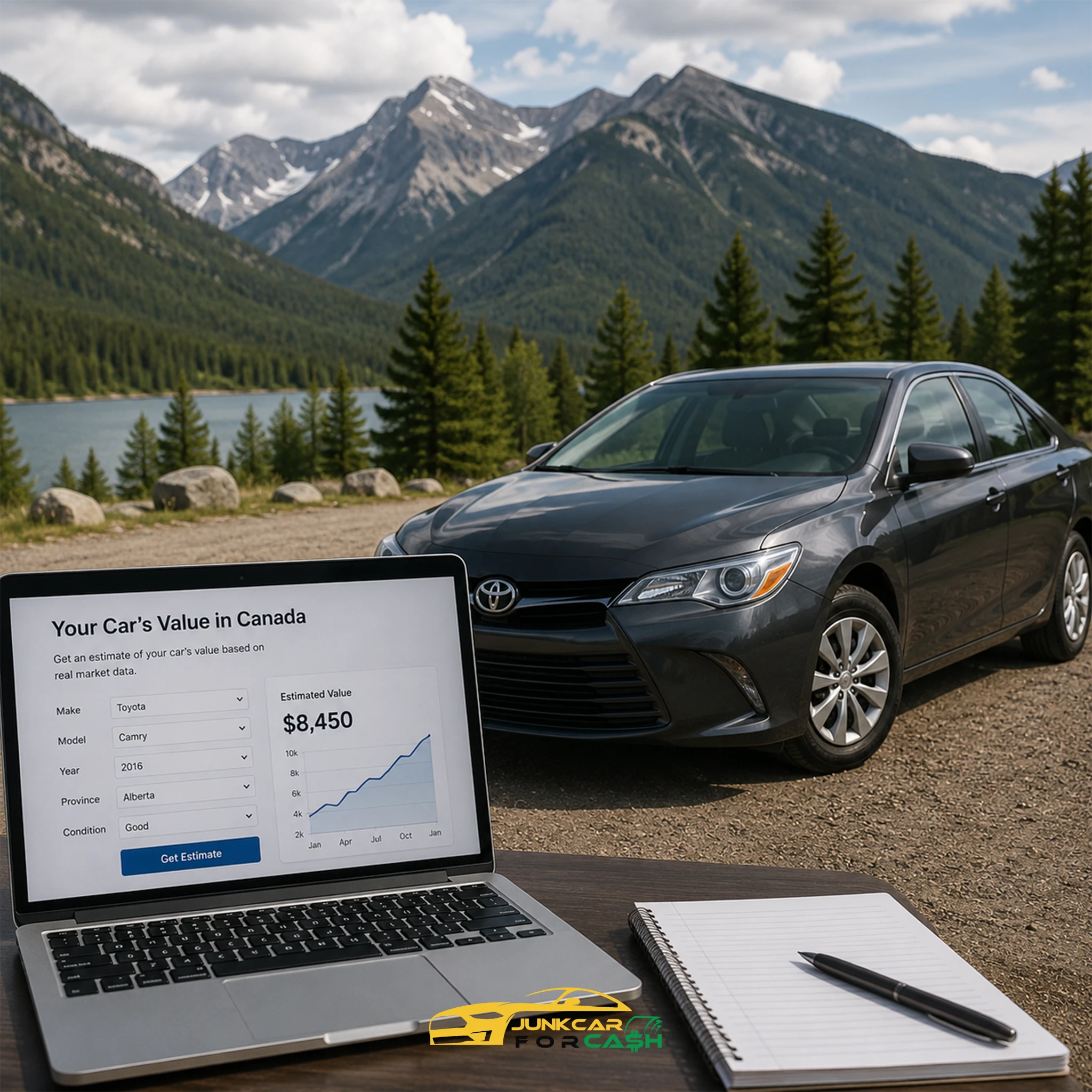
Your car’s value in Canada depends on four things: who’s buying it, what province you’re in, the condition of the vehicle, and what the market looks like right now. Most sellers find out the hard way that online tools give a number without explaining it, and that number is often lower than expected. The gap between what a tool shows and what you’re actually being offered isn’t random. It comes from the fact that private buyers, dealerships, and direct cash buyers are each measuring something different. Add in regional demand, seasonal timing, and Alberta-specific factors like hail history and oil patch use, and the same car can carry meaningfully different values depending on where and how you sell it. This post breaks down each factor so you can read any offer with a clear head.
Ready to Find Out What Your Car Is Worth?
If you want a firm cash offer on your vehicle without having to visit anyone or prepare the car, get a quote or email [email protected]. Tell us the year, make, model, mileage, and a brief description of the condition, and we’ll give you a number quickly with no obligation to accept.
Why the Same Car Has Different Values in Canada
The most important thing to understand is that there’s no single “correct” value for your car. There are at least three different numbers depending on who’s on the other side of the transaction.
A private sale typically produces the highest return. You’re selling directly to another person, cutting out the middleman, and keeping the full price. The trade-off is time, paperwork, negotiation, and the risk of no-shows.
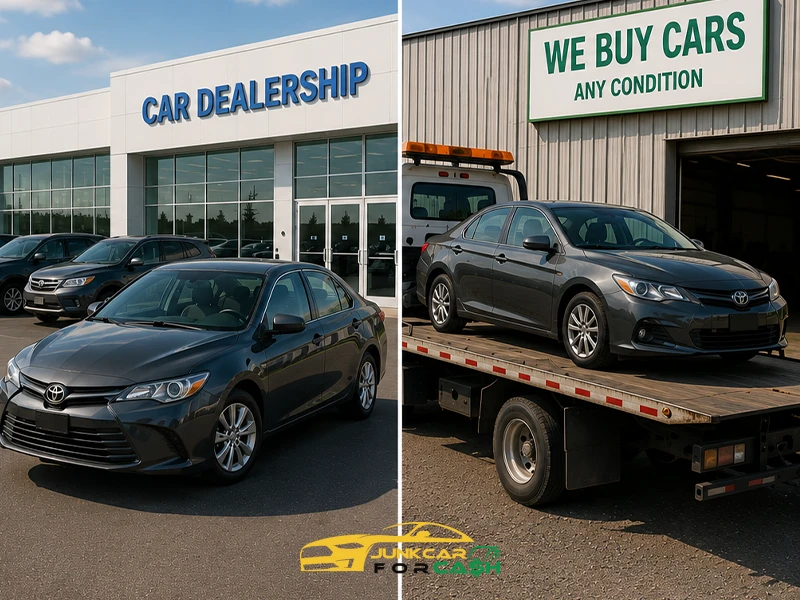
A dealership trade-in offers convenience but comes with a built-in margin. The dealer needs to make money on the resell, so the offer reflects what they can realistically wholesale or retail the car for, minus their risk and costs. That number is almost always lower than what you’d get privately.
A direct cash buyer assesses the car as-is, which works well for vehicles that can’t easily be sold privately. The offer is typically lower than a running private sale but faster, simpler, and available for vehicles in any condition.
Regional demand also plays a real role. A four-wheel-drive pickup truck commands more in rural Alberta than it does in downtown Vancouver. Diesel work trucks are in consistent demand across Alberta’s oil and agriculture sectors. A hybrid or EV holds stronger value in urban Ontario and BC, where incentives and infrastructure support them. Knowing your local market matters when you’re reading any valuation.
The Factors That Determine What Your Car Is Worth
Year, make, model, and trim. These form the baseline. A higher trim with factory options holds more value than a base model of the same year. Popular makes with strong parts demand depreciate more slowly because the ownership base keeps resale prices supported.
Mileage relative to age. Natural Resources Canada puts the average annual distance driven by a Canadian at around 15,200 kilometers. A vehicle that’s accumulated significantly more than that for its age will attract lower offers because buyers and appraisers price in additional wear. A vehicle well under that average for its age can hold a premium.
Condition: mechanical, body, and interior. All three are assessed separately. A car with a clean engine and transmission but a damaged body gets a different number than one that runs poorly but looks presentable. Mechanical soundness generally weighs heavier for private sales; overall condition matters more at trade-in.
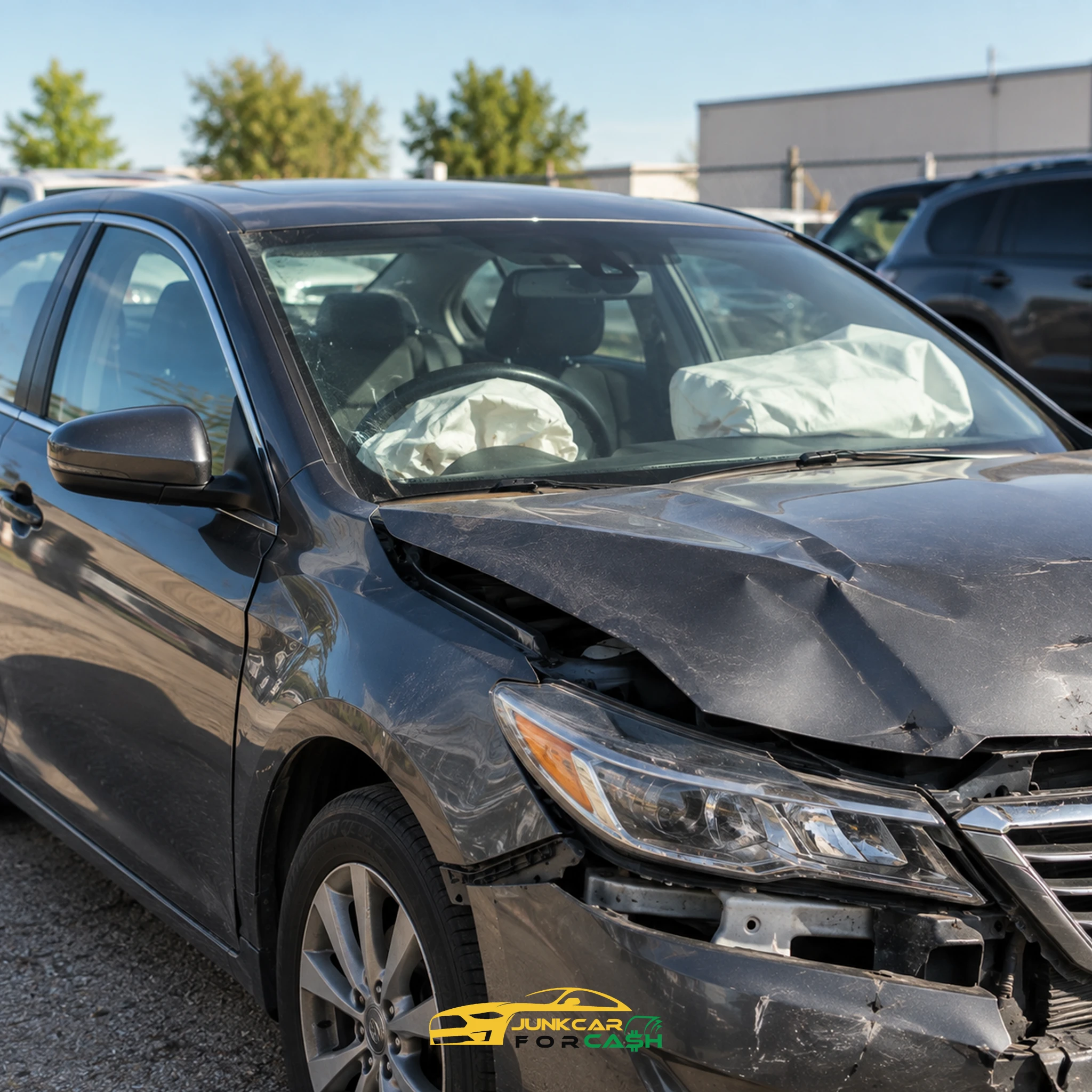
Accident and damage history. Any prior accident recorded on the vehicle’s history report reduces its market value, even if the repair work was done properly. In Alberta, buyers can request a Vehicle Information Report through a registry agent to see registered ownership history and flag any outstanding liens.
Outstanding liens. If your vehicle has a lien registered against it through Alberta’s Personal Property Registry, that affects what a buyer can safely pay. A lien means a creditor has a registered interest in the vehicle. Selling with an undisclosed lien creates legal risk for both parties. Buyers conducting a proper lien search will factor any outstanding balance into what they’re willing to offer.
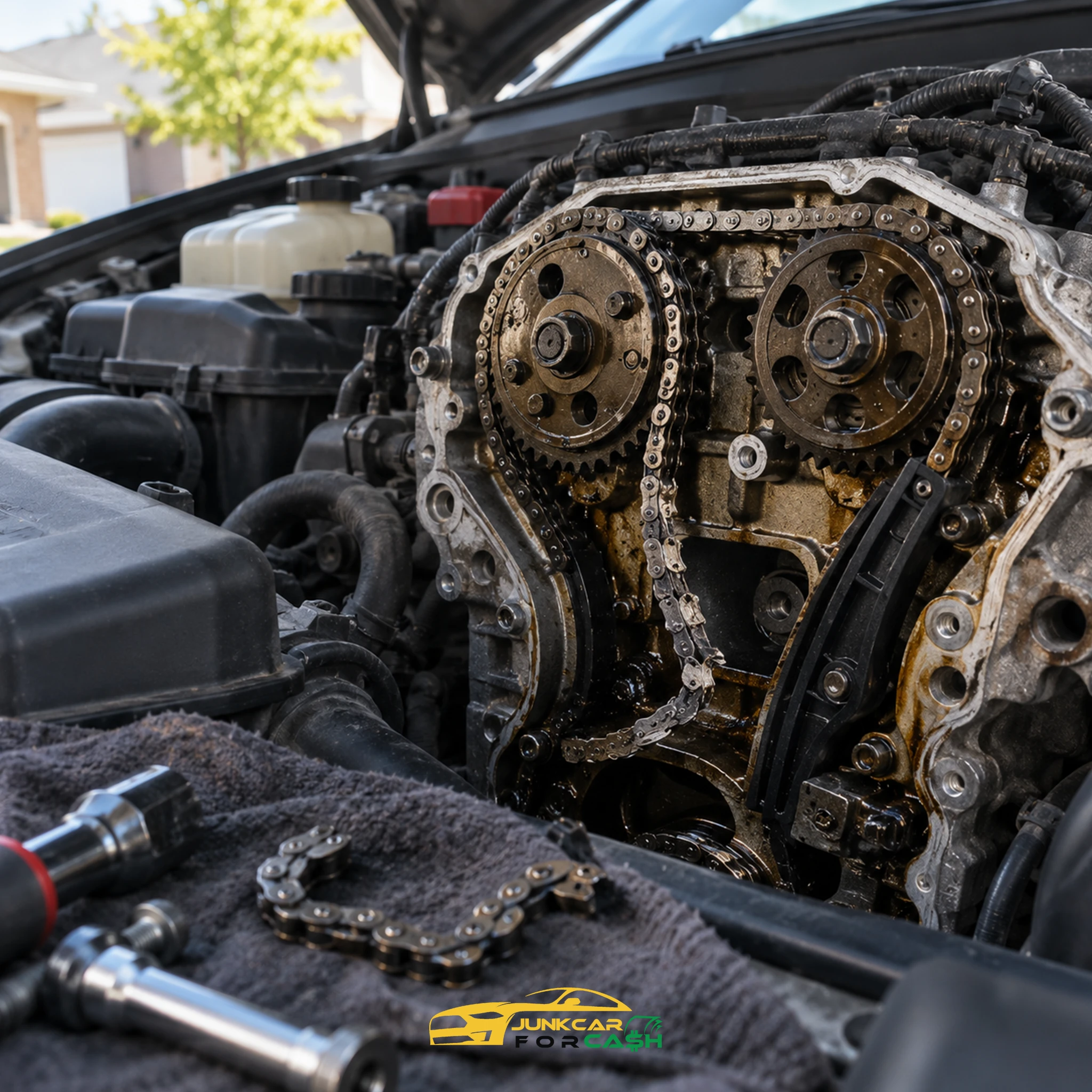
Whether the vehicle is running. A non-running vehicle is harder to sell privately and gets heavily discounted at a dealership. For vehicles that won’t start or have major mechanical failure, the valuation process works differently and is worth looking into separately.
How Different Valuation Sources Calculate Your Car's Worth
Not all valuation tools measure the same thing. Here’s what each approach actually reflects:
| Source | What it measures | What it doesn't capture |
|---|---|---|
| Wholesale market tools (e.g. Canadian Black Book) | Dealer and auction transaction data across Canada | Private sale demand; regional variation in some cases |
| Active listing platforms | What sellers are currently asking | What cars are actually selling for; listings that sit unsold skew the data |
| Dealership appraisal | What the dealer will pay, net of their resale margin | Any value above what they can profitably resell |
| Direct cash buyer quote | As-is value for any condition vehicle | Private sale upside for a running vehicle in good shape |
Canadian Black Book, which has tracked wholesale vehicle pricing in Canada since the 1950s, is widely used by dealers, lenders, and insurers as a baseline. Its figures reflect the wholesale and trade-in market, not what a private buyer might pay. That’s why CBB numbers often read lower than active listing prices. They’re measuring a different market.
Listing platforms show asking prices, not sale prices. A vehicle listed for $12,000 that sat unsold for three months and sold at $9,500 only shows up as a $12,000 data point in active search results. This is why listing-based estimates can overstate what your car will realistically sell for.
What Specifically Affects Car Value in Alberta
Alberta has some characteristics that make vehicle values behave differently than in other provinces.
Hail damage is common and measurable. Calgary and southern Alberta experience some of Canada’s most active hail seasons. A vehicle with documented hail damage, even if repaired, will carry a reduced value on any history report and a lower offer at trade-in or private sale. Undisclosed hail damage that shows up on inspection is one of the more common points of dispute in private sales.
Alberta has no provincial sales tax, which affects private sale math differently than in provinces where PST applies to used vehicle purchases. Buyers in Alberta don’t pay provincial tax on private used vehicle purchases, which removes one negotiating variable that exists in other markets.
Work and oil patch use is another local factor. High-mileage trucks with documented commercial use are common in Alberta and tend to be discounted further than the mileage alone would suggest, because the nature of that use is typically harder on the vehicle.
How to Get the Most Accurate Number for Your Car
Getting an accurate picture of what your car is worth takes more than one data point. Here’s a practical approach:
- Check a wholesale valuation tool for a baseline. This tells you what the industry floor looks like.
- Search active listings for your exact make, model, year, trim, and approximate condition in your province. Filter by listings that have been up for fewer than 30 days to avoid stale asking prices.
- Get a written dealer appraisal if you’re planning a trade-in. This is a real offer, not an estimate.
- Get a direct cash buyer quote if the car has damage, doesn’t run, or failed an out-of-province inspection. This tells you what the as-is floor is.
Comparing these four numbers gives you a realistic range. The private listing price is the ceiling and the direct buyer quote is the floor. Where your car actually lands depends on how much time and effort you’re willing to put into the sale.
Frequently Asked Questions
Conclusion
Car value in Canada isn’t a fixed number and it’s not produced by a single source. It shifts depending on whether you’re selling privately, trading in, or selling as-is, and it shifts again based on your province, the condition of the vehicle, and what the local market looks like right now. Understanding what each valuation source actually measures, and why they produce different numbers, puts you in a position to evaluate offers rather than just accept them.
A wholesale tool gives you the industry floor. Active listings show you what sellers are asking, not what buyers are paying. A dealer appraisal tells you what convenience costs. Knowing where each number comes from, and what it leaves out, is what lets you walk into any sale with a realistic picture of what your car is actually worth.
References
- Natural Resources Canada. Fuel Consumption Guide – Annual Distance Assumption. https://natural-resources.canada.ca/energy-efficiency/transportation-energy-efficiency/fuel-consumption-guide
- Government of Alberta. Buying a Vehicle from a Private Seller. https://www.alberta.ca/buying-vehicle-private-seller
- Government of Alberta. Inspect Before You Buy. https://www.alberta.ca/inspect-before-you-buy
- Government of Alberta. Personal Property Liens – Find a Registration. https://www.alberta.ca/find-personal-property-registration
- Government of Alberta. Vehicle Information Report. https://www.alberta.ca/vehicle-information-report
- Canadian Black Book. Canadian Black Book’s Trade-In Values. https://www.canadianblackbook.com/canadian-black-books-trade-in-values/
- Canadian Black Book. Mastering Modern Auto Valuation. https://www.canadianblackbook.com/mastering-modern-auto-valuation-expert-tips-for-data-driven-depreciation-leasing-strategies-in-canada/
- Insurance Bureau of Canada (IBC). Facts of the General Insurance Industry in Canada. https://www.ibc.ca/industry-resources/resources-data/facts-book
Ready to Find Out What Your Car Is Worth?
If you want a firm cash offer on your vehicle without having to visit anyone or prepare the car, get a quote or email [email protected]. Tell us the year, make, model, mileage, and a brief description of the condition, and we’ll give you a number quickly with no obligation to accept.