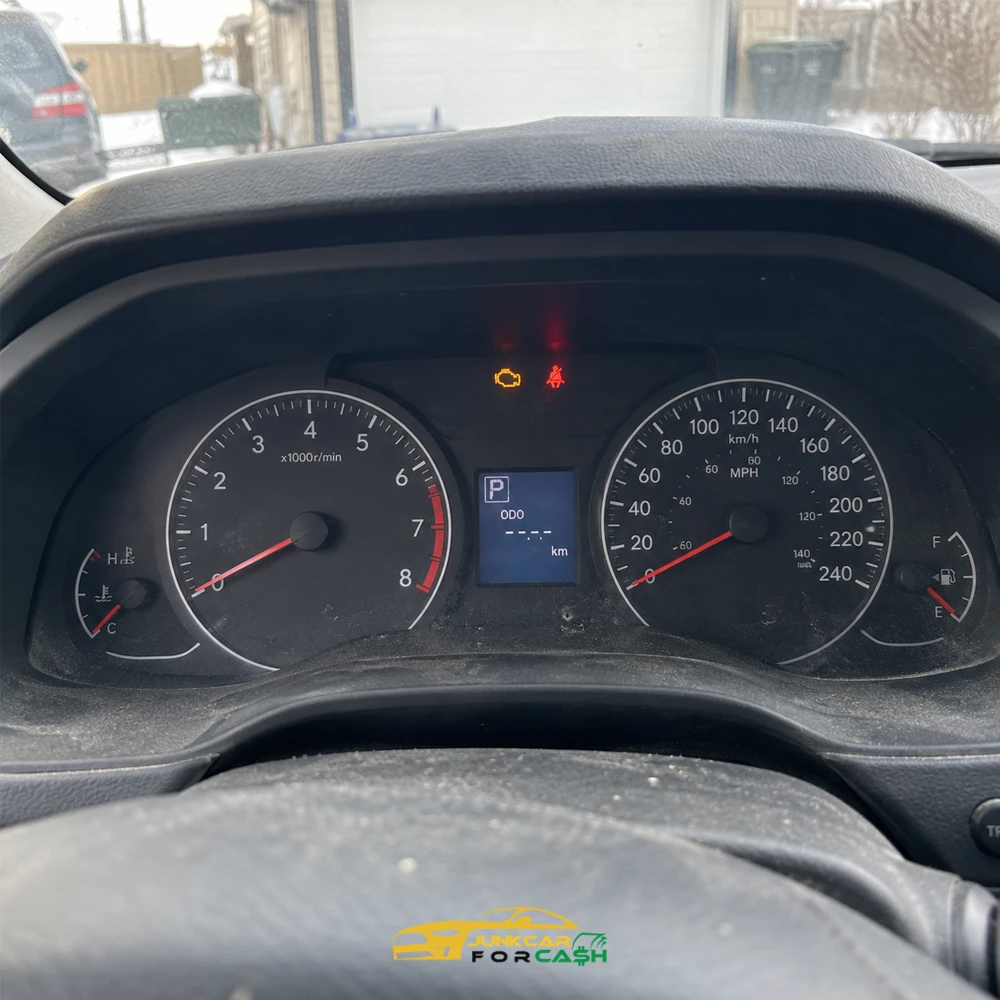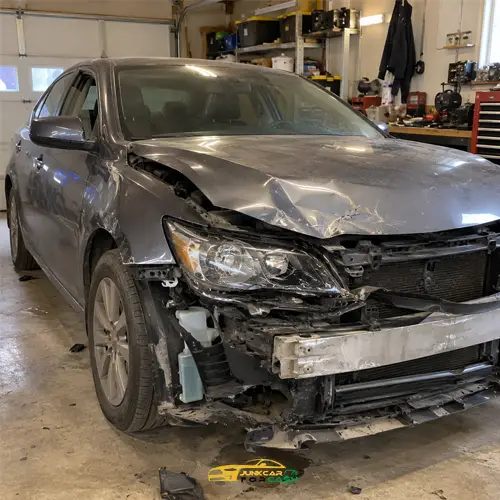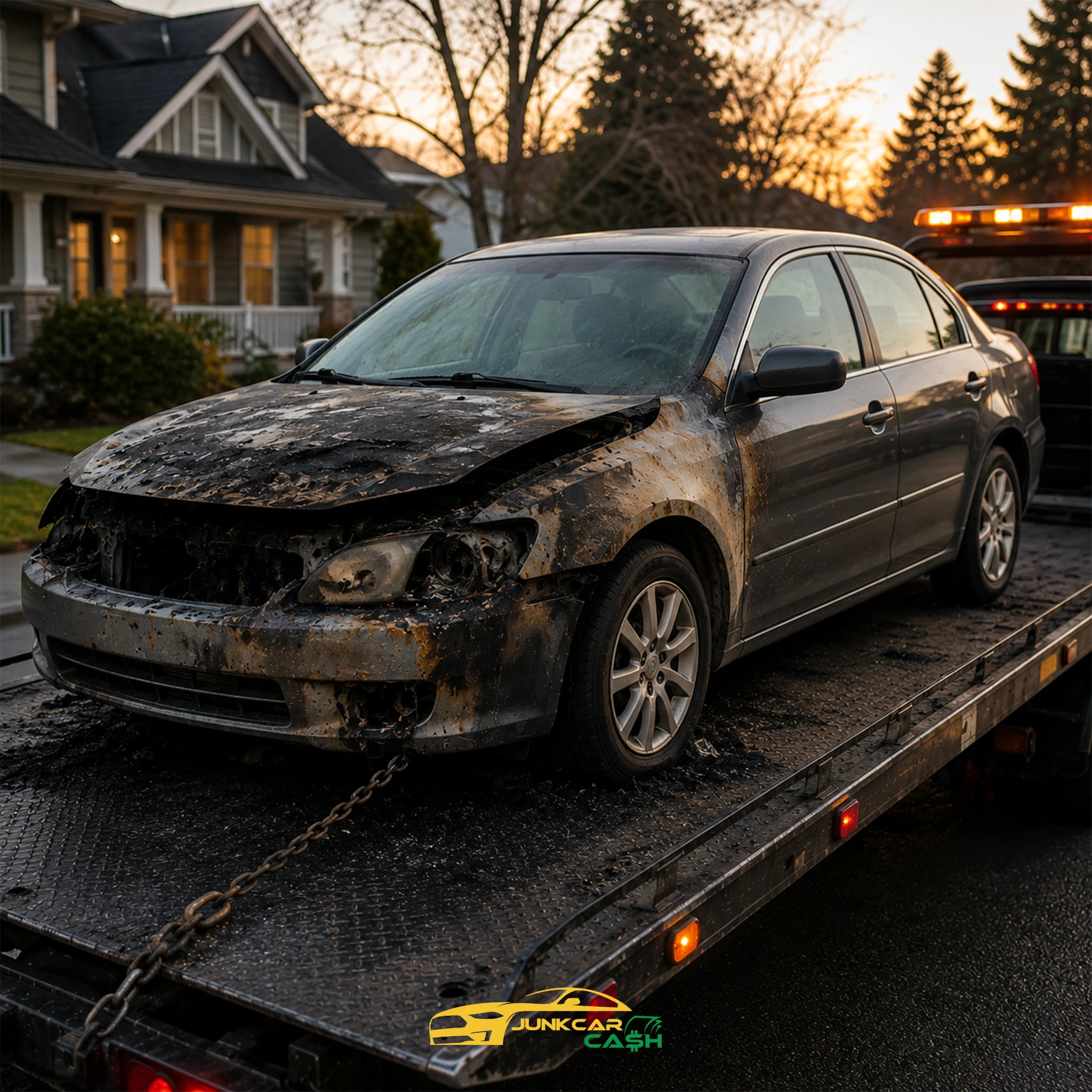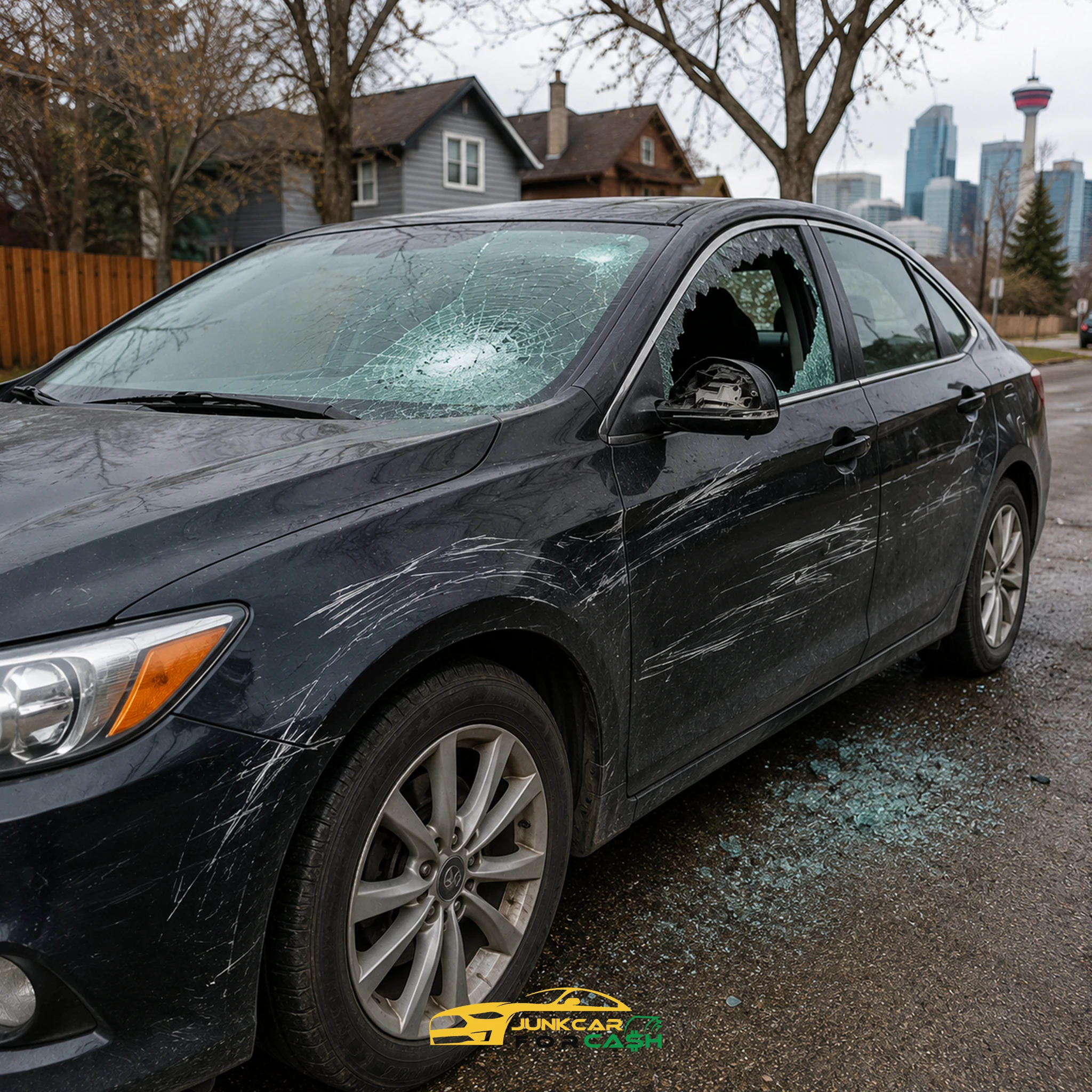

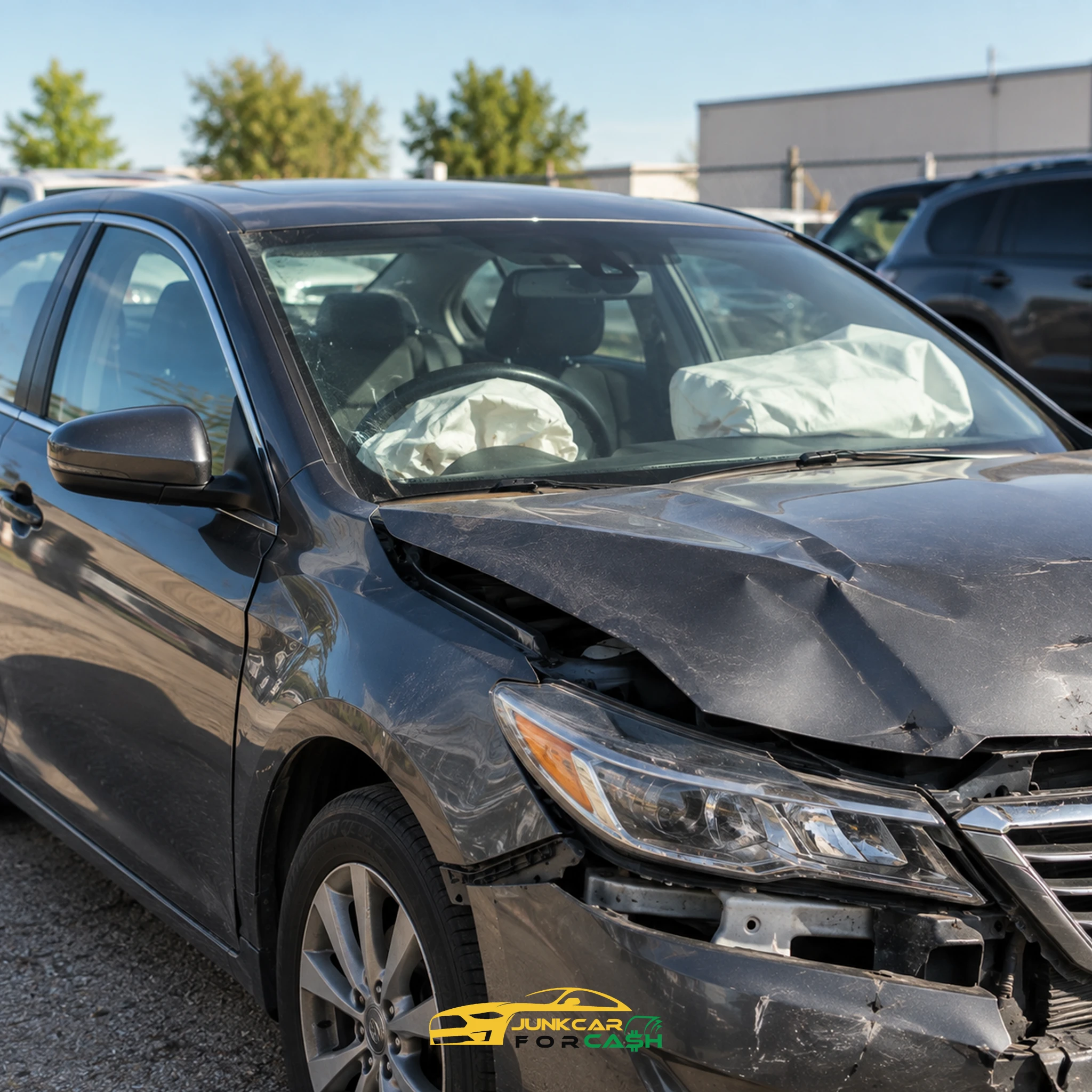
A collision severe enough to trigger your airbags often leaves the rest of the car looking almost fine, drivable, cosmetically minor, seemingly not that bad. That gap between how the vehicle looks and what it’s actually going to cost to properly repair is where most owners get caught off guard, since the restraint system that just deployed involves several separate components that can add up to a substantial repair bill on their own. The good news is that none of this stops you from selling.
Alberta doesn’t require a working airbag system before a private sale. This guide covers what’s actually legal to sell, why the repair cost climbs so fast, whether your specific vehicle is headed toward a salvage brand, and what to gather before you list it.
Ready to Sell a Car With Deployed Airbags?
Whether the airbags deployed in a minor incident or the vehicle was written off entirely, Junk Car For Cash buys vehicles in any condition, deployed airbags included, without requiring repairs first. We serve Calgary and Alberta communities across the province. Get a quote or email [email protected] for a free, no-obligation quote.
Is It Legal to Sell a Car With Deployed Airbags in Alberta?
Yes. Alberta doesn’t require a private seller to provide a Mechanical Fitness Assessment, the inspection document licensed dealers must give buyers, so deployed airbags don’t legally block a private sale. What matters is disclosure, a buyer needs to know the airbags deployed before committing, not discover it afterward. Concealing this isn’t just a trust issue, in the worst case it puts a future occupant at real risk if they assume a working safety system is still in place.
Why Does Airbag Deployment Get So Expensive So Fast?
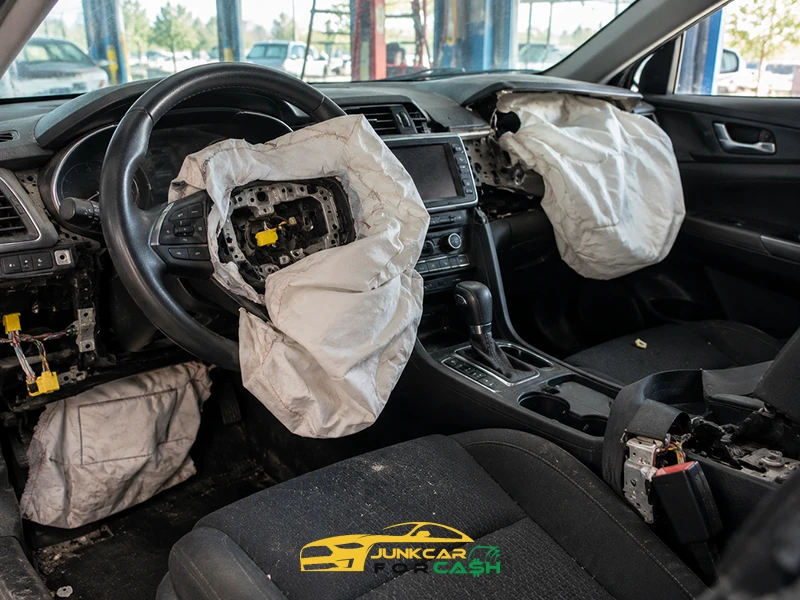
A single deployed airbag isn’t a standalone repair, it’s the visible part of a much larger system that often needs attention together.
What Actually Gets Damaged in a Deployment?
- The airbag unit and its single-use inflator, which can’t be reused once triggered, regardless of condition.
- The clock spring, a ribbon-style electrical connector in the steering column, can be damaged in a collision or during related repairs and may need replacement depending on its condition.
- Crash sensors, which detect the impact and trigger deployment, and are sometimes damaged or need replacing as part of the same repair.
- Seatbelt pretensioners, which fire pyrotechnically to tighten seatbelts during a collision. Once triggered, they generally require replacement according to the manufacturer’s repair procedure.
- The airbag control module, which may need replacement or reprogramming depending on the extent of the event.
- Surrounding trim, dashboard panels, and sometimes the steering wheel itself, particularly where a passenger-side airbag deploys through the dash.
What’s consistently true across these components is that they add up quickly, and a repair that looks like “just replace the airbag” on the surface is rarely that simple once the full list is accounted for.
Why Can Deployed Airbags Contribute to a Total-Loss Decision?
Airbag deployment can make a collision claim substantially more expensive because the repair may involve multiple restraint-system components in addition to any collision damage itself. Whether an insurer writes the vehicle off depends on the overall repair cost weighed against the vehicle’s value and repairability, not simply on whether an airbag deployed.
Canadian insurers generally frame a total loss as an economic decision, repairing isn’t worth it relative to the vehicle’s value, rather than a rule tied to any single component. A car that looks like a straightforward fix from the outside can still end up in that position once the full restraint-system repair and any other damage are added together.
- Read Also :
Can Airbag Deployment Lead to Salvage Branding in Alberta?
It can, but airbag deployment alone doesn’t determine the vehicle’s Alberta brand. If an insurer declares the vehicle a total loss and it meets the applicable criteria, the status gets recorded through Alberta’s vehicle-branding system as salvage or non-repairable, salvage meaning it can potentially be repaired and re-inspected to return to the road, non-repairable meaning it cannot be registered for normal road use.
The vehicle’s branding history remains part of its record, even if a salvage vehicle is later repaired and reclassified as rebuilt.
Repaired, Sold As-Is, or Sold After Total Loss: What Actually Changes
These three paths lead to genuinely different outcomes for disclosure, price, and who’s likely to buy.
| Repaired and kept | Sold with deployed airbags, unrepaired | Sold after insurer total loss | |
|---|---|---|---|
| Disclosure needed | Full repair history if later selling | Airbag deployment and any known damage | Total loss status and any Alberta vehicle brand |
| Typical buyer pool | Normal private buyers, once repaired | Narrower, buyers comfortable with restraint-system work | Salvage buyers, parts buyers, direct cash buyers |
| Price impact | Depends on repair quality and disclosure | Reduced, reflects deferred repair cost | Reduced further, reflects branding and condition |
| Documentation involved | Repair invoices, parts used | Bill of sale, honest condition disclosure | Total loss letter, Vehicle Information Report, bill of sale |
Most sellers land in the middle or right-hand columns, since a full repair only makes financial sense on a newer or higher-value vehicle, covered in more detail below.
Does Selling for Parts Make Sense on a Vehicle With Deployed Airbags?
Sometimes, depending on what else survived the incident. Airbag deployment doesn’t necessarily mean the engine or transmission was damaged, so those components can retain significant value depending on the nature of the collision. If your specific vehicle has genuinely valuable components still in good condition, parting it out is worth considering, though it takes real time, mechanical knowledge, and space that a direct sale doesn’t require.
Is Repairing Worth It Instead?
Occasionally, particularly on a newer or higher-value vehicle where the repair cost, even a substantial one, still leaves real equity in the car afterward. For an older or lower-value vehicle, the math rarely works out, the same pattern we’ve covered with other expensive repairs: if fixing it costs more than it adds back to the sale price, selling as-is is usually the more practical route.
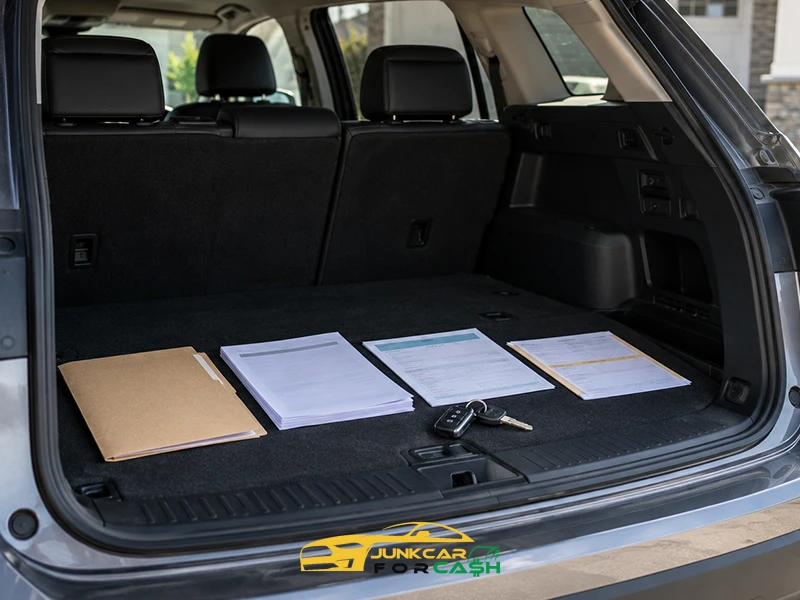
What Documents Should You Gather Before Selling?
Having the right paperwork ready speeds up the sale and gives a buyer confidence they’re getting an accurate picture of the vehicle.
- Your insurance total-loss letter, if the vehicle went through a claim and was declared a write-off. This confirms the official determination rather than leaving a buyer to take your word for it.
- Any repair estimates you’ve already obtained, even if you decided not to proceed. These give a buyer, or yourself, a real number to work from instead of guessing.
- A current Vehicle Information Report, available through Alberta’s registry system, which shows whether the vehicle carries a salvage or non-repairable brand. This is worth pulling yourself before a buyer asks, since it’s the same document they’d likely check independently.
- Your registration and a completed bill of sale, the same baseline paperwork required for any private vehicle sale in Alberta, regardless of condition.
Having these ready before you start fielding offers means you’re not scrambling to answer a buyer’s question mid-negotiation, and it signals you’re a straightforward seller rather than someone hoping the details don’t come up.
What Should You Tell a Buyer About Deployed Airbags?
Be specific rather than vague. Mention which airbags deployed, whether the vehicle has since been assessed by an insurer, and whether it carries a salvage or non-repairable brand. A buyer who knows exactly what they’re getting is far less likely to walk away mid-negotiation or come back with a dispute later, and it narrows your buyer pool to people who are genuinely prepared for the vehicle’s actual condition rather than expecting a normal used car.
Questions Readers Ask
Ready to Sell a Car With Deployed Airbags?
Whether the airbags deployed in a minor incident or the vehicle was written off entirely, Junk Car For Cash buys vehicles in any condition, deployed airbags included, without requiring repairs first. We serve Calgary and Alberta communities across the province. Get a quote or email [email protected] for a free, no-obligation quote.
The Bottom Line
Selling a car with deployed airbags in Alberta is legal. The real cost driver isn’t the visible airbag itself, it’s the full restraint system, clock springs, sensors, pretensioners, and the control module, that typically needs attention together, and that combined cost is what can contribute to a total-loss decision, not airbag deployment on its own.
Whether repairing makes sense depends on the vehicle’s value and how much of that system was actually affected, and being upfront with a buyer about what happened, backed by the right paperwork, protects you and narrows your buyer pool to people prepared for the vehicle’s real condition.
References
- AMVIC (Alberta Motor Vehicle Industry Council) — consumer guidance on buying and selling used vehicles
https://www.amvic.org/consumer/buying-a-vehicle/buying-used/ - Government of Alberta — Salvage vehicle inspections
https://www.alberta.ca/salvage-vehicle-inspections - Government of Alberta — Standard bill of sale
https://www.alberta.ca/standard-bill-sale - ICBC — If your vehicle is not repairable, total loss determination process
https://www.icbc.com/claims/repair-replace/If-your-vehicle-is-a-write-off - Government of Alberta — Vehicle Information Report (eServices)
https://eservices.alberta.ca/vehicle-info-report.html