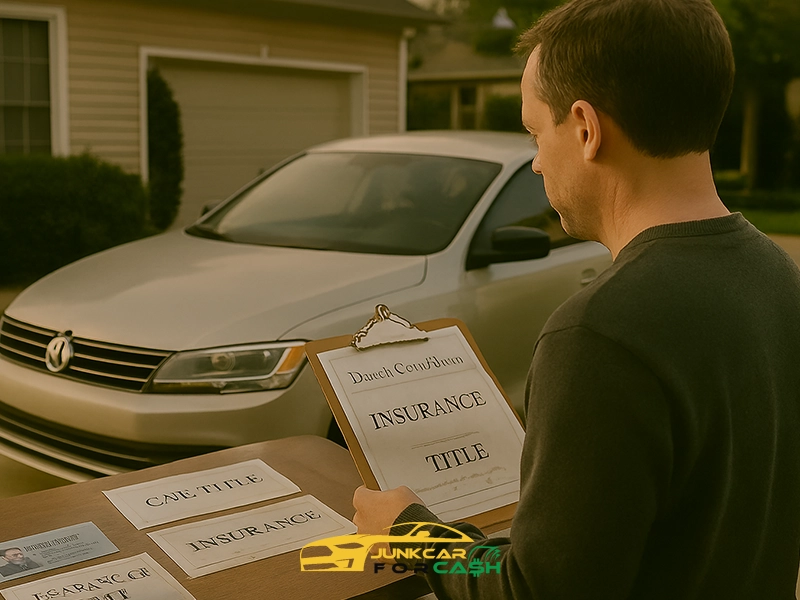

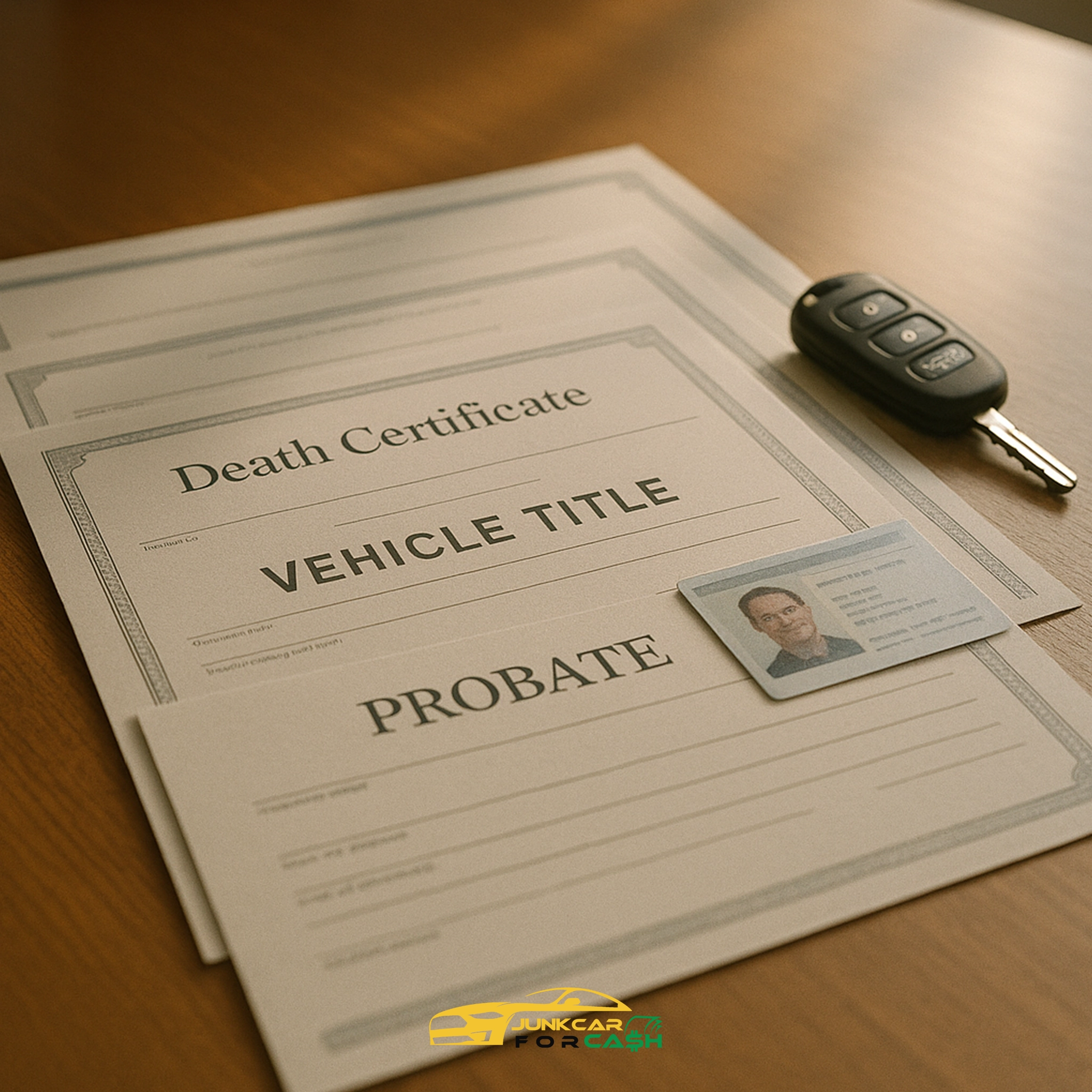
Before anything else, gather what you’ll likely need to bring to a registry agent or a buyer.
- The death certificate. This is the starting point for establishing that the registered owner has passed away.
- The vehicle’s registration certificate. This identifies the vehicle and its registered owner, though it isn’t proof of ownership on its own.
- Documentation establishing your legal authority to act for the estate. What this looks like depends on the estate, covered in detail below.
- Your own government-issued photo ID.
- Loan or lien information, if the vehicle was financed. The lender may need to provide payoff and discharge documentation as part of the sale itself, covered further down.
If any of these are missing or unclear, a registry agent can advise on what’s actually needed for your specific situation rather than guessing.
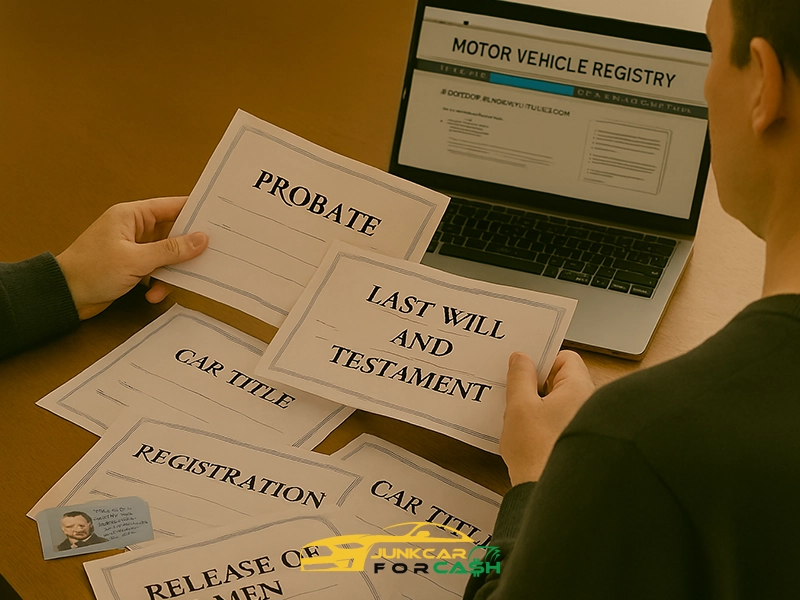
Once you’ve confirmed your authority to act and gathered the necessary documents, selling the vehicle itself follows a fairly standard process.
- Confirm your authority and gather your documents. This includes the death certificate, the vehicle’s registration, and whatever documentation establishes your right to act, whether that’s a grant of probate, letters of administration, or simply your role as named executor.
- Get a quote from your buyer of choice. Provide the vehicle’s make, model, year, and condition, and mention upfront that you’re selling on behalf of an estate so the buyer knows what documentation to expect.
- Complete the applicable bill of sale. Identify your capacity as the estate’s personal representative clearly in the transaction documentation, the same standard bill of sale required for any other private sale in Alberta.
- Confirm payment and handover. A legitimate buyer completes payment before or at the time the vehicle is picked up, the same as any other transaction.
In our experience, this is one of the more common points of hesitation for people in this situation, worrying that the sale itself will be complicated because of the circumstances, when in practice the documentation is what actually determines whether a buyer can proceed, not the situation itself.