
A car that no longer runs still holds real money in its catalytic converter, engine, and electronics, often more than most owners assume. The harder question is whether to dismantle it yourself for the highest possible return, or sell it whole to a buyer who takes on that work for you. Choosing wrong means either spending weeks tracking down individual buyers for a payout that barely covers your time, or accepting a lowball offer because you didn’t know what your vehicle’s components were actually worth.
Selling a car for parts in Alberta is straightforward once you understand which components carry the most value and which selling method actually fits your situation. This guide breaks down both.
What Parts of a Car Are Worth the Most Money?
Not every component contributes equally to a buyer’s final offer. A handful of parts consistently drive most of a vehicle’s salvage value.
Catalytic Converters Carry the Highest Value
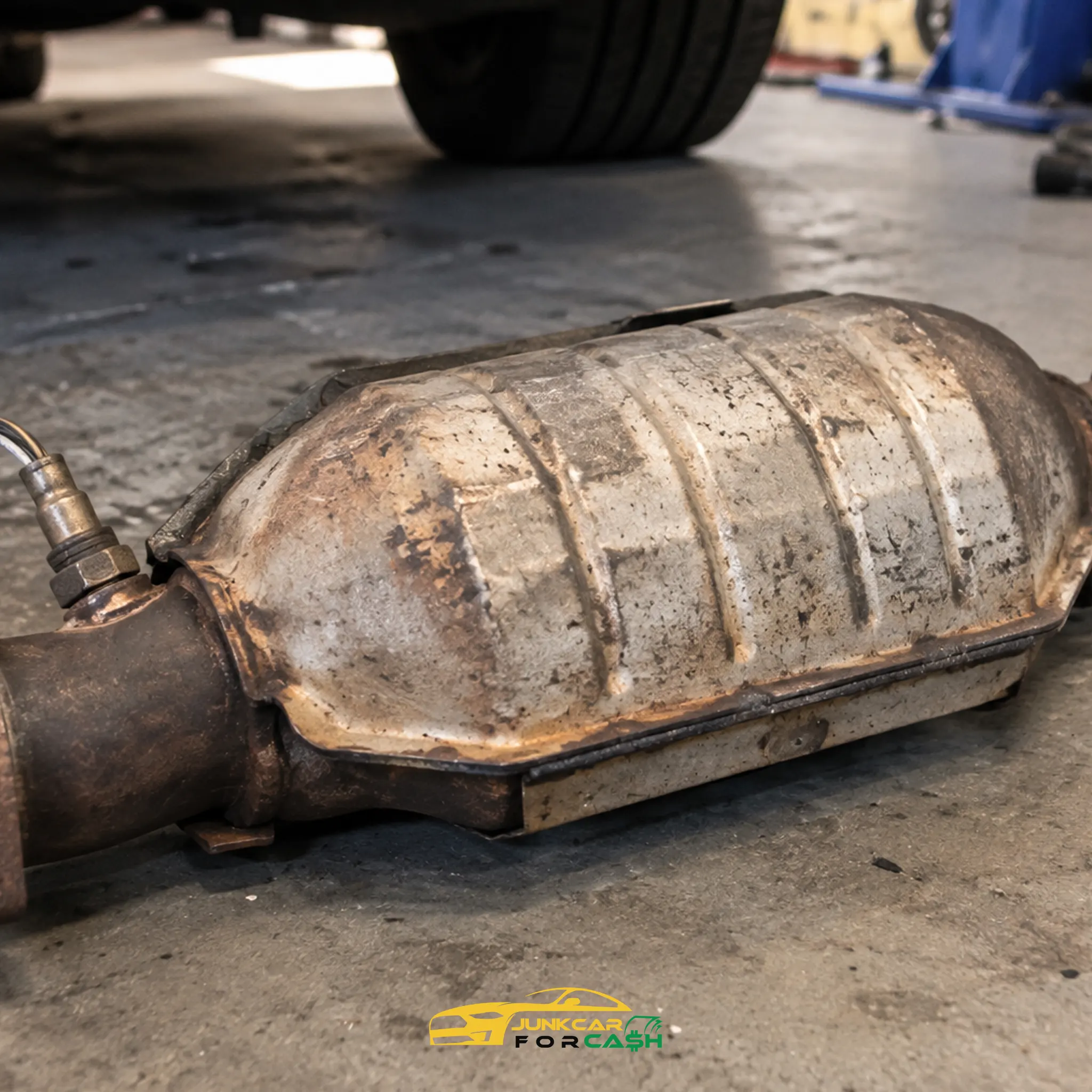
The catalytic converter is typically the single most valuable component on a non-running car, since it contains platinum, palladium, and rhodium used to treat exhaust emissions. Pricing varies daily with precious metal markets, but most standard converters scrap for somewhere between $50 and $250, while high-demand models like hybrids can fetch $300 to $700 due to their higher metal loading.
Catalytic converter theft has become enough of a problem in Alberta that the province now treats these sales differently from ordinary scrap metal. As of September 2025, any transaction involving a catalytic converter requires the buyer to record the vehicle identification number and proof of ownership, and the payment must be made through a traceable method rather than cash. This applies whether you’re selling the converter attached to your vehicle or on its own, so keeping your ownership documents handy matters even at this stage.
Read Also : Selling a Car Without a Catalytic Converter
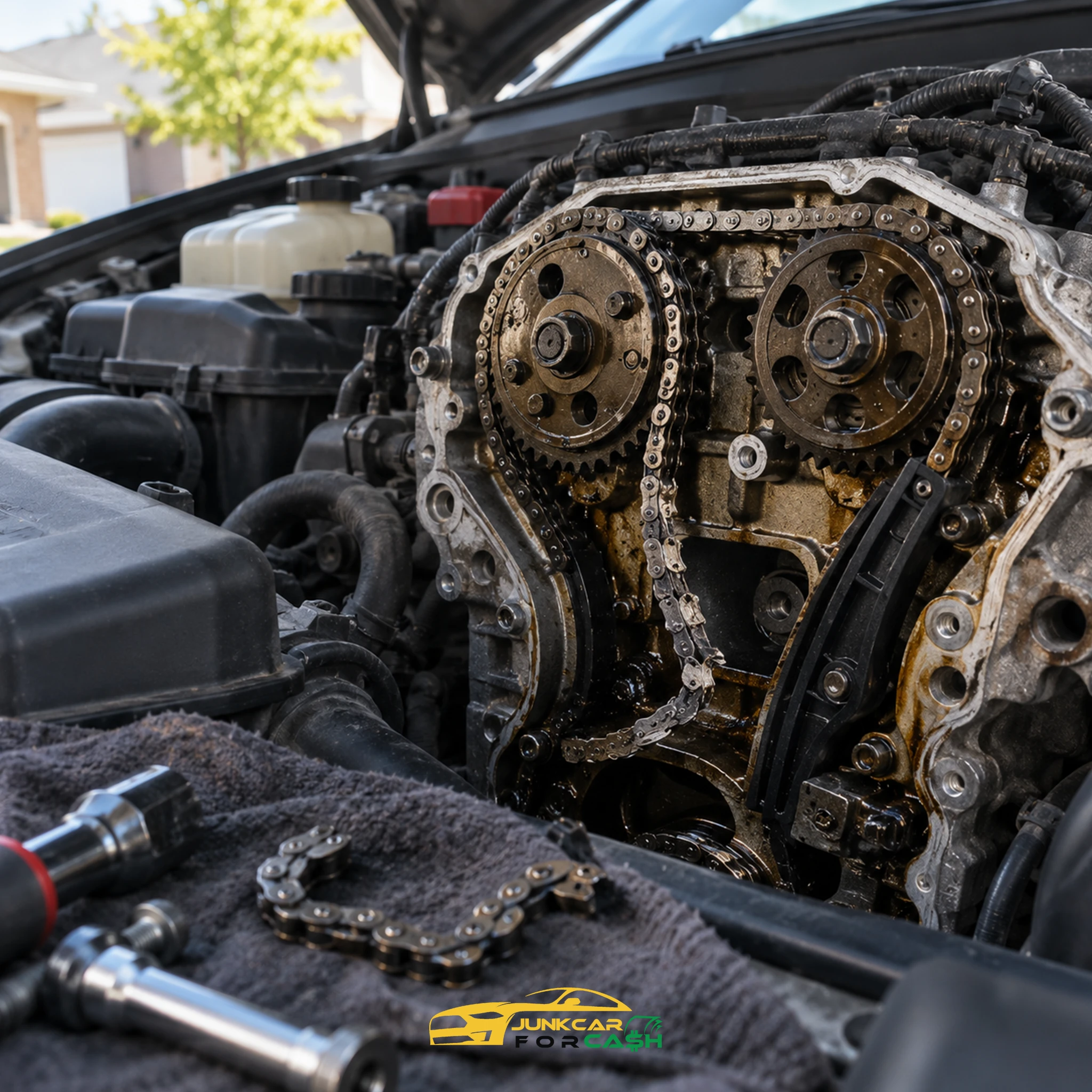
Engines and Transmissions Add Up by Weight
Even a non-functioning engine or transmission still holds scrap value based on its metal content. Aluminum components generally sell for more than iron or steel by weight, and current Canadian scrap rates for aluminum transmissions run in the range of $0.10 to $0.25 per pound. A complete engine or transmission, sold as a unit rather than broken into pieces, typically commands a better price than the same metal sold loose.
Electronics and Smaller Components Still Count
Modern vehicles carry a surprising amount of resalable electronics, including the engine control unit, infotainment displays, and even intact airbags. None of these alone matches the value of a catalytic converter, but together they meaningfully add to the total offer a buyer puts together for the whole vehicle.
Selling Parts Yourself vs Selling the Whole Car
Once you’ve decided to part ways with a non-running vehicle, the choice comes down to dismantling it piece by piece or selling it as one transaction to a buyer who handles the breakdown themselves.
| Factor | DIY Parting Out | Selling to a Specialist Buyer |
|---|---|---|
| Typical payout | Highest potential total, but only if every part sells well | Single combined offer, usually lower than a successful full parts sale |
| Time required | Weeks to months to find buyers for each part | Often completed within a single day |
| Technical skill | Requires knowing how to remove and price parts correctly | None required from the seller |
| Tools and space | Needs a proper toolset and a garage or yard | Not required |
| Number of transactions | Multiple buyers, multiple negotiations | One transaction, one buyer |
| Leftover costs | You're left with a stripped shell you still have to dispose of | The entire vehicle, including the frame, is removed |
The DIY route can produce a higher total dollar figure if every part sells at a good price, but that outcome depends on finding buyers for each component and absorbing the time, tools, and listing costs along the way. Selling the whole vehicle in one transaction trades some of that potential upside for speed, certainty, and a single clean payout.
When the Car Runs but One Part Has Failed
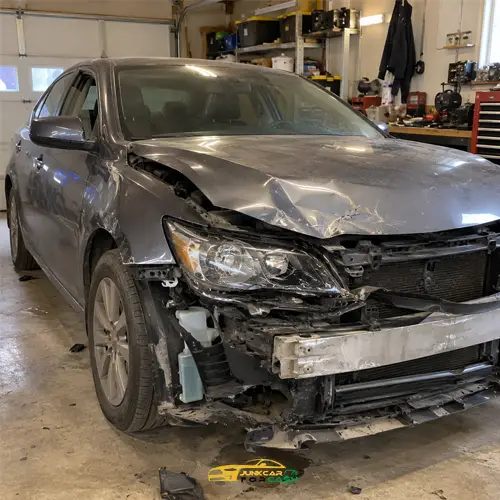
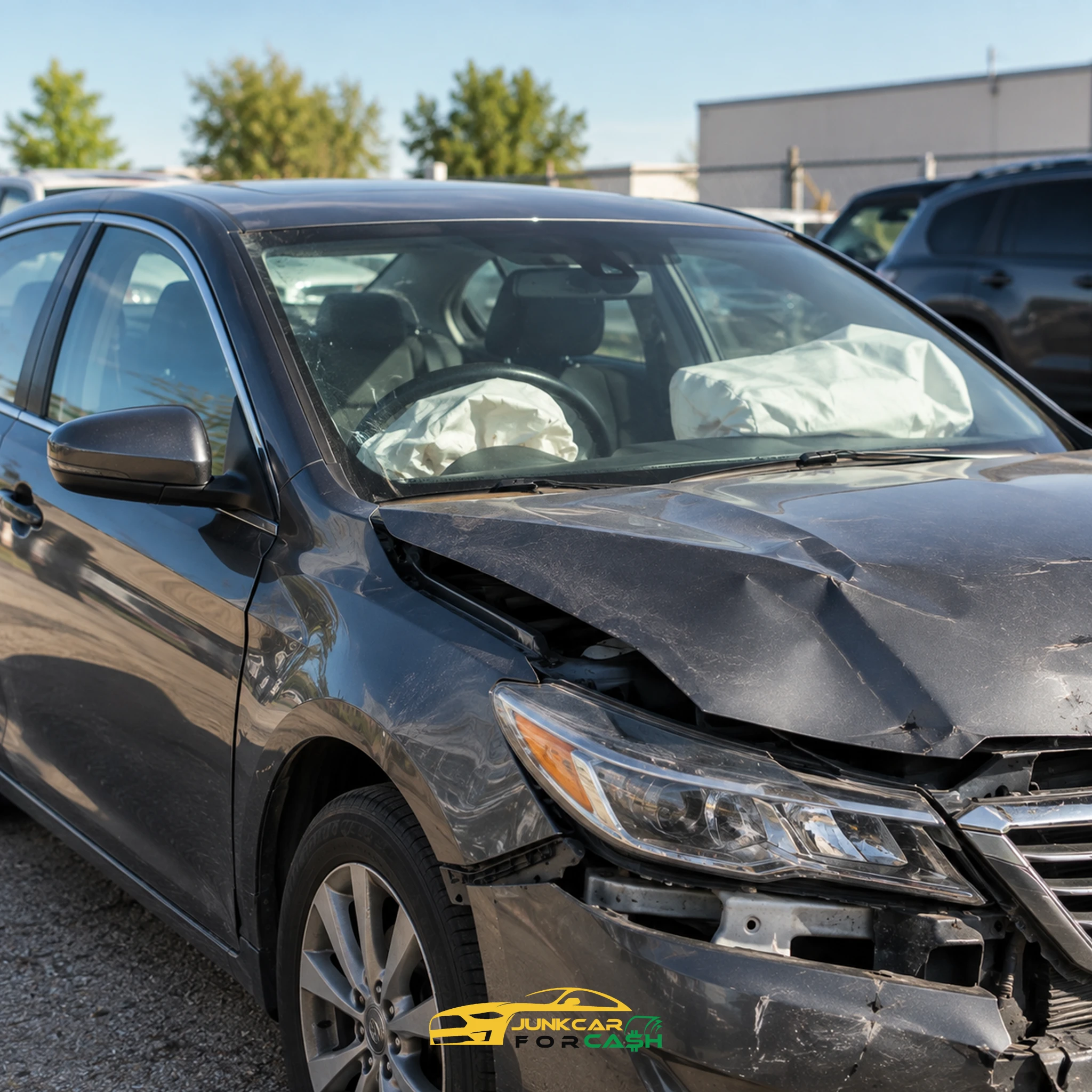
Not every parts sale starts with a vehicle that’s completely dead. A car with a blown engine or a failed transmission but a clean body, working electronics, and intact interior is a different situation from a non-running shell, and it’s worth treating differently. A dealership trade-in usually prices the vehicle close to scrap value, since dealers want cars they can resell quickly without major repair work, and a single catastrophic mechanical failure removes that option.
Selling the car whole to a specialist buyer often captures more of that remaining value than a trade-in would, because the buyer is pricing the entire vehicle, body panels, working electronics, wheels, and undamaged drivetrain components included, rather than treating it as a single failed part. Parting it out yourself can still produce a higher return in this scenario, since the body and electronics on an otherwise sound vehicle are genuinely more valuable than scrap weight, but the same time and effort trade-offs apply as with any non-running vehicle.
How Selling for Parts Actually Works
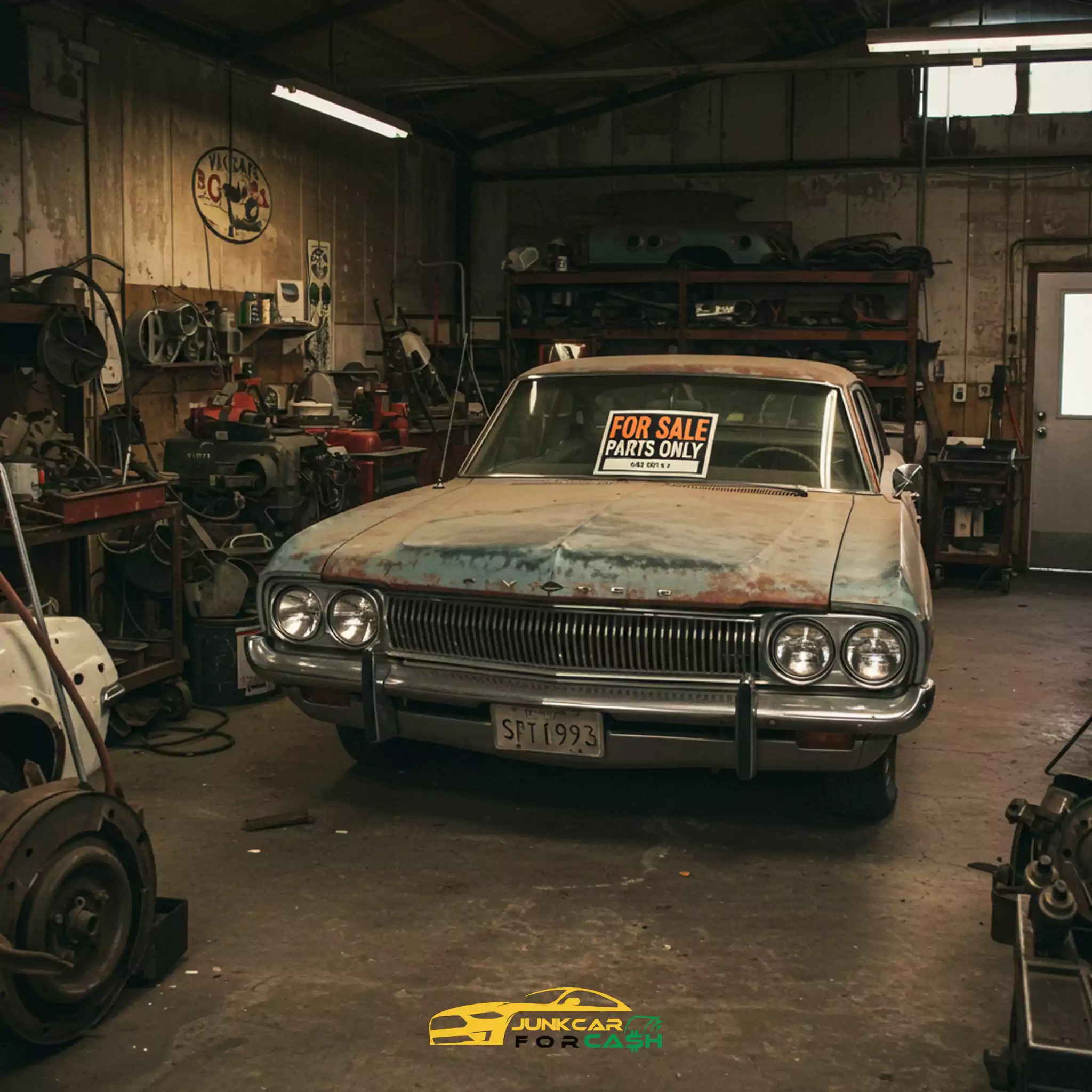
A car bought purely for parts doesn’t need to be registered in Alberta, which simplifies the transaction compared to a typical used vehicle sale. Most buyers who specialize in this kind of purchase follow a similar process from quote to payment.
- You provide the vehicle’s make, model, year, and condition, either online or by phone, and receive a quote based on that information.
- Once you accept the quote, pickup is scheduled, often for the same day depending on the buyer’s availability.
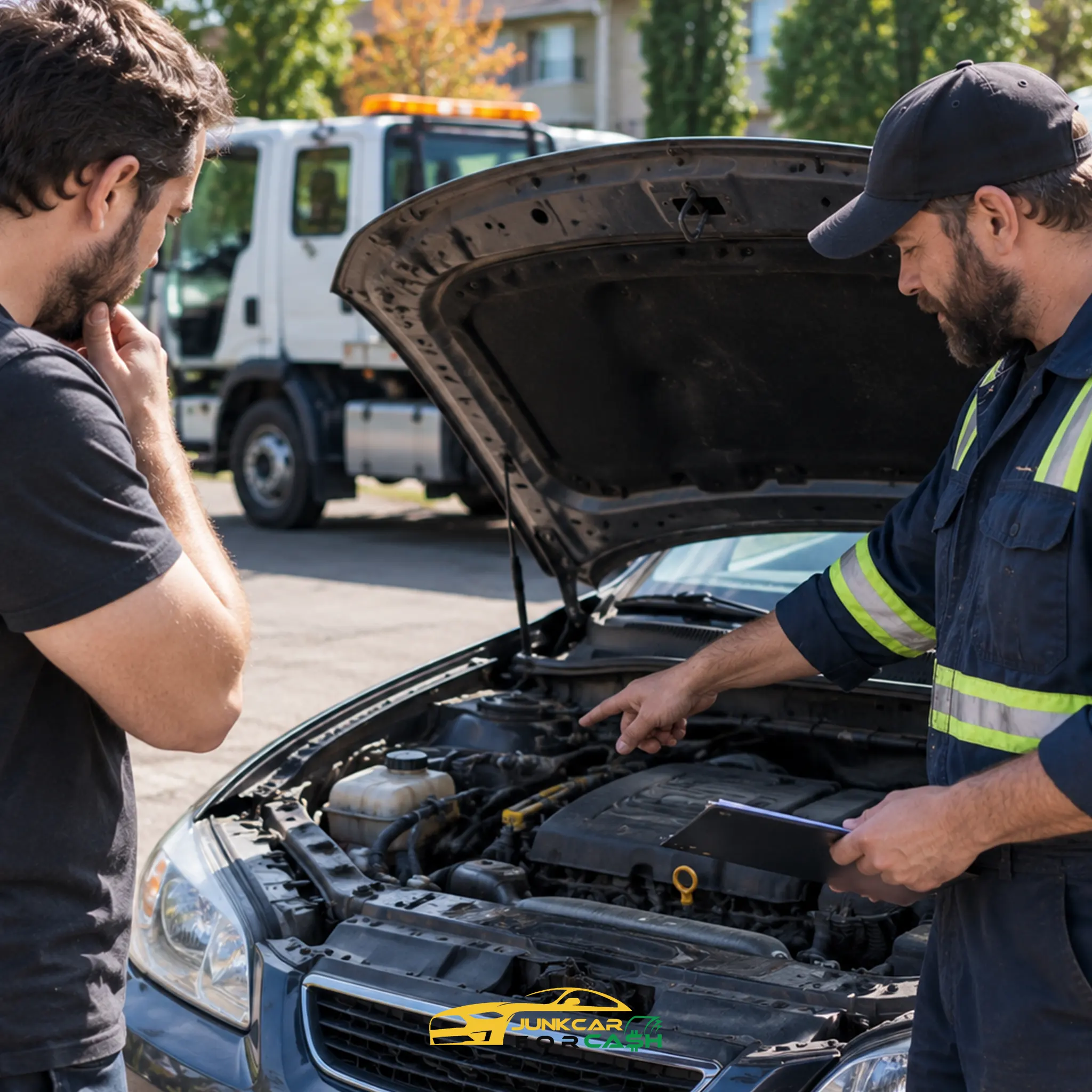
- A tow truck arrives to remove the vehicle, with most reputable buyers covering the towing cost as part of the deal.
- The buyer verifies your ownership documents on-site, and payment is made before the vehicle leaves.
- Having your ownership documents and a valid photo ID ready ahead of time helps this process move without delay, and most buyers will expect both before completing the transaction.
Preparing Your Vehicle Before the Buyer Arrives
A few minutes of preparation before pickup keeps the transaction simple and avoids last-minute issues.
- Clear out personal belongings from the glove compartment, trunk, under the seats, and any other storage area.
- Have your ownership documents and photo ID ready for verification.
- Make sure the vehicle is parked somewhere a tow truck can access without obstruction.
Sell Your Car for Parts Today
If you’d rather skip the parting-out process entirely, Junk Car for Cash buys vehicles across Alberta in any condition, including non-running cars with valuable parts intact. We offer same-day pickup, handle towing at no cost, and pay a transparent quote with no hidden deductions. Call us at (587) 325-0717 or email [email protected] to get a free quote today.
Conclusion
A car that no longer runs isn’t worthless, but realizing its full value takes either time or the right buyer. Catalytic converters, engines, transmissions, and electronics all carry real resale value, and a knowledgeable buyer factors all of that into a single offer rather than asking you to find separate markets for each part. Parting the vehicle out yourself can produce a higher total return if you have the time, tools, and patience to manage multiple sales, while working with a specialist buyer trades some of that ceiling for a faster, simpler transaction. The right choice depends on how much your time is worth relative to the gap between the two payouts.
Frequently Asked Questions
References
- ScrapMonster, “Catalytic Converter Scrap Price.” https://www.scrapmonster.com/catalytic-converter-scrap-price
- ScrapMonster, “Aluminum Transmissions Price in Canada Scrap Yards.” https://www.scrapmonster.com/scrap-yard/price/aluminum-transmissions/469
- Government of Alberta, “Scrap Metal Transactions.” https://www.alberta.ca/scrap-metal-transactions
- Government of Alberta, “Register a Vehicle in Alberta.” https://www.alberta.ca/register-vehicle
- Government of Alberta, “Standard Bill of Sale.” https://www.alberta.ca/standard-bill-sale